

JAWAN SHARIFZADEH
BUKAN_A food recipe can sometimes reveal the past more than documents do; behind a loaf of local bread or a dish prepared with mountain herbs lie stories of geography, agriculture, poverty, abundance, migration, and the ways of life of previous generations.
To understand the role women played, one must return to the earliest human societies, when the activities of gathering plants, processing grains, cooking, and storing provisions were pillars of survival and continuity.
Through these daily practices, women contributed to producing local food knowledge transmitted across generations, and its impact remains present in cultural heritage, even though their names are absent from official records and documents. This issue acquires particular importance among a people like the Kurdish people, who have witnessed a history full of political transformations that made preserving cultural memory and transmitting it between generations a continuous challenge.
When Food Becomes an Arena of Political Conflict
In West Asia, documenting food heritage is no longer limited to protecting local practices and traditions; in some cases, it has turned into an arena of national competition and identity conflict. This trend stands out despite the difficulty of determining the historical origins of many foods, and despite the intertwining and cultural exchange that have made them a shared heritage transcending national borders.
Lavash bread is a prominent example of this. In 2014, Armenia registered the tradition of preparing this bread with UNESCO, before Iran, Azerbaijan, Turkey, Kazakhstan, and Kyrgyzstan jointly registered in 2016 the traditions of preparing, eating, and sharing bread, including lavash.
The debate was not limited to this type of bread, but extended to dishes such as kashkak and dolma, which in turn became the subject of disputes transcending the kitchen to touch on issues of identity, belonging, and cultural ownership.
Researcher in history and archaeology Shida Karimi (a pseudonym) affirms that preserving Kurdish food heritage has become a responsibility falling largely on the shoulders of Kurdish women and cultural activists, amid repeated attempts to erase the origins of this heritage or attribute it to other peoples.
She says: "At a time when some Middle Eastern countries are contending over foods like tea and yogurt, and even over cooking habits and the culture of sharing food, Kurdish women and cultural activists remain the most prominent hope for preserving this heritage and maintaining its identity. Local markets can also play an important role in this."
She believes that food in such circumstances transcends being a daily need to become part of collective memory and a means of preserving identity and belonging. Despite the pivotal role women play in transmitting and preserving this heritage across generations, their contributions often remain unknown, without names or deserved recognition.
History and Geography on the Table of Eastern Kurdistan
The Kurdish table was formed through a close interaction between geography, history, and culture. In eastern Kurdistan, especially the Mokrian region, the mountainous environment and harsh winters imposed a particular character on the local cuisine; grain cultivation, such as wheat and barley, livestock raising, and the availability of meat and dairy products provided the basis for traditional ingredients, while mountain plants and wild herbs added their distinctive flavors to local dishes.
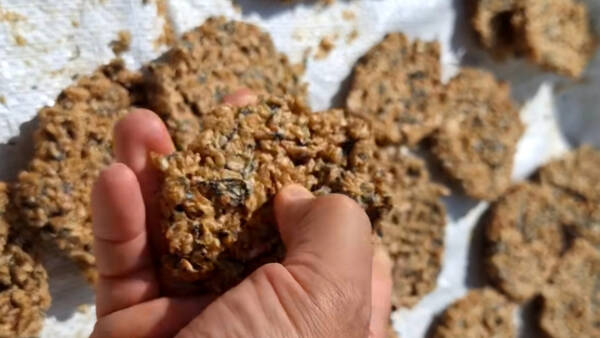
The harshness of winter and the difficulty of obtaining certain foodstuffs also pushed residents to innovate methods of preservation and storage, such as drying vegetables and fruits, storing grains, and preparing dairy products, making these practices an authentic part of Kurdish culinary traditions.
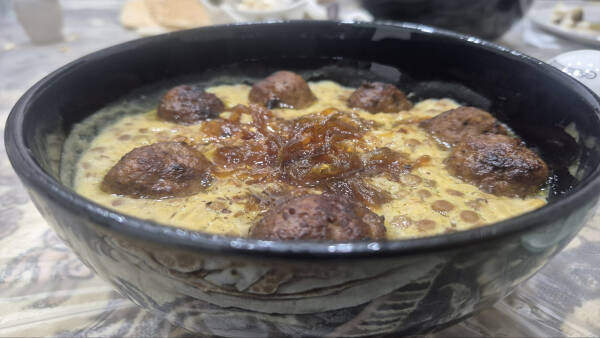
This table was not formed by geography alone; patterns of movement, migration, wars, and insecurity left their mark on cooking habits and ingredients. The effects of these transformations are evident in foods such as "beji" bread in Kermanshah and Ilam, tarkhineh, sankasir, barbasil, kardo rice, kalija, shormeza, leek stew—dishes that store aspects of the lives of previous generations, especially in the Mokrian region.
As families and nomads moved between regions, foods and their preparation recipes moved with them, but they did not remain in their original form; they adapted to available ingredients and local conditions, acquiring a different specificity from one region to another. This is evident in dishes such as yogurt soup (ash-e doogh), dolma, shifta or doklio, and kalaneh bread, whose preparation methods and even eating habits vary by region.
Thus, food diversity in eastern Kurdistan reflects not only differences in recipes and ingredients, but also documents the history of a people, its social transformations, and its relationship with its land and collective memory.
Women's Hands Preserve the Flavors of History
A large part of food heritage has been preserved inside kitchens and at the hands of women whose names have not appeared in official narratives, as this work was often considered a "domestic duty" falling within the framework of informal household labor.
In reality, women were producers of food knowledge—knowledge not limited to cooking alone, but also including knowledge of ingredients, identification of edible plants, drying and preserving foodstuffs, and even determining the appropriate time to prepare a particular dish.
Amina M., a 55-year-old woman and housewife, learned, like many other women in eastern Kurdistan, everything she knows about cooking and dairy products from her mother. "There are dishes like barbasil, which is prepared with meat, yogurt, herbs, and crushed chickpeas, but its preparation always requires some secrets and details specific to the cook—things I learned from previous generations. Although some traditional foods have begun to decline, part of them is still present at official occasions and celebrations."
Many of the foods that today form part of the identity of peoples, such as the Kurdish people, are the fruit of the experiences of women whose names had no place in official history. Nevertheless, preserving this heritage means, above all, listening to these women's narratives and acknowledging the contribution of those who kept it alive and transmitted it from generation to generation.


