
In the Middle East and North Africa... The Time for Change Has Come (6)
The conditions of Syrian women worsened during 2025 and 2026 amid the radical transformations the country witnessed. There is a clear gap between what the interim laws related to women's rights stipulate and what is actually applied on the ground.
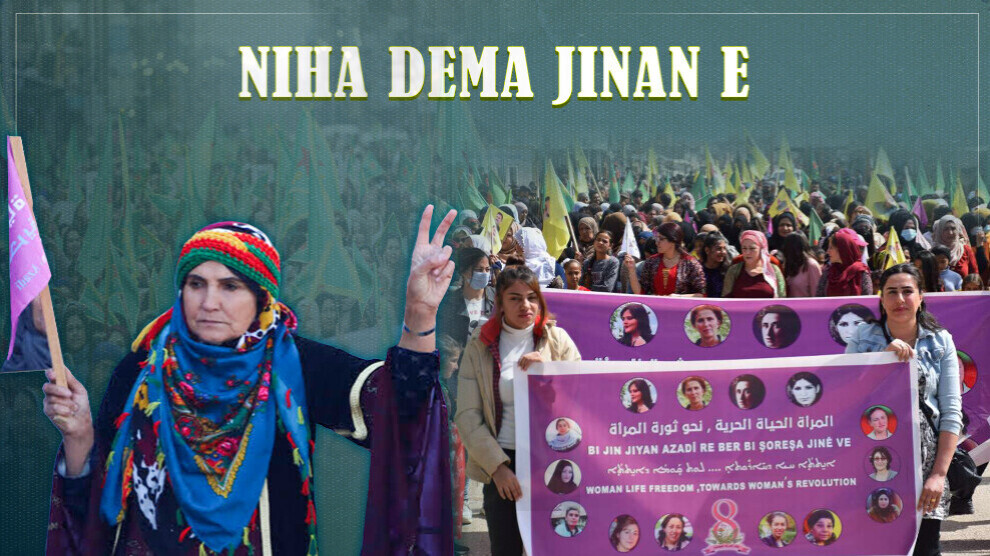
Between Violence and Resistance... A Pivotal Year in the Journey of Syrian Women
NEWS CENTER — Women in Middle Eastern countries face many forms of violence, but this does not constitute an obstacle to their struggle for equality, justice, the rule of law, and changing societal awareness.
In this file, we shed light on the forms of violence and violations that women in Syria are subjected to, and open a space to highlight their voices, visions, and aspirations, while presenting strategic solutions and practical visions that place women's rights, protection, and empowerment at the heart of building the new Syria, ensuring their active participation in shaping a future of greater justice, equality, and dignity for all.
Legal and Constitutional Achievements**
Through these data, we will focus on the most prominent constitutional and legal developments related to women's rights in Syria, within the legal and constitutional fields.
With the issuance of the Constitutional Declaration of 2025, an important constitutional development emerged, represented in explicitly enshrining the protection of women's rights in Articles 21, which affirmed her right to education, work, and equality before the law.
Despite its importance, it does not by itself constitute an integrated guarantee for gender equality, but represents an initial step requiring executive legislation and clear mechanisms, in light of the continued gap between the rights approved by constitutional texts and the reality of their application on the ground.
On another level, the file of granting Syrian nationality to the children of Syrian women married to foreigners witnessed a remarkable development, represented in legal movement and discussions at high levels, especially in Geneva and within the corridors of the United Nations, with the aim of pushing toward amending Article Three of the Syrian Nationality Law, allowing Syrian women to transmit their nationality to their children, in line with the principles related to women's rights contained in the new Constitutional Declaration.
Despite the importance of this orientation, this proposal raised a number of concerns and questions centered on the timing of presenting the proposal, in light of the complex political and security conditions Syria is going through, in addition to the readiness of transitional institutions and their administrative and legal ability to implement any legislative amendment of this kind effectively and in a disciplined manner.
The sensitivity of this file increases in light of the complexities associated with the presence of foreigners who entered Syrian territory through armed groups, including ISIS, Al-Nusra Front, Al-Qaeda, and the Syrian National Army (SNA), and married women who joined these organizations, and the resulting legal, security, and social questions regarding granting nationality to children born as a result of these marriages.
Societal divisions, demographic transformations, and the complexities of civil records resulting from the Syrian crisis make addressing the nationality file a sensitive and complex matter, and require any legislative step to be based on a comprehensive legal, social, and security assessment, with clear legal and institutional guarantees provided.
**Political Participation and Decision-Making
In the field of political participation and decision-making, women in Syria still face systematic marginalization and exclusion, clearly manifested in their weak representation within political institutions and decision-making centers.
Despite continuous demands and efforts to enhance women's presence and ensure their equal participation during the transitional phase, the reality reveals a remarkable decline in the level of their representation.
Indicators issued since 2026 indicate that the percentage of women's representation in the transitional parliament and senior decision-making centers in some institutions did not exceed 5.5% to 10%, reflecting a large gap in political representation between women and men.
Amid the disturbances associated with Hay'at Tahrir al-Sham, which took over the appointment of its cadres in various Syrian state institutions, concerns are emerging about a trend toward establishing a political system based on a strict interpretation of Islamic Sharia and a radical Islamic political approach, which may entrench women's status as second-class citizens and question their eligibility to hold administrative and political positions.
These orientations are reflected in the features of the new governance system, through the exclusion of women from decision-making positions and leadership positions with major responsibilities, in exchange for confining their roles mostly to the fields of humanitarian and relief work, or appointing them at the lower levels of the administrative hierarchy.
Major Challenges in All Fields
In the economic field and reconstruction, women played a leading role in early recovery efforts. As a result of years of war, women occupied part of the important vacancies in the labor market, but poverty rates among women remain among the highest in Syria.
Syrian women were represented in leadership positions within the fields of financial control, analysis, and banking management, but this is still insufficient to enable women to achieve their economic and financial independence.
In the field of entrepreneurship as well, economic events, such as the "Syria Project 2026" conference, place women's empowerment and enhancing their participation in entrepreneurship, green projects, and renewable energy sectors among the priorities of reconstruction plans, reflecting the importance of their role in supporting economic recovery and sustainable development.
On the other hand, Syria faces serious challenges in the fields of education and human rights, manifested in the restrictions imposed on women's enrollment in specializations related to security and defense. With the approach of the end of 2026, the Syrian authorities issued new admission conditions that deprive women of enrolling in most specialized programs in these two fields, within two newly established government universities, which raised wide discussions and serious concerns about women's rights and the principle of equal opportunities.
These restrictions are not limited to university education but extend to school curricula that witnessed amendments affecting the diverse social fabric of Syrian society and contributed to entrenching traditional perceptions about women's role and status. The deletion of historical female figures from curricula, the removal of women's images from textbooks, or their replacement with images of women wearing full hijab or the niqab (burqa), reflects a social and political orientation seeking to impose a specific perception of women's image and role in society.
Given the pivotal role of education in human development and shaping societal awareness, these conservative and radical amendments can be viewed as attempts to reshape society according to a monolithic and homogeneous structure that reinforces male domination and limits diversity and difference. On the other hand, women who study or work outside their cities face additional social challenges, represented in conservative attitudes, family restrictions on movement and residence, in addition to the absence of safe university housing, which limits their educational and professional opportunities and their independence.
Sweida... A Year of Violations and Attempts at Resistance
Throughout Syrian history, Sweida occupied a special place, not only for its religious specificity and independent national identity but also for the role of its leadership and its firm positions in the face of the tyranny of successive regimes during periods of war.
Among the most prominent basic features of Sweida is its social structure based on the ideology that society adopts and embraces. Within this structure, cooperation between women and men forms a basic and necessary bond for the continuation of life.
During the Baath rule era, the role of Druze women emerged in leading the protest movement and expressing society's rejection of repression and the regime's policies aimed at dismantling the social structure and striking its cohesion.
With the arrival of Hay'at Tahrir al-Sham, manifestations of resistance renewed in Sweida, where residents, especially Druze women, showed a firm position in defending their identity and refused to make any concessions regarding their societal specificity or to abandon their resistance to armed groups.
In this context, the hostility shown by Hay'at Tahrir al-Sham toward Sweida was linked to the community's adherence to the values of gender equality and its solidity in the face of attempts at subjugation and forced change. These tensions escalated to reach their peak with the organized and planned attack that targeted the region in July 2025.
During these attacks, women were among the most targeted groups, as dozens of women were killed and others were kidnapped in large numbers. Druze women were also subjected to grave violations and suffering, similar to what Yazidi women faced at the hands of the same armed groups, including violations related to what is known as the "74th Decree."
In the face of these assaults, women did not limit themselves to resisting repression but carried weapons and joined the front lines of confrontation, refusing to surrender to threats or to abandon defending their community and identity. In the areas affected by the attacks, women made great sacrifices, played an active role in protecting residents and defending their communities, and did everything in their power to confront the repercussions of the assaults.
Despite the grave risks surrounding them, including kidnapping, killing, and violence, the women of Sweida continued to perform their roles in protecting social cohesion and bearing societal responsibilities, in light of the absence of security and the continuation of threats, reflecting their determination to persevere and preserve the cohesion of their society despite the harshness of the conditions.
Women Victims of Enforced Disappearance and Kidnapping**
The issue of women's disappearance in Sweida is one of the most sensitive and complex issues, not only because of the gravity of the violations associated with it but also as a result of the great difficulties facing efforts to access reliable and accurate information about the fate of the disappeared women.
These difficulties were directly reflected in documentation and statistics efforts, making the available figures insufficient to determine the true scale of the violations accurately. Some families are also deprived of the ability to demand the revelation of their daughters' fate or obtain information about them, which exacerbates their psychological and social suffering and keeps them in a continuous circle of fear, anxiety, and anticipation.
According to local data collected within the framework of preparing this file, the disappearance of 120 women was reported, and available information indicates that they were killed inside their homes after being kidnapped, while four women remain among the missing.
In response to these violations, women's initiatives emerged demanding the revelation of the fate of kidnapped women and men and intensifying their efforts for their release, based on the fact that the issue of disappearance and kidnapping does not only affect the victims and their families but constitutes a humanitarian and societal tragedy affecting society as a whole.
The "Sabaya Sanad" initiative is among the most prominent of these movements, as it played an important role in demanding families' right to know the fate of their loved ones and shedding light on the suffering of the families of the disappeared and kidnapped. This initiative reflects women's transformation from the position of victims of violations to the position of actors in societal movement, by leading efforts to demand truth and justice and working to address this issue.
Security threats were not limited to the borders of Sweida but extended to the roads that civilians take in their daily movements and meeting their basic needs, making movement and travel a source of permanent danger, especially for women and families. The death of Aya Salam inside a bus was evidence of the widening scope of these risks and the transformation of civilian transportation means into places not free of security threats.
*From Confronting Violations to Expanding Societal Roles
The events of July produced a transformation in the general climate in Sweida, where the region found itself facing escalating threats and repeated violations of ceasefire agreements.
Amid these circumstances, women showed a high level of responsibility and adherence to their beliefs and identity. Druze women were also inspired by the experience of the women's revolution led by Kurdish women in Rojava, which strengthened their courage and leadership role in the struggle. Their capabilities clearly emerged in managing and organizing local community affairs during crises.
Women's presence was prominent in neighborhood committees, as local and field data indicate that their participation rate reached about 90%. Their role was not limited to that but extended to the fields of administration and municipal work, where women assumed positions in municipalities and other leadership roles, alongside their engagement in relief and nursing efforts, organizing initiatives, and responding to the daily needs of residents.
Women were not merely participants in these efforts but were often at the forefront of initiatives and bore direct responsibilities under extremely difficult conditions. They proved their practical and administrative competence and showed that their capabilities are not inferior to those of men and that their role in managing and organizing society's affairs is no longer secondary or marginal.
**The Struggle of Rojava Women... A Year of Guaranteeing 14 Years of Gains
The women of Rojava received the new year under exceptional circumstances characterized by mobilization and alert, with the start of attacks launched by jihadist groups linked to Hay'at Tahrir al-Sham on Kurdish areas at the beginning of 2026, which brought the Rojava areas into a new phase of confrontation.
These attacks targeted the gains of the Rojava revolution that extended over 14 years and pushed the struggle into a more difficult and complex phase. Women were the most affected, as their organizational system suffered great damage, and their gains became threatened with regression and disappearance. In the face of this, the struggle of the women's revolution entered a new phase of resistance that required changing its strategy.
At the beginning of the year, the strategy of the Star Congress witnessed a transformation represented in seeking to find a position for itself within the new Syria system, while the mechanisms for achieving this are still under discussion among women. The Congress does not seek integration into the government but to ensure the continuity of its existence and entrench its legitimacy officially through the approval of laws regulating the work of parties and organizations.
In the absence of projects and plans presented by the interim government regarding Syrian women and their weak representation in parliament, the Star Congress launched a campaign aimed at protecting women's gains and ensuring their continuity.
In this context, various activities and events were organized with wide participation of Rojava women, in support of the Women's Protection Units (YPJ) and the Kurdish language, and to enhance discussion about ways to ensure women's political representation and their participation in the new Syria.
Women's Gains Under Integration
The interim government rejected the co-presidency system, preferring to maintain a system based on gender singularity. However, thanks to women's struggle, remarkable progress was achieved in women's representation, represented in the appointment of a Kurdish woman for the first time as director of the Qamishlo region, and a Kurdish woman assuming the presidency of the People's Municipality in Kobani, alongside the appointment of women as deputy presidents in other institutions.
Following the restructuring conferences held by the Star Congress, the district system was abolished, and the Congress currently organizes its work in ten cities in Rojava. Its administrations were formed through elections, allowing women to choose their representatives themselves. Currently, discussions focus on mechanisms for organizing communes in neighborhoods and cities, strengthening social ties, and confronting patriarchal awareness, ensuring the expansion of women's presence in various areas of life and enhancing their economic independence.
On the other hand, women still live in a country where they are not allowed to exercise their right to vote freely, as they are deprived of this right. After the restructuring conferences, the Star Congress continues its struggle with determination, demanding the guarantee of constitutional, legal, and political rights for women and seeking to play an active role in the new Syria, especially after what women witnessed during this year of widespread violence practices at high levels.
Rojava women wage a struggle against attempts by the interim government to impose the Afghan women's model on them and reject their marginalization or deprivation of their status and role in society. They also work to ensure their presence in Syria's new constitution and recognition of their identity, allowing them to transfer their organizational and struggling experience extending over 14 years to Syrian women in general and contribute to organizing their ranks and enhancing their role.
On the other hand, Rojava witnessed visits by democratic women's delegations from Europe and various parts of the world, including intellectuals, journalists, and activists who believe in women's freedom and struggle for society's democracy. These delegations had previously followed the women's revolution experience and learned about it closely and adopted it as a role model. With the escalation of attacks on the region, these delegations came to express their solidarity and declare their support for women.
At the same time, women in Rojava contributed to rebuilding institutions and organizational structures, including institutions concerned with women's science "Jineology," women's centers, the women's village "Jinwar," alongside many other participatory initiatives, based on the principles of protecting women's rights and combating violence practiced against them. The inclusion of women's science as an academic specialization within one of the university colleges is one of the most prominent fruits of this struggle and an indicator of the growing social and intellectual presence of an independent feminist perspective.
Despite these gains, Rojava still faces persistent problems, including femicide, violence practiced against women, and family disputes. Despite the intervention of collective spaces created by women to address these issues, the level of societal awareness is still below the required level. Political and security interventions in the region also contributed to the worsening of social problems in general and increased difficulties facing women in particular.
In the context of enhancing women's presence in the security field, the involvement of women in police forces, public order, and internal security—a participation that has been officially guaranteed—constitutes an important step in supporting women's struggle and expanding their roles in society. Positive indicators of the impact of this participation have already begun to appear.
Women's Protection Units (YPJ) Maintain Their Defense System
The year 2026 constituted an extremely difficult year and a pivotal station in the journey of Rojava women. Despite the intensity of the attacks, women did not abandon their defense system but worked to strengthen it and maintained a state of alert and guarding around the clock, night and day, in defense of their neighborhoods and cities.
This position was not limited to female fighters; women of the region engaged in confronting threats in defense of their existence and dignity. In the face of brutal practices, which included throwing the bodies of female fighters from buildings in the Sheikh Maqsoud neighborhood and cutting their braids, women affirmed their adherence to the necessity of maintaining an independent defense system of their own.
After continuous struggle, the Women's Protection Units (YPJ) were included within the Syrian Ministry of Interior, within the framework of two counter-terrorism units; the first in Kobani and Afrin, and the second in Hasakah and Qamishlo.
Despite the harshness of this year, it may constitute a station for protecting the gains achieved by women and ensuring their continuity. At a time when the interim government lacks a strategy and projects dedicated to Syrian women, the Star Congress possesses organizational capabilities that allow it to work on organizing Syrian women in general, provided that opportunities and necessary conditions are available.
In this context, the need for a comprehensive legal umbrella protecting the rights of Syrian women emerges, starting from laws to the constitution, ensuring an end to violence practiced against them, preserving their rights, and most importantly, consolidating their status and ensuring their active participation in building the new Syria.
**The Situation of Alawite Women
The Alawites, historically known as Nusayris, belong to a religious group that appeared in the ninth century AD and took the Syrian coastal mountains as a geographical and social refuge. The role of Alawite women historically formed within the framework of social ties and inherited traditions and was essentially limited to agricultural work and family care.
At the beginning of the twentieth century, during the French Mandate period, Alawite women began to expand their presence in the fields of education and politics and achieved remarkable progress in literature, arts, and medicine. However, these transformations remained geographically and doctrinally limited, did not extend to various Syrian regions, and did not establish a comprehensive structural transformation in women's status within society.
With the outbreak of protests in the context of the Arab Spring in 2011, Syria entered a long phase of violence and conflict whose repercussions affected various segments of society, and women were among the most affected. Their suffering was not limited to deprivation of basic needs but extended to violations affecting their basic rights, and their bodies, psychological safety, and independence became direct targets of violence and violations.
Despite the extension of this crisis to various parts of the country, the reality of Alawite women remained essentially linked to the coastal areas. While Alawite affiliation provided these women, theoretically, a degree of social protection under the Assad regime, they were not immune to exclusion and marginalization. In the end, women bore a large part of the repercussions of the regime's sectarian affiliations and policies and paid a heavy price for the conflicts and divisions it left behind.
After the fall of the Syrian regime on December 8, 2024, the country entered a new phase characterized by chaos and escalating violence. With Hay'at Tahrir al-Sham coming to power, Alawite women found themselves facing a new wave of threats and violations and became targets of multiple armed groups.
To justify these violations, these groups resorted to stigmatizing women and Alawites in general as "remnants of the regime." However, targeting civilians on the basis of their sectarian affiliation or suspicion of association with the Assad regime cannot be justified in any way, especially when it comes to women who bear the repercussions of this targeting directly.
The coastal areas with an Alawite majority witnessed bloody massacres that claimed the lives of thousands of people, including women and children. Alongside killing and forced displacement, kidnappings became a means of intimidation and breaking the will of Alawite women and undermining their sense of security and stability. The repercussions of these violations did not stop there but extended to their exclusion from participation in the process of rebuilding Syria.
In this context, local and international human rights organizations, including Amnesty International, documented dozens of incidents on the Syrian coast since the beginning of 2025. The motives and patterns associated with these crimes varied, from ransom demands and forced marriage to human trafficking and humiliation based on sectarian identity.
In contrast, the investigation committee formed by Al-Julani rejected reports related to the kidnapping of women and classified these cases as "voluntary disappearances" or "moral problems," in a position that raised widespread criticism for denying the gravity of the violations and ignoring the suffering of victims and their families.
The remarkable escalation in cases of kidnapping of women in the coastal areas contributed to deepening concerns about their security and safety. Among the cases that recently raised concern was the disappearance of the young woman Karis Ali, 23 years old, who has been missing since November 14.
Although some human rights organizations attribute kidnappings to the actions of individuals, the recurrence of these incidents and the similarity of their patterns raise serious questions about the extent of their connection to a broader political and security environment and to the policies adopted by the interim administration. Investigations conducted in these cases have not yielded tangible results, in the absence of effective investigation methodologies and the failure to deal with the nature of the violations seriously and accurately.
In light of this reality, Alawite women wage a daily battle for survival, amid escalating violence, threats, and violations based on gender and sectarian affiliation, in a scene that reflects the danger of what can be described as "gender genocide."
Hundreds of women who previously worked in the education, health, economy, environmental services, and administration sectors were also excluded from their jobs by decisions issued by the interim administration. As a result, many found themselves facing unemployment, poverty, hunger, and loss of sources of income and economic independence, and became trapped by harsh living conditions imposed on them by their geographical location and social affiliation.
The state of helplessness and despair experienced by Alawite women, in light of the general Syrian scene, does not reflect merely a passing humanitarian crisis but reveals a reality of systematic exclusion and absence of protection and accountability, which may give the existing authority a wider space to continue its policies without deterrence.
*Most Prominent Statistics of the Past Year: *
According to data obtained from the Syrian Observatory for Human Rights and local sources, a total of 116 women were kidnapped from areas with an Alawite majority by Hay'at Tahrir al-Sham, during the period between 2025 and 2026. Their current whereabouts remain unknown.
Also, according to data published by the Syrian Observatory, at least 9 Alawite women were killed during 2026, while the fate of 50 women who disappeared during the first months of 2025 remains unknown.
In addition, it was reported that out of 42 reports investigated by the Syrian Ministry of Interior, only one case was recognized as a kidnapping incident.
Although the interim administration with a jihadist orientation pledges to build "a Syria for all Syrians," the reality reflects a completely different picture.
Violence practiced against Syrian women is not limited to the Alawite community; Sunni, Christian, Kurdish, and Druze women were also subjected to grave violations at the hands of jihadists affiliated with Hay'at Tahrir al-Sham, ranging from sexual assaults to forced displacement.
This situation stems from the continuation of war, the rise of political Islam as an institutional entity similar to the state, and the imposition of a false legal system that is neither just nor aimed at achieving social interest. At their core, these events are based on the deep structural crisis that Syria is currently living under.