
In the Middle East and North Africa… The Time foe Change Has Come (7)
Different paths of women’s work in Morocco, Algeria and Tunisia meet in confronting discrimination, defending gains and expanding the spaces that allow women to organize and influence public policies.
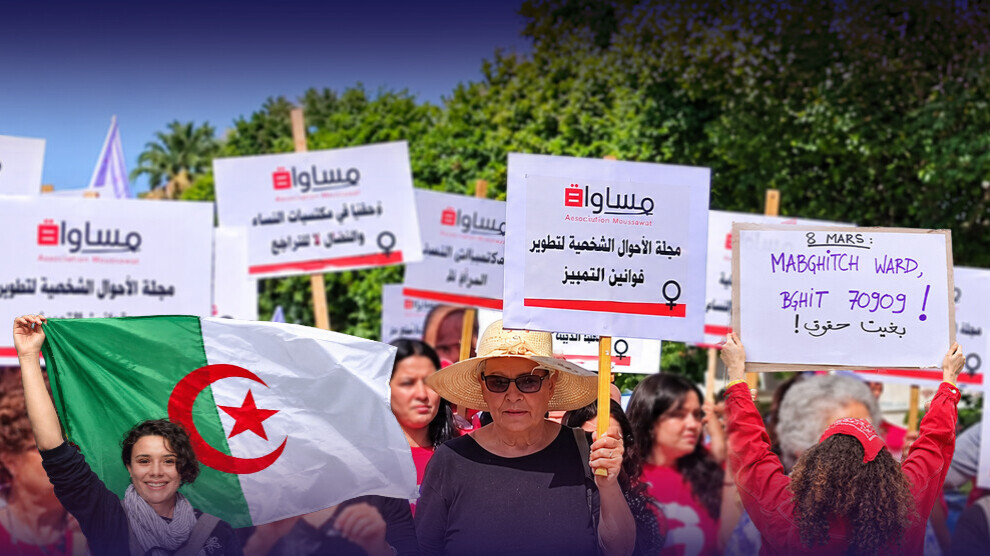
In Morocco, Algeria, and Tunisia… Women’s Struggle from Protest to Building Tools of Confrontation
NEWS CENTER_ Women's resistance to violence and discrimination in a number of North African countries is no longer limited to protesting against violations or demanding legal change. During the period extending from November 2025 to the same month of 2026, women's initiatives in Morocco, Algeria, and Tunisia moved toward developing various tools of confrontation, combining documentation of violations, building solidarity networks, preparing mechanisms to care for survivors, and advocating for the reform of legislation and public policies. These experiences differ according to political, social, and institutional contexts, as do the nature of the challenges facing women in each country.
Women in North Africa, as in the Middle East, face multiple challenges in which social, economic, legal, and political forms of discrimination intersect—from the continuation of violence against women, including domestic, sexual, and digital violence, to economic vulnerability, the expansion of informal work, and restrictions on their participation in public and political life, accompanied by weak social protection and difficulty accessing labor rights, amid ongoing debate over reforming the Family Code and the faltering approval of legal changes responding to the feminist movement's demands. In light of this, women's demands are no longer limited to protection from violations but have turned toward holding public policies, laws, and practices that produce and perpetuate discrimination accountable—producing multiple forms of women's resistance that go beyond traditional protest to monitoring, documentation, organization, and advocacy for changing the reality of rights and freedoms.
Women's experiences in Morocco, Algeria, and Tunisia reveal that resistance to violence and discrimination no longer moves in a single path but has taken multiple forms beyond protest and demanding legal change.
In Morocco, the arenas of confrontation expanded to include digital space, workplaces, local resources, and legislative debate, while in Algeria a trend emerged toward building a collective memory of violations and developing independent tools to document femicide, alongside solidarity networks and civil protection initiatives. In Tunisia, the continuity of the struggle for equality overlapped with the battle to defend legal gains and the civic space that allowed the feminist movement to build an important part of its working tools.
Morocco... From Documenting Violations to Expanding Arenas of Resistance
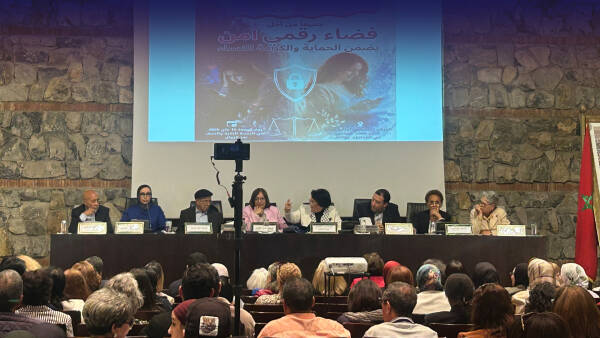
Forms of women's resistance in Morocco varied between monitoring digital violence, protesting for labor rights and local resources, and advocating for legal reform. Confrontation is no longer limited to condemning violations after they occur; women's organizations have moved toward developing monitoring and documentation mechanisms and attempts to influence policies and legislation regulating women's lives.
These movements come in a context where complaints of violence against women still record high numbers. Public prosecutors in Morocco recorded about 79,059 complaints related to violence against women during 2025, with 25,885 people prosecuted and 24,806 judicial files opened. These figures do not necessarily reflect the full scale of violence but the cases that reached justice institutions, though they provide an indicator of the phenomenon's scope that women's organizations are confronting.
In facing digital violence, the Challenge Association for Equality and Citizenship announced on November 25, 2025, the establishment of the National Observatory for Protection from Digital Violence as a civil mechanism gathering the efforts of women's associations from seven regions, working to monitor and document violations, contribute to caring for affected women, and advocate for strengthening legal and institutional protection. The announcement coincided with the association presenting a report recording 535 cases received by its listening centers and mobile unit during the months preceding the report's issuance—an indicator of the scale of violations women face and the difficulties still obstructing affected women's access to redress mechanisms.
The Observatory's work did not stop at monitoring digital assaults in their general context but extended to following up on the targeting of women participating in political life. During the legislative election campaign in September 2026, the Observatory, in partnership with the Challenge Association for Equality and Citizenship, completed a study on digital violence directed against women candidates heading local electoral lists.
The study included 42 candidates, with the participation of 21 male and female monitors, and documented 628 cases of digital targeting, recording 481 defamation cases, 436 cases involving gender-based hate speech, and 405 cases of publishing unverified information. These figures do not represent the number of targeted women but the total cases documented by the monitoring team, and forms of assault may overlap within a single case.
Alongside these civil initiatives, the National Human Rights Council launched on November 26, 2025, a national campaign under the slogan "We Don't Stay Silent About Violence," whose edition that year was dedicated to combating digital violence against women and girls.
In the labor field, workers of the "Sicom-Sicomique" company in Meknes continued their protests demanding their rights after dismissal, in a path dating back to previous years and including an open sit-in.
In the Figuig oasis, women's presence emerged in the local movement defending the right to water and the specificity of water resource management; on June 18, 2026, this path moved from field protest to institutional advocacy.
At the level of resisting legal discrimination within the family, women's associations and coordinations continued demanding the inclusion of equality and protection of women's rights within the anticipated reform of the Family Code.
Decades of rights work and women's mobilization contributed to shifting the aura of reticence and sensitivity that long surrounded personal status, moving it from a field viewed as a private matter or a topic difficult to subject to public debate to a rights and societal issue open to accountability and review. Thus the impact of women's resistance was not limited to demanding changes in legal texts but also included expanding the limits of what can be discussed socially and wresting women's right to participate in determining the rules regulating their family lives.
The Moroccan experience reveals the multiplicity of arenas of women's resistance, from digital space to workplaces, local resources, and legislative debate. While monitoring produced data revealing patterns of violence, protest maintained social and economic demands in the public sphere, and advocacy presented proposals directed at institutions. These movements also showed that resisting discrimination is not limited to demanding legal change but also includes challenging practices and discourses that reproduce it and expanding the spaces through which women can express their demands and defend their rights.
Algeria... From Documenting Violence to Holding Institutions Accountable
Extending this women's dynamic in the Maghreb region, women in Algeria faced a set of legal, social, economic, and institutional challenges. Difficulties were not linked to violence alone but also included continued discrimination in legislation, weak protection, limited participation in public life, and restrictions facing associations defending their rights.
In facing this, part of women's resistance during the period from November 2025 to the same month of 2026 moved toward developing collective tools to document violence and confront discrimination, in parallel with expanding advocacy for more equitable public policies. These efforts were no longer limited to monitoring violations after they occur but extended to questioning how they are handled judicially and in the media, and demanding institutional mechanisms allowing follow-up of the extent to which the principle of equality is reflected in decisions and public budgets.
These movements come in a context where available official data on violence against women remains partial, and figures do not reflect the full scale of the phenomenon. Amid these gaps, the Femicide Algeria initiative emerged in September 2026, seeking to create a database of femicide according to a methodology based on verifying information, documenting cases, and following their developments. The initiative does not represent the beginning of feminist documentation of femicide in Algeria; the Féminicides Algérie group had previously worked on monitoring these crimes for years, documenting at least 37 cases of women killed during 2025, according to Amnesty International. The new initiative comes in the context of continuing this work and developing its mechanisms, in an attempt to provide independent data helping reveal patterns of crimes not shown by available official statistics.
The challenge, according to Algerian activist Fatima Zohra Cherfi's assessment for our agency, is not limited to the lack of data but extends to the way femicide is characterized and handled judicially and in the media. She believes that a number of these crimes are treated as separate murder incidents without highlighting gender-based violence backgrounds or tracing the assaults that may have preceded the crime, noting that some media coverage focuses on the emotional aspect or the perpetrator's narrative, while accountability of institutions and protection paths that could have prevented the crime is sometimes absent.
She points to the disparity in media treatment between Arabic- and French-speaking press in using the term femicide and to some coverage's tendency to explain the crime through the perpetrator's psychological state, which may obscure the social and discriminatory factors surrounding it.
From this standpoint, feminist documentation initiatives acquire importance beyond counting victims to include producing an independent reading linking crimes to contexts of violence, control, and discrimination, and re-posing institutions' responsibility in prevention, protection, and accountability.
Confrontation extended to digital space, where Algeria witnessed during August 2026 a campaign of defamation, threats, and incitement targeting workers and activists at the Algerian Feminist Newspaper, a non-profit cultural and social institution working to defend women's rights and equality. The campaign sparked a wave of solidarity from rights and feminist associations and organizations, which issued statements condemning the assaults and rejecting turning threats and insults into means of excluding women from the public sphere. The response was not limited to condemning what the workers were subjected to but re-posed digital violence as a tool for intimidating women participating in public debate and defending their rights.
In this context, Fatima Zohra Cherfi noted that initiatives concerned with confronting this type of violence are still at the beginning but have begun taking more organized forms through digital safety awareness workshops, documenting cases of defamation, blackmail, and online harassment, and accompanying affected women in filing complaints. However, these efforts, in her assessment, collide with difficulties in obtaining rapid judicial response and the need to develop more specialized expertise and institutional mechanisms in dealing with gender-based digital violence.
In the field of direct protection for women survivors of violence, women's associations continue to fill part of the void revealed by the limited official shelters. An Amnesty International report issued on June 24, 2026, showed that only three government shelters were officially opened in Algeria, located in Tipaza, Mostaganem, and Annaba, with a combined capacity not exceeding about 220 women. In contrast, the report indicated that women's organizations have established since 2010 at least five assistance facilities, in an attempt to alleviate the shortage in protection services.
Fatima Cherfi affirms that women's associations do not content themselves with providing support within the limits of their capabilities but in many cases bear burdens exceeding their resources through solidarity networks providing transportation, temporary shelter, accompaniment to courts and hospitals, alongside psychological and legal support. This role reveals the importance of civil initiatives in responding to women's needs but simultaneously raises the question of these services' sustainability and the extent of associations' ability to continue providing them amid limited resources and restrictions facing associative work.
These initiatives are inseparable from a broader context of disparity between the progress women have achieved in education and the limited reflection of this on their economic and political participation.
Fatima Zohra Cherfi describes this contradiction as the paradox of the feminization of the university and the masculinization of the economy, referring to women's growing presence in higher education and some professional sectors, against the continued weakness of their participation in productive sectors and positions of responsibility.
She believes this imbalance is linked to the continuation of traditional representations, difficulties reconciling work and family responsibilities, and the expansion of informal work, making educational empowerment alone insufficient to achieve actual equality.
This gap is also manifested in the limited participation of women in political life and decision-making positions, despite previous legal and institutional gains. During 2026, developments of symbolic significance emerged in this field, including the election of Khalida Boufdash as president of the National People's Assembly on July 28, becoming the first woman to assume the presidency of this legislative institution. Fatima Zohra Cherfi also referred to the appointment of Lieutenant Colonel Kanouni Rezika in the communication cell of the National People's Army and the installation of Nacira Dahou as president of the Disputes Court on September 7, 2026.
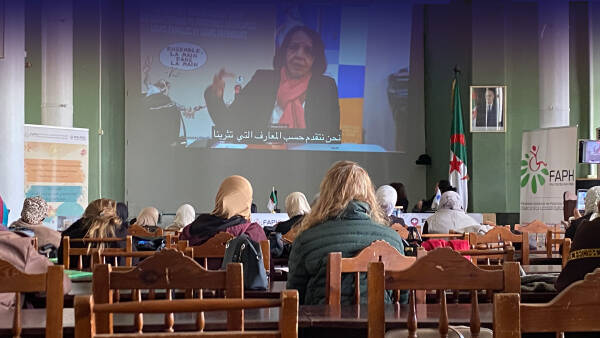
These appointments reflect the expansion of women's presence in high institutional positions, but they alone are not sufficient to judge the realization of equality in participation or women's transition to positions of actual influence in decision-making. The challenge, as Fatima Cherfi raises, is not only removing barriers to women's access to positions but also ensuring this presence is reflected in public policies and in addressing economic and social disparities that still limit their opportunities.
In this direction, feminist advocacy emerged during 2026 for the establishment of a national observatory for equality between women and men. According to what she explained, this proposal came in the context of a series of exchange and training activities on gains, challenges, and prospects for feminist work, culminating in a national symposium hosted by Algeria between May 20 and 23, 2026, with the participation of institutional, academic, associative actors, and experts.
These movements reveal that women's resistance in Algeria takes integrated paths: producing independent data on violations, confronting attempts at digital intimidation, providing civil alternatives to protection services, and advocating for institutional tools monitoring the extent to which equality is realized in policies and budgets. They also show that the battle is not only about the existence of laws recognizing women's rights but about the extent of their application and civil society's ability to monitor and hold institutions accountable and preserve the spaces allowing women to organize and influence decisions affecting their lives.
Tunisia... From Achieving Gains to Defending Them
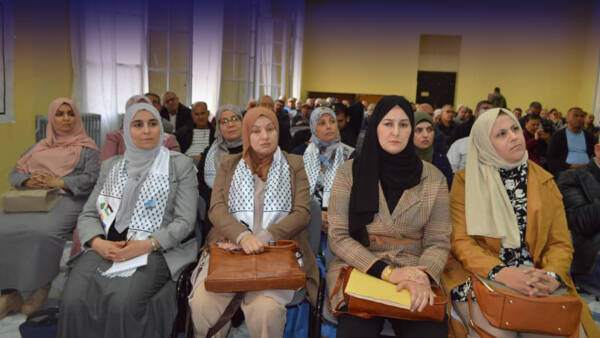
In Tunisia, women's resistance differs from the Moroccan and Algerian experiences. The feminist movement, which has accumulated legislative and institutional gains over decades, found itself recently before a dual challenge: continuing to develop tools to protect women from violence and defending the civic space allowing women's associations to work and provide their services.
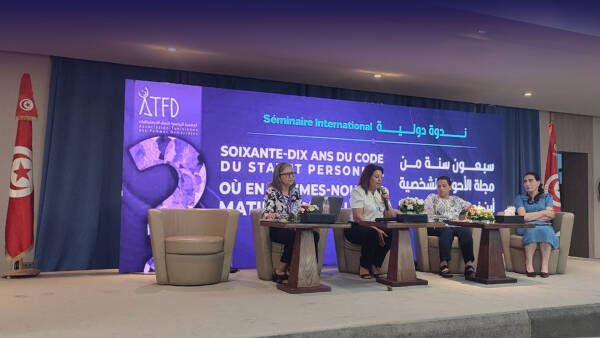
This experience is based on a legal legacy dating back to previous decades, including the Personal Status Code issued on August 13, 1956, which entered into force at the beginning of 1957, then the expansion of the legal framework for abortion in 1973 to include women regardless of their marital status and number of children, within medical and legal conditions. Organic Law No. 58 of 2017 related to eliminating violence against women also formed an important station in the path of legal recognition of forms of violence and prevention and protection mechanisms.
However, the existence of these texts did not end challenges related to their application and did not stop attempts to restrict organizations working to defend women's rights.
During the period between 2025 and 2026, judicial activity suspension procedures affected a number of civil society organizations, including the Tunisian Association of Democratic Women and the Voices of Women Association.
Human Rights Watch documented the suspension of activity of at least 20 civil organizations during two waves of procedures, the first between July and October 2025, and the second during April and May 2026, considering that a number of these decisions were marred by procedural irregularities and did not give associations an actual opportunity to address alleged violations or appeal them fairly.
These procedures were not merely passing administrative measures for women's associations; their effects extended to the services they provide to women survivors of violence. The "Najiya" center affiliated with the Voices of Women Association stopped working during the period of suspension of the association's activity in July and August 2025—a center providing listening, guidance, and legal, social, and psychological accompaniment services. The Tunisian Association of Democratic Women was also forced to close its safe spaces dedicated to women survivors of violence during the suspension period. Both associations resumed their activity after the suspension period ended, but the incident revealed the extent to which the continuity of protection services is linked to associations' freedom and their ability to work without disruption.
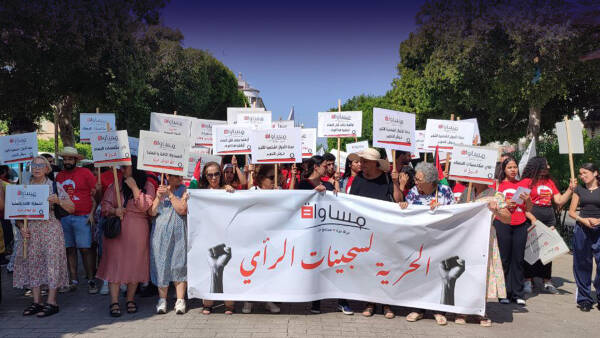
In facing these challenges, women's organizations continued developing their professional and field tools. On June 17, 2026, the Voices of Women Association presented a feminist guide for procedures of caring for women victims of sexual violence, targeting professionals, interveners, and actors in accompanying survivors. The guide's preparation was based on field work with 13 Tunisian associations, in an attempt to unify reception, guidance, and accompaniment procedures, improve intervention quality, and coordinate services provided to affected women.
This work highlights a trend toward transforming the expertise accumulated by associations in dealing with violence cases into practical tools usable and developable, beyond individual response to each case.
Work on documentation extended to femicide and attempted femicide through an electronic platform launched by the Voices of Women Association to monitor and document these crimes. The platform allows reporting cases, with information subject to review before publication, and works to preserve victims' names and stories in the face of the absence of comprehensive official statistics and a national strategy dedicated to dealing with femicide.
In parallel, the issue of equality in inheritance remained present in Tunisian feminist and rights debate as one of the issues not settled by previous legislative gains. Tunisian law still distinguishes between women and men in some inheritance cases, despite demands raised by women's and rights organizations to review these provisions and approve equality.
The continuation of this demand reflects that the feminist movement is not content with defending existing laws but continues pushing toward achieving equality in areas where discrimination remains.
The Tunisian experience reveals that women's battle is no longer linked only to changing legal texts or demanding the approval of new rights but also includes defending civil institutions that have become part of the protection and support system. When women's associations are subjected to suspension or restriction, the matter does not stop at restricting organizational activity but may extend to disrupting listening, shelter, accompaniment, and documentation services.
Thus, defending freedom of associative work and the independence of feminist organizations has become part of resisting violence and discrimination, because legal gains lose part of their effectiveness when the civic space allowing monitoring of their application, defending them, and developing them narrows.
From Expanding Arenas of Resistance to Defending the Conditions for Their Continuation
Despite the difference in these paths, the three experiences reveal that women's ability to resist violence is not only linked to the existence of laws criminalizing violations but also requires tools to monitor and document them, civil institutions capable of accompanying survivors, and safe spaces for organization, expression, and advocacy. They also show that the gains accumulated by feminist movements remain vulnerable to regression or disruption when protection and accountability mechanisms are absent or the space allowing women to defend them shrinks.
But these tools, however numerous, do not develop in all countries under the same conditions. So what happens when women face more fragile contexts, where legal and social restrictions intertwine with armed conflicts, economic crises, and the decline of state institutions? And how do forms of resistance change when preserving life, securing protection, and the continuation of women's organization itself become part of the daily battle?