
In the Middle East and North Africa… The Time for Change Has Come (5)
In 2026, Iraqi women waged continuous struggle against the Jaafari Personal Status Law, femicide, war and digital violence_from Baghdad to Kurdistan, Kirkuk and Shingla_demanding life, equality and fair representation.
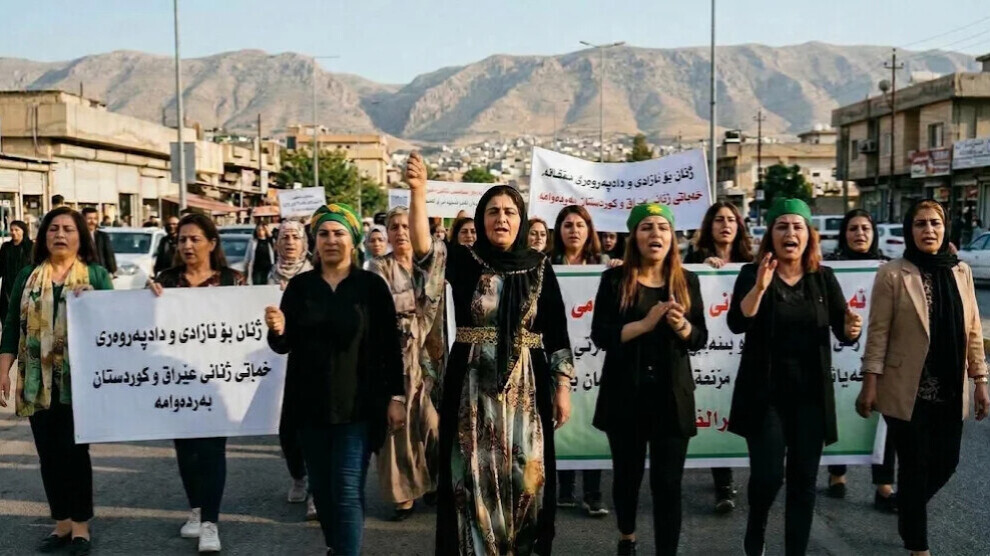
News Center — Iraq constitutes a geographically and socially multi-identity space, in which cultures, beliefs, and societal experiences intertwine. Amid this diversity, women face compound challenges due to wars, political crises, sectarian conflicts, and social disparities, in addition to the dominance of the patriarchal system and economic imbalances.
Despite the multiplicity of forms of oppression and pressures, women continue their struggle to entrench their right to freedom and self-determination. Women's reality is not shaped by forms of male violence alone; state policies and social and economic structures that reproduce discrimination and exclusion also contribute to entrenching it.
This is manifested in domestic violence, forced and child marriage, the exploitation of the concept of "honor" to control women, economic dependency, discrimination in work, digital violence, and legislation and religious interpretations that limit their independence and rights.
From the Kurdistan Region to Shingal, from Kirkuk to Baghdad, and from Mosul to Basra, women's forms of struggle vary according to the specificity and conditions of each region. Kurdish, Yazidi, Turkmen, Arab, Kakai, Syriac, Chaldean, Assyrian, and Sabian-Mandean women unite their efforts in defense of their identities, cultures, beliefs, and their right to exist, participate, and shape the future.
The slogan "Now is the time of women," which is repeated this year in the Middle East in conjunction with the approach of the International Day for the Elimination of Violence against Women, which falls on November 25, is not a slogan for a passing occasion, but an expression of a struggling march and continuous organization, and a will that does not stop at one day, but extends throughout the year in pursuit of freedom.
The reality of women in this geography
One of the most prominent axes of women's struggle agenda for rights and freedoms in Iraq during 2026 was the Jaafari Personal Status Law, which was approved in 2025, and the effects this legislation left on women's lives. Women's organizations, lawyers, and activists waged a struggle against the stripping of their rights in matters of marriage, divorce, and child custody under this law.
The applications of legislation based on the Jaafari law, especially regarding child custody, again highlighted the problems facing mothers. In this context, the "Revolution of a Woman's Fingerprint" initiative, launched by Iraqi activist Tahira Dakhil, stood out. It works to document the testimonies of mothers who lost custody of their children, or became threatened with losing it, following the application of the law.
According to data, there is a rise in the number of child marriage cases in Iraq by 14,000 cases after the amendments contained in the Jaafari law. The weakness of media in Iraq, the pressures exercised by the state, and society's closure in on itself are all factors that contribute to obscuring the existing reality and hiding aspects of it.
Women go out to the squares in defense of their rights
Women gathered repeatedly. They were not content with issuing statements and declarations, but went out to the squares in Baghdad, organized protests in defense of mothers' rights to custody of their children, and directed calls to parliament and judicial institutions. They also demanded, in cooperation with international human rights organizations, the withdrawal of the law.
Among the most prominent events organized:
- May 1, 2026: Large numbers of women gathered in Al-Firdaws Square and organized a protest against the custody amendments. Women expressed their rejection of provisions that could lead to stripping mothers of child custody after the children reach the age of seven. Mothers participating in the protest recounted the threats they face of losing their right to custody.
- June 6, 2026: Al-Firdaws Square was again a gathering point for women. Mothers organized a protest, affirming that the transfer of custody to the father could expose children to neglect and abuse.
- July 18, 2026: Women gathered in front of the Supreme Judicial Council and organized a protest against the possibility of men changing existing marriage contracts and subjecting them to Jaafari jurisprudence provisions, without the women's knowledge or consent.
- October 16, 2026: The protests that began in Basra moved to Baghdad. Women organized a march during which they demanded the cancellation of Decision No. 93, an end to the retroactive application of the law, and ensuring equality in rights between women and men.
Escalation of violence in Iraq
Women's struggle is not limited to personal status amendments, but extends to include domestic violence, femicide, crimes committed under the pretext of "honor," and ensuring women's access to their legal rights. In this context, Article 41 of the Iraqi Penal Code faces criticism from women's organizations, due to its connection to the concept of disciplining the wife, which may allow the justification of physical violence against women within the family.
The reduction of penalties in crimes committed under the pretext of honor, and the possibility of a rapist escaping prosecution if he marries the victim, are among the provisions that hinder the achievement of justice, which pushes women's organizations to demand the amendment of these texts and an end to forms of legal protection for violence against women.
According to data from the Iraqi Human Rights Observatory, recorded domestic violence cases rose from about 14,000 cases in 2024 to 36,289 cases in 2025, including 19,587 cases of violence practiced by men against their wives. The Supreme Judicial Council also announced the recording of 4,606 cases of violence against women within cases presented to courts during the first months of the current year.
These figures reflect only officially reported cases, while many cases remain outside statistics due to social pressures, economic dependency, and fear of revenge.
The law is suspended and rights defenders are targeted
Violence against women in Iraq takes more dangerous dimensions with the targeting of women's rights defenders. On March 2, 2026, Yanar Mohammed, one of the founders of the Organization of Women's Freedom in Iraq, was killed following an armed attack in front of her home in Baghdad. She had devoted her efforts to establishing shelters for women threatened with violence, human trafficking, and crimes committed under the pretext of "honor." International rights organizations called for revealing the circumstances of the crime and ensuring the protection of women's rights defenders.
On April 6 last year, lawyer Noor Saud Al-Hamdani was killed in Basra by her father, in a crime that reflected the scale of risks women face even within their families. Women's organizations believe that these crimes are not isolated incidents, but are linked to impunity and the absence of effective protection mechanisms.
Among the most prominent obstacles to combating violence against women is the absence of a comprehensive federal law against domestic violence, as the draft law, listed on parliament's agenda for years, remains suspended without approval, despite efforts aimed at re-proposing it and providing a legal framework to protect women.
In contrast, women continue to strengthen their organization and participation in local administrations, parliament, civil society organizations, and solidarity networks. According to a study published by the National Democratic Institute (NDI) during 2026, about 90 women work in different areas of Iraq in cooperation with local administrations through women's advisory councils.
These experiences affirm that women are not merely victims of violence and discrimination, but actors in shaping local policies, participating in decision-making, and building the future of their communities.
Women in the Kurdistan Region
The Kurdistan Region, compared to other areas in Iraq, possesses more developed legal legislation in the field of combating violence against women, and broader legal mechanisms that allow women to wage their struggle to demand their rights. However, there is a large gap between the existence of this legal legislation and the reality that women face in their daily lives. Many rights guaranteed in theory find no actual reflection on the ground.
During the first eight months of the current year, 48 women were killed in the Kurdistan Region. According to data announced by the General Directorate for Combating Violence against Women and Family in the Kurdistan Region, 12,456 complaints related to violence were officially recorded in the Region during the past year. However, this figure includes only complaints that reached official authorities.
At a time when women's organizations demanded an end to femicide, they also called for revealing the circumstances of suspicious deaths of women. They also demanded the establishment of mechanisms to protect against domestic violence, the effective application of existing laws, and ensuring women's right to life.
The following are the most prominent women's movements and events that received media coverage:
- March 8: On the occasion of International Women's Day, light was shed on the struggle for women's rights, and the obstacles women face in the fields of education, politics, law, and social life were discussed.
- August 12: Women organized a seminar in Sulaymaniyah on women's participation in political life. During it, women's participation in decision-making mechanisms, the obstacles they face in political representation, and their demands for achieving equal participation were discussed.
- September 9: A campaign was launched in the Kurdistan Region against femicide and suspicious death cases. The March 8 Network, with the participation of women's organizations and human rights institutions, called for waging a societal struggle against violence.
- October: Women again launched an awareness campaign against femicide. The campaign aimed to build societal awareness against these crimes through producing documentaries, collecting signatures, organizing field events, and working through digital media. The campaign was scheduled to include cities and villages.
- Women commemorated the memory of Nakehan Akarsal, a member of the Genology Research Center who was assassinated, and Gulistan Tara and Hero Baha Al-Din, who worked in the field of free journalism, through various events, statements, and declarations.
In contrast, the Anti-Domestic Violence Law No. 8 in the Kurdistan Region entered into force in 2011, including provisions to combat physical, psychological, economic, and social violence, alongside forced marriage, child marriage, and female genital mutilation. However, its application still faces challenges, due to tribal and social pressures and individual interests, which affect the course of justice and allow perpetrators of crimes to escape punishment.
In the current year, three women from the Peshmerga forces were killed as a result of Iranian drone attacks that targeted the Kurdistan Region during the war between Israel, Iran, and the United States. Among the victims was Ghazal Molan Jaberabadi, a member of the Komala Party, who was deprived of receiving treatment in the hospital because of her political identity, and was also refused reception by religious institutions to perform religious rituals and duties after her death.
This incident reveals that women do not face the dangers of wars alone, but also political and social discrimination. Nevertheless, women of the Kurdistan Region continue their struggle for national unity and lasting peace, and for building a democratic society that guarantees equal representation and combats all forms of violence and discrimination.
Digital assaults
Digital violence was also one of the most prominent issues on women's agenda in the region during 2026. Digital assaults, threats, and online harassment, which target young women in particular, raised discussions about new forms of violence.
In this context, women's organizations focused on creating joint platforms, expanding the scope of awareness campaigns, and shedding light on digital violence targeting women. Platforms that expose violence practiced against women have also become one of the important tools in this struggle.
Journalists and activists stood out through their efforts to combat digital violence, while changing sexist media language and style was one of the basic demands of women. Women also stood against the pressures imposed on their bodies and forced beauty standards.
The controversy over polygamy and women's reactions
Polygamy was another issue that raised widespread controversy. Raising the issue of polygamy through various programs, especially in some media outlets and digital platforms close to the Kurdistan Democratic Party, provoked reactions from women's organizations.
The way polygamy was addressed in YouTube channels, digital platforms, and television programs re-ignited discussions related to women's social status.
Women's organizations and activists saw that the language used in these programs may contribute to legitimizing polygamy and marginalizing women's rights and will. Criticisms were also raised that this media orientation reproduces the dominant patriarchal mentality.
Women's reactions to these programs were not limited to statements and criticisms, but turned into endeavors to develop organized struggle.
The continued presence of ISIS
The lives of women in Mosul and Nineveh, despite the destruction left by ISIS's control of the two cities, remain governed by the repercussions of violence and the lack of security and guarantees. Women who were subjected to grave violations during the war today face unemployment, economic dependency, forced and early marriage, in addition to family and tribal pressures. Under the dominance of sectarian traditions and patriarchal structures, violence against them often remains confined behind walls.
The recording of more than a thousand files related to violence against women in Nineveh during the first nine months of the current year reveals the scale of the crisis, as 495 files were closed, 405 files were referred to the relevant authorities, while 131 files are still under investigation.
The transfer of about 22,000 people from families associated with ISIS from Al-Hol camp to Iraq, and the housing of a large proportion of them in Nineveh camps and their surroundings, also raises growing security and social concerns about the future of the region and its women.
The movements of ISIS cells in Mosul, Nineveh, and Tal Afar intertwine with sectarian tensions, the influence of political Islam, and traditional pressures, which narrows the spaces of freedom available to women. In the face of this reality, their struggle continues not only against the effects of war, but also against the social and political structures that reproduce violence, exclusion, and control over their lives.
Shingal... The time of women and integration
The struggle of women in Shingal cannot be addressed without pausing at the genocide committed by ISIS against the Yazidi community in 2014, and the grave violations that accompanied it targeting women and their social existence.
Yazidi women were subjected to one of the most horrific crimes of genocide against women in our era, and the fate of more than two thousand women remains unknown to this day. Families' suffering also continues with the presence of dozens of mass graves discovered, and others not yet revealed. Until now, more than 90 mass graves have been identified, while hundreds of remains are still preserved in the Forensic Medicine Institute in Baghdad, without being handed over to the victims' families.
The effects of the genocide are not limited to the loss of relatives, but extend to the traumas and violations that targeted women's bodies, identity, and existence. Nevertheless, Yazidi women continue their struggle to overcome the effects of the genocide, rebuild their society, and maintain their connection to their land.
Through the Yazidi Women's Freedom Movement (TAJÊ), the Shingal Resistance Units (YJŞ), and other women's institutions, women organized their ranks and strengthened their presence in the military, political, diplomatic, and societal fields.
Today, women play an active role in integration efforts in Shingal, and in negotiations aimed at ensuring recognition of the Yazidi community's rights and its political and administrative will.
Women who were subjected to killing, abduction, and sale in slave markets did not stop at the limits of survival from the genocide, but turned their organized struggle into a path for defending their existence and rights.
Women's organization and transformation into a societal actor
Women's organization in Shingal is based on rebuilding societal life, enhancing women's participation in decision-making, revealing the fate of the missing, the return of the displaced, and achieving economic independence. The activities of the Yazidi Women's Freedom Movement (TAJÊ) after the genocide contributed to raising women's awareness and strengthening their organization.
In this context, the Genology Academy in Shingal works to restore the history of Yazidi women that was obscured or undocumented, through oral narratives, and to highlight their fundamental role in society. Training and awareness campaigns also contribute to enabling women to understand social problems based on their experiences and develop ways to address them.
The Academy's activities are not limited to women, but also include men, with a focus on issues of domestic violence, early marriage, suicide among youth, women's social status, in addition to the psychological, social, and economic effects of the genocide, and the early marriage and motherhood associated with them.
During 2026, efforts to enhance women's participation in local peace-building stood out. According to the United Nations assessment issued on September 25, 2026, 125 people received training in peace-building, negotiation, and policy development through the Shingal Open Spaces Network. Five local peace bodies were also formed comprising 50 women, with the aim of enhancing their role in solving local problems and participating in peace processes.
Within the framework of these efforts, women in Shingal issued statements and organized meetings addressing multiple issues and axes, most notably:
- The Yazidi Women's Freedom Movement (TAJÊ) and the umbrella organization of the Yazidi Women's Council (SMJÊ) launched a campaign under the slogan "For Justice and Freedom, Be You Too the Voice of the Abducted Women of the Genocide."
- Statements were issued on the twelfth anniversary of the Shingal massacre, demanding the finding of missing Yazidi women and children, the trial of the perpetrators, and ensuring the legal and administrative status of Shingal.
- In July, women announced a campaign that continues until November 25 of the current month in a statement to public opinion read at the Mam Zaki intersection in the Snoun sub-district. The campaign demanded finding missing women, opening mass graves, and trying the perpetrators of crimes.
- In September, the Yazidi Women's Freedom Movement (TAJÊ) organized a workshop with the participation of Yazidi women who were rescued, members of the movement, and representatives of women's institutions in Shingal.
Joint women's struggle and future vision
The women's institutions, associations, communes, cooperatives, and solidarity networks established in different areas, from Shingal to Mosul, and from Kirkuk to Baghdad, constitute important models of women's experiences in managing their own affairs.
Women who seek to rebuild life after war, forced displacement, and societal destruction are working to reshape their lives and the future of their communities.
The experiences of women belonging to these groups show that women's struggle in Iraq cannot be addressed through a single identity or a single social structure alone. Women's pursuit of freedom goes hand in hand with their struggle to protect their cultural existence, beliefs, and societal memory.