
The Association of Women with Disabilities… A Voice Demanding Rights and Social Inclusion
The Association of Women with Disabilities in Sudan’s Northern State includes 30 women, a group facing double violence as a result of the conflict.
Aya Ibrahim
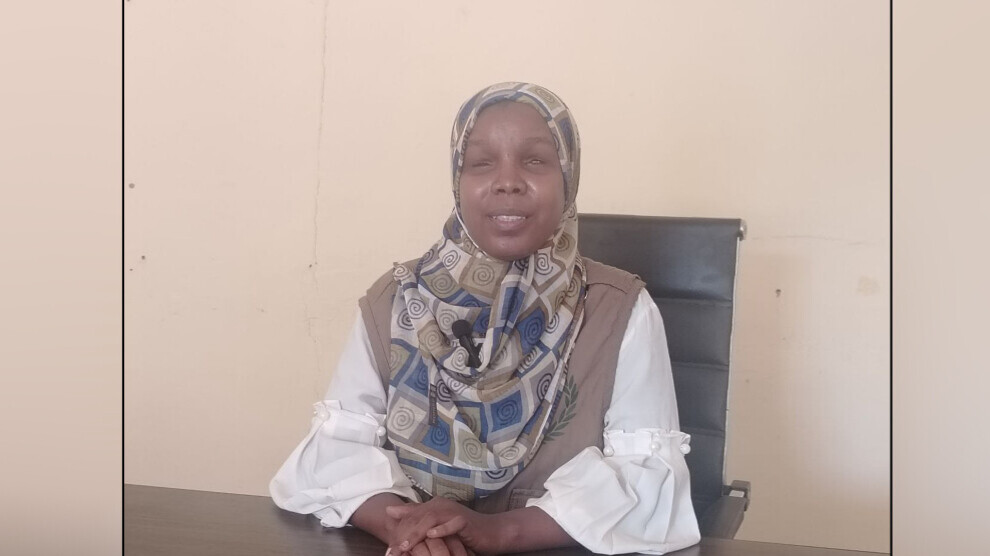
Sudan – Intisar Mahmoud, the head of the Association of Women with Disabilities in the Northern State, has a visual impairment. She therefore deeply understands the suffering of women who have lost one of their senses or are unable to walk. She affirms that women with disabilities in her country face major obstacles, and that as the association’s leader she is unable to fully carry out her mission toward them in light of the challenges she encounters.
Intisar Mahmoud called for women with disabilities to obtain their rights, be integrated into society, end discrimination against them, and be actively involved in the political process.
She pointed out that the association focuses on the economic empowerment of its members. However, it faces a major challenge in the shortage of materials for handicrafts. She explained that these could be provided by national and international organizations, whose support could be used for projects, awareness workshops, and campaigns aimed at removing negative stereotypes about people with disabilities in society.
Regarding society’s perception of women with disabilities, she said: “The awareness campaigns carried out by the association have received a strong response from the community,” which she confirmed is engaging with disability issues, “but this is not enough—it is only the beginning.”
The Association of Women with Disabilities in the Northern State includes 30 women. It was established after the conflict between the Sudanese Army and the Rapid Support Forces that erupted in April 2023. It works to provide assistance to women with disabilities, particularly in psychological support and economic empowerment.
Mahmoud noted that the idea of establishing the association began in 2019, but it only came to light after the conflict and was officially launched in 2023 with the support of women with disabilities themselves.
She also addressed the laws concerning people with disabilities, saying that although there has been a law regulating associations since the 1970s, it has not been effectively implemented compared to other countries. This, she said, requires a greater role from persons with disabilities themselves. She also expressed regret over the lack of sign language implementation and the absence of interpreters.
Mahmoud stressed the importance of raising awareness on this issue and supporting campaigns to teach sign language, noting that the association she heads is the first to become active after the suspension of associations in the eastern states of Gedaref and Kassala.
Three Main Focus Areas
Regarding the most prominent challenges and the issues they highlight, she explained that women with disabilities do not receive employment opportunities and are deprived of their full rights. In addition, they face discrimination, bullying, and psychological violence.
“There are three main pillars in all the association’s programs: rights, removing negative stereotypes about women with disabilities within society, and combating gender-based violence.”
She added that the association works extensively on psychological support, especially in response to bullying, by organizing recreational programs and other activities to alleviate psychological impacts.
She called on society to be aware of the rights of women with disabilities, not to discriminate against them, to care about their issues, to integrate them into the community, and to ensure their effective participation in all fields.
Intisar Mahmoud concluded by stressing the need for women with disabilities to unite in order to face the challenges before them:
“We demand our rights but do not obtain them as required. Nevertheless, we have many future plans, and the responsible authorities must pay greater attention to us.”