
Iraqi Women’s Network Warns of Decline in Women’s Rights
Iraqi women’s rights have sharply declined, with new laws threatening family stability, social cohesion, and fundamental protections and equality nationwide.
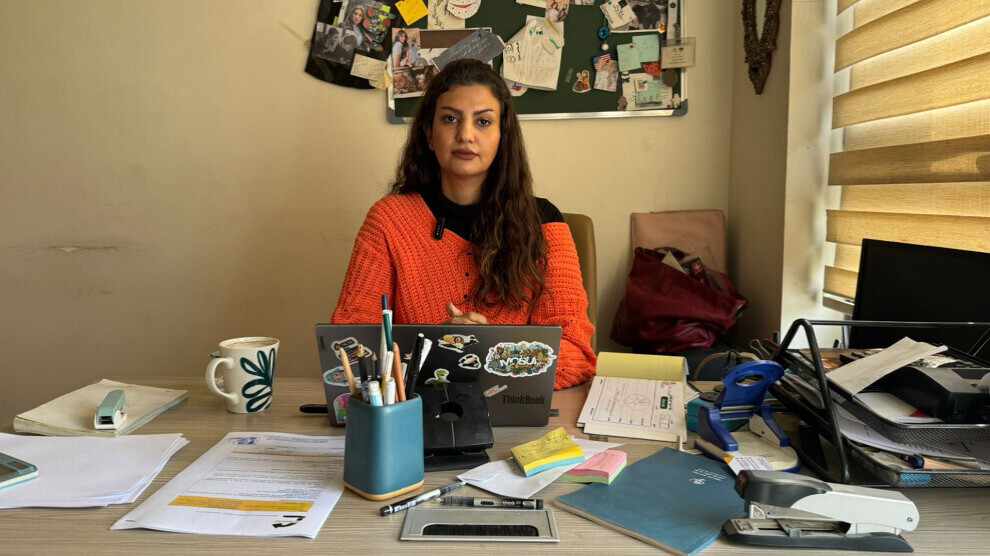
Raja Hamid Rashid
Iraq — The Iraqi Women’s Network submitted a “shadow report” during its participation in the 92nd session of the Committee on the Elimination of Discrimination against Women (CEDAW) in Geneva on Monday, February 2 of this year.
In its statement, the Iraqi Women’s Network affirmed that women in Iraq are facing some of the most dangerous challenges, foremost among them the 2025 Personal Status Law and the Jaafari Code, due to the grave violations of women’s rights they entail.
The network pointed to escalating smear campaigns and threats targeting women’s organizations and human rights defenders. These violations not only affect women’s rights but also threaten human rights more broadly and the foundations of a civil state. It called on the international community to exert pressure on the Iraqi government to fulfill its legal obligations toward women.
Personal Status Law No. (1) of 2025 and the Jaafari Code constitute a serious and divisive issue that threatens family stability and social peace. The law includes outdated jurisprudential provisions that contradict the Iraqi Constitution, the legal system, and judicial independence, in addition to violating Iraq’s international commitments.
Among the most prominent violations enabled by the law, according to the shadow report, are permitting religious marriage for minors, abolishing penalties for marriages conducted outside the court, revoking divorced women’s right to housing, reducing mothers’ custody rights, depriving wives of inheritance rights to land and property, applying the law retroactively without the wife’s consent, granting the husband absolute authority over divorce, and allowing polygamy without fair regulations.
Escalating Restrictions on Women’s Organizations
Beyond legislation, there are systematic smear and treason campaigns targeting civil society organizations concerned with women’s rights and human rights defenders. These include threats of killing and kidnapping, arbitrary arrests, and bans on activities within universities, media outlets, and educational institutions. There has also been an official prohibition on the use of terms such as “gender” and “equality,” along with the imposition of pledges on organizations not to engage with international concepts under the pretext that they contradict religious and moral values.
The country has witnessed rising rates of domestic violence, particularly spousal violence against women, in the absence of a law criminalizing domestic violence and providing legal protection for women and girls. Some university curricula include criticism of CEDAW, portraying it as a tool to dismantle the family and presenting misleading concepts about equality between spouses.
The network concluded by presenting the shadow report and the recommendations of the 92nd session, calling on the Iraqi government to adhere to the Constitution, international treaties, and CEDAW in order to ensure the protection of women’s rights and achieve justice and equality.
Non-Compliance with International Conventions
Commenting on the matter, the Chair of the Committee on the Elimination of Discrimination against Women, Nahla Haidar, criticized the Iraqi government delegation for failing to comply with international conventions, despite Iraq having acceded to the Convention in 1987.
She explained that recent years have witnessed a significant regression in women’s rights gains, particularly at the legislative and legal levels, especially concerning the Jaafari Code, emphasizing that this regression represents one of the most dangerous phases for women’s rights in Iraq.
The Committee Chair also referred to previous recommendations urging Iraq to repeal Article (41) of the Constitution related to freedom of legislation in personal status matters, as it entrenches differences among women themselves before even creating a gap between women and men.
She added that the Committee expressed regret over government institutions issuing university curricula containing misinformation under the banners of human rights and democracy, promoting the idea that CEDAW aims to dismantle the family. She considered this a serious violation of the Convention, its members, and Iraq’s international obligations, given its direct impact on the country’s reputation. The Committee also criticized incitement campaigns and restrictions against civil society organizations monitoring Iraq’s international commitments.
Regarding the impact of the Jaafari Code on women’s rights in Iraq, particularly in relation to child marriage, inheritance, and child custody, the Iraqi report confirmed that the Code was met with broad rejection from various sects and societal elites, as it entrenches violence against women and strips them of many rights. These include reducing the years of maternal custody, depriving wives of inheritance and property rights, legitimizing marriages conducted outside the court, and permitting child marriage with religious authorization based on the concept of legal puberty, thereby deepening the economic gap.
The Need to Adhere to CEDAW and the Constitution
Nahla Haidar stressed that achieving a balance between Iraq’s international obligations and respect for societal values does not conflict with improving women’s rights. Traditions, she emphasized, do not justify depriving women of education, healthcare, or participation in the labor market. She underscored the necessity of genuine political will within government institutions to support the Convention and provide essential services such as education and free healthcare.
She further affirmed that fulfilling commitments to security and stability requires a comprehensive review of discriminatory legislation against women found in certain Iraqi laws and adherence to the constitutional principle of equality between women and men. This includes repealing legal provisions that permit the “disciplining of women” or allow a rapist to evade punishment by marrying the victim.
Haidar concluded by stating that Iraqi women are full citizens with complete rights and an integral part of the country’s history. This necessitates protecting legislation that guarantees equality, ensures women’s participation in work, leadership, and decision-making, and highlights women’s roles in educational curricula—especially given Iraq’s history of prominent female leaders.
It is worth noting that Iraq announced progress in increasing women’s employment and participation in political processes and leadership positions during the official delegation of the Republic of Iraq’s presentation of its eighth periodic report before the CEDAW Committee at its 92nd session in Geneva. The delegation reaffirmed Iraq’s commitment to protecting and promoting women’s rights and cooperating with UN mechanisms through comprehensive national strategies to combat violence and promote women’s economic and political empowerment, as well as its commitment to protecting human rights and women’s rights.