
Presidential Candidate Amira Jaber: I Seek to Break the Quota System and Strengthen the Role of Women
Amid political complexity and sectarian power-sharing, activist Amira Jaber says her presidential candidacy rests on a constitutional right, joining a crowded race of 81 contenders, including four women, nationwide elections.
Raja Hamid Rashid
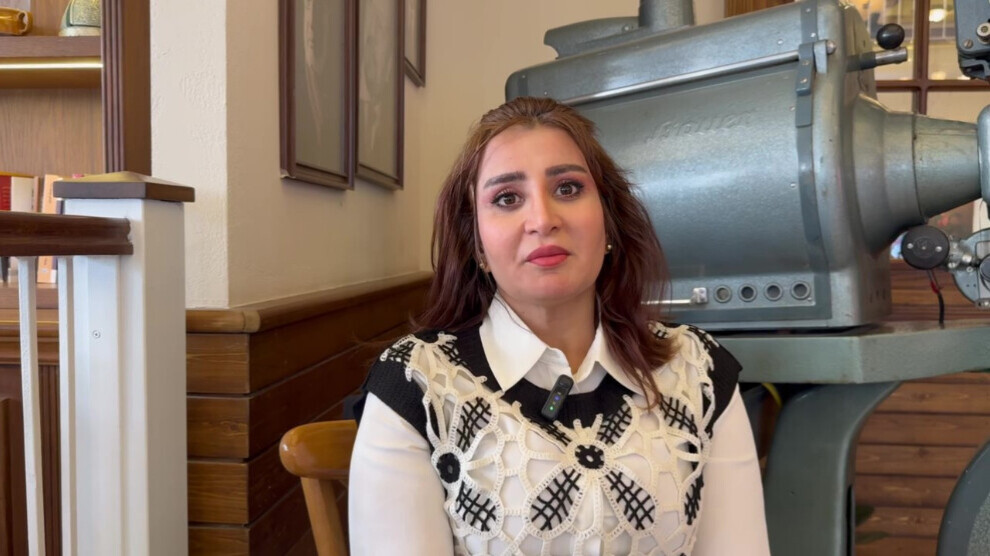
Iraq-Iraqi presidential candidate Amira Jaber aims, through her electoral program, to break the system of political quotas and strengthen women’s role in political life, within a reform agenda that includes reviewing legislation.
The Iraqi Council of Representatives announced the closure of nominations for the position of President of the Republic after receiving 81 applications, including four from women, according to an official statement issued on Monday, January 5.
This large number of candidates comes amid political fragmentation and complexities that usually hinder consensus on top positions, in addition to disputes among political blocs that delay adherence to constitutional deadlines. The new parliament held its first session on December 29, and is required to elect the president within 30 days by a two-thirds majority. The elected president then tasks the nominee of the “largest bloc” with forming the government within 15 days.
Calls to End the Quota System
Among the candidates, political activist Amira Jaber officially submitted her candidacy documents, a move that sparked wide interaction on social media. She emphasized that her decision is grounded in a constitutional right and represents a personal choice stemming from her concern for national affairs.
She stated that one of her main motivations is to break the principle of sectarian quotas in distributing sovereign positions, pointing out that there is no constitutional text mandating such power-sharing among components. She stressed the need to rely on standards of competence and job performance instead of prevailing political customs.
Continuation of Her Political Path and Electoral Program
Amira Jaber explained that her candidacy is an extension of her electoral program for the years 2020–2021, which focused on empowering women to reach the three presidencies. She affirmed that she put herself forward through an independent personal decision, without affiliation to any political or organizational entity.
If she wins the position, Amira Jaber said she will work to end political stereotyping in the distribution of positions among components, and to review laws that have not been ratified since 2017, including the Political Parties Law. She also pledged to follow up on the Personal Status Law and reconsider its controversial articles.
She expressed regret over the weak public awareness of the powers of the President of the Republic, explaining that the position has been “politically neutralized.” Laws, she noted, become effective after 15 days even without presidential ratification, which weakens the president’s constitutional role. She called for restructuring presidential powers and amending articles related to the executive authority.
Abolishing the Women’s Quota
Amira Jaber criticized the reality of women’s political participation in Iraq, asserting that women’s presence within political parties is often symbolic and exploited for electoral purposes. She announced that she would seek to abolish the women’s quota system, arguing that it does not reflect the true scale of Iraqi women’s struggle.
She also highlighted the suffering of women within party systems due to their exclusion from decision-making, stressing the necessity of women’s presence from the outset and their ability to assert their personalities to ensure an effective role.
She called for reconsidering controversial laws, including the Personal Status Law, the so-called “disciplining the wife” law, and the law allowing a rapist to marry his victim, through specialized judicial committees that study the impacts of these laws and propose fair solutions.
In her message to women, she emphasized the importance of relying on intellect and experience rather than outward appearances, citing historical female leadership models from ancient Iraqi history such as Shubad, Semiramis, and the queens of Sumer, Assyria, and Akkad.
In conclusion, Amira Jaber stressed the necessity for women to preserve their individuality within any political system and not be merely a means for others’ success. She urged women to seek alternative political environments if they face marginalization or exclusion.