
Political Violence and the Reshaping of Society in Gaza
Women are among the most affected during war yet excluding them from negotiations deepens their suffering. In Gaza, women bear the heaviest cost of genocide, while men dominate discussions and lead current calls for solutions.
Rafif Asleem
Gaza — The political violence inflicted on women in the Gaza Strip throughout the period of the assault has contributed to reshaping society, in line with the harsh conditions it endured and the new concepts that emerged during this time—such as displacement, starvation, and negotiations from which women were entirely excluded. As a result, a new society has emerged, one that women are not accustomed to.
Throughout the war, men monopolized negotiations and conferences; none of these bodies included even a single woman, despite international law stipulating a minimum of 30 percent female participation. This confirms the fragility of their outcomes, given the exclusion of half of society.
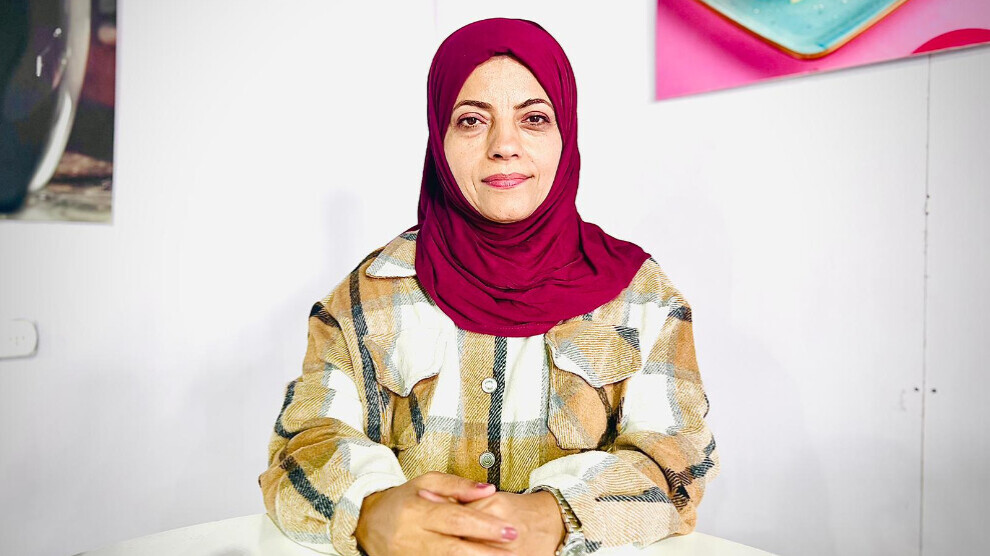
Social and psychological specialist and women’s rights activist Khitam Odeh affirmed that women are the most affected segment of society and have paid the harshest price of the genocide. The assault left them in unbearable, coercive conditions, exposing them to numerous violations—whether in health, reproductive, and professional aspects, or even in the simplest details of daily life, during which they lost all forms of well-being.
She stressed that life for Gaza’s women before October 7, 2023 is not the same as after it, especially with regard to political life. “Today, you no longer find that passion among women for forms of participation; daily survival has become the priority—how to secure water and food,” she said, noting that the Palestinian political situation has shown an unprecedented and catastrophic failure throughout the two-year-long assault, as not a single political party demonstrated responsibility in defending civilians or carrying out its required role.
She believes that Palestinian political life today, conducted outside the Gaza Strip—with all its negotiations, conferences, and similar displays—does not include even one woman. Women do not participate in shaping Gaza’s future, nor in reconstruction conferences. Instead, women are used politically only for mobilization, not for participation in critical decision-making or expressing their views.
Reshaping the Structure of Society
According to Khitam Odeh, all these circumstances have affected the structure of society. The least displaced woman in Gaza has been displaced five times, meaning that each time she has had to rebuild her life from scratch, during which she was exposed to all forms of violence—not only political, economic, physical, and psychological, but also the constant dilemma of displacement: “Each time, a woman asks herself: Do I flee with my family or separate from them? What matters most is finding a place that can shelter her, regardless of who she is with.”
She explained that when she lived with women in the camps, she encountered multiple social configurations and different cultural systems that had gathered from all areas and towns of the Strip, from the far north to the far south. Consequently, new and different social relationships emerged, with women engaging through daily life and new forms of interaction that appeared around bakeries and water collection points.
She pointed out that before October 7, 2023, there was a social structure centered on the nuclear and extended family. During the assault, however, only the nuclear family prevailed. The tent model does not allow more than one family to live together; even a single family may live in more than one tent in an attempt to gain some of the lost privacy. Social visits disappeared entirely due to the high cost of transportation and the distance between displacement areas.
Although some families demonstrated solidarity with one another during the assault and provided various forms of support, other families, according to Odeh, were forcibly cut off from one another—especially when half of a family remained in Gaza while the other half was forcibly displaced outside the Strip. This imposed a new social structure on Gazan society, which has negatively affected women’s lives and now requires repair.
Palestinian Women Are Capable of Changing Society
She emphasized that women have a major role in repairing the current situation and can bring about change starting from the family, through work, or via other alternative approaches. “If Palestinian women were given the reins of power, they would change society through support groups for marginalized women across all categories, while also highlighting and strengthening success stories and, at the same time, thinking about how to restore social solidarity.”
She explained that in the Gaza Strip, there is a need to return to emergency response plans by providing shelter kits and psychological first aid, creating safe spaces within camps exclusively for women, and committing to psychological awareness amid the growing numbers of injured people and persons with disabilities. “It is essential to pay greater attention to education, as it is the key to progress in many fields, especially at the community level.”
In concluding her remarks, Khitam Odeh stressed the importance of caring for the generation born during the assault, networking with international institutions, and learning how to prepare reports and document testimonies of women victims who were wronged and whose rights were violated during the assault. “It is also important to strengthen women’s resilience by focusing on economic empowerment, providing job opportunities, or compensating them for some of their losses in this area, in order to eliminate political violence and rebuild a better society.