
Women of Makhmour Camp Call for an End to Displacement Policies and a Dignified Return
More than three decades after being forcibly displaced from their villages in North Kurdistan, residents of Makhmour Refugee Camp — particularly women — continue to build a unique model of community organization and resistance.
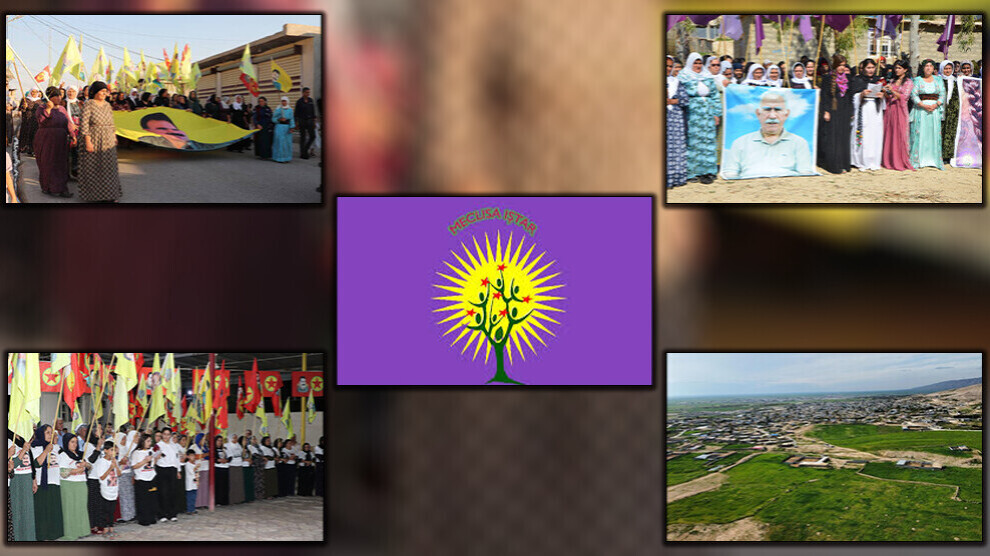
Makhmour — Residents of Makhmour Refugee Camp, who were displaced due to Turkish state policies and the burning of villages in the 1990s, eventually settled in the camp after years of moving between different refugee sites. Through persistent work and collective effort, they transformed a barren desert into a livable space, opening what they describe as a bright chapter in their long-standing struggle.
Women in the camp have emerged as a central force in protecting the community and preserving its identity. As calls grow to end the policies that led to the displacement of thousands of Kurds, residents — particularly women — affirm that their 32-year struggle will only be crowned by a dignified return.
Regarding the return of refugees from Makhmour Camp, Layla Arzu, a member of the Ishtar Council Coordination, stated that camp residents became refugees as a result of repression and the policies of the Republic of Turkey. She explained that before becoming refugees, many had already established ties with the movement of Abdullah Öcalan in the regions of Botan and Hakkari.
She noted that with the Turkish state’s policies of repression and what she described as genocidal practices against North Kurdistan and the Kurdish people, thousands from the Botan region migrated to the Kurdistan Region. According to her, these policies aimed to eliminate the freedom struggle led by Abdullah Öcalan and to complete what she characterized as genocidal measures against the Kurdish people. As a result, thousands of Kurdish villages were burned and destroyed, and many Kurds were killed or forcibly disappeared. Camp residents, she said, chose the path of struggle to free themselves from these policies of repression and subjugation.
“A Women’s Self-Administration System Was Established”
Layla Arzu believes that Turkish authorities attempted to use displacement as a tool to suppress and destroy the community’s culture and language. However, refugees redirected the camp toward organized struggle.
She explained that since the camp’s establishment, residents have built a self-administration system based on collective and social life. Within this system, women hold a highly valued and central position, and a women’s self-administration structure was established as part of the broader social framework.
“With Every Step, Women Identified Themselves with the Movement”
Despite efforts to impose a patriarchal order on the local community, she said the society did not completely detach from its collective values. As a result, women were able to integrate quickly into the system founded during the early years of displacement, now known as the Ishtar Council.
Women assumed responsibilities across all areas of life and gained rights corresponding to those responsibilities. “With every step taken by the freedom movement, women of the camp identified themselves with the movement,” she stated.
The movement also implemented women’s self-organization through a co-leadership system in which women and men organize themselves jointly. “It can be said that a women-led social system was established in the camp,” she added.
“Women of the Camp Paid a Heavy Price”
According to Layla Arzu, camp residents organize themselves based on the principles of a democratic, ecological, and women’s liberation-oriented society. Despite repeated attacks and harsh policies, they have sustained and escalated their struggle thanks to the achievements of a women-led community.
“Women of the camp paid a heavy price,” she said, emphasizing that current achievements are the result of those sacrifices and can only be preserved through stronger organization, greater determination, and shared understanding.
“Organization Thwarted Conspiracies and Attacks”
Layla Arzu pointed out that every policy targeting the Kurdish people and the freedom movement affected the camp. “Every attack on Öcalan’s model had repercussions on the camp, but residents thwarted these conspiracies and attacks through their organization,” she said, adding that Öcalan has taken what she described as an important step for the Kurdish people and humanity as a whole.
She linked this step to the “Peace and Democratic Society” declaration announced on February 27 last year, stating that she believes Öcalan is once again attempting to prevent broader violence in Kurdistan and the Middle East through peaceful and democratic means.
“A 32-Year Struggle Will Be Crowned with Freedom”
She noted that the camp’s situation is being discussed within the framework of advancing the peace and democratic society initiative. For 32 years, residents have repeatedly expressed their vision for what the future should look like if their refugee status ends.
Layla Arzu concluded by affirming that the 32-year struggle will ultimately be crowned with freedom, alongside recognition of Kurdish language and culture. Camp residents are determined to return, she said, and if that occurs, it will be based on the model developed by Abdullah Öcalan.
“The determination of the camp’s residents — especially its women — is rooted in achieving a dignified return. First, the policies that led to the worsening refugee situation must end, and Kurdish language, culture, and identity must be recognized.”