
In Iran, Violence Transcends Repression and Becomes Part of Power Equations
In Iran, violence is now a political tool, reducing human life to a power-balance element, not just a cost of conflict..
Parsheng Doulatyari
News Center – Iran is experiencing one of the most tense periods in its modern history, as war and security crises have led to escalating militancy within the country and the tightening of the public sphere. Regional confrontations have contributed to entrenching the security approach and intensifying pressure on critical voices, making the boundaries between protecting national security and restricting civil rights more ambiguous and controversial.
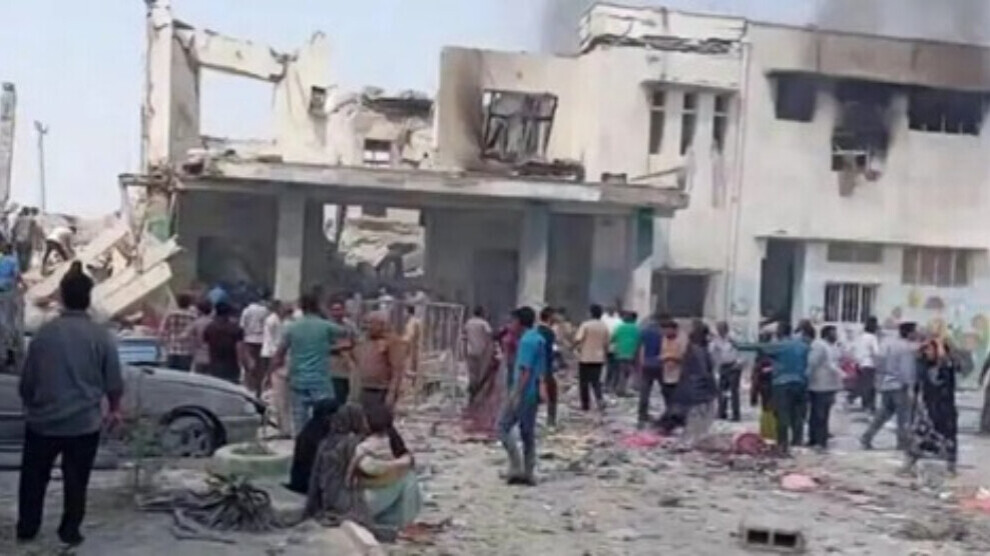
Local accounts and testimonies attributed to eyewitnesses have reported a new tension added to the scene. These sources indicate that Shajarat-e Tayyibah Elementary School for Girls in Minab was attacked in a recent incident, with the number of victims reportedly reaching 165 schoolgirls according to circulating claims. Some accounts also include allegations pointing to potential internal motives and linking the attack to government entities – extremely serious allegations that cannot be confirmed without an independent, reliable, and transparent investigation to determine the circumstances and responsibilities for the incident.
Regardless of the truth or falsity of these claims, the creation and dissemination of such narratives reflects the depth of social divisions and the high level of public distrust. In wartime and within a highly security-sensitive environment, information flow is limited, and the absence of official information may lead to conflicting narratives spreading in public opinion. Therefore, the need for transparent investigations, accountability of responsible institutions, and ensuring the protection of civilians, especially children, becomes increasingly important.
The events that occurred during the bloody protests that claimed child victims cannot be analyzed in isolation from this critical context. When a government finds itself in a state of war or on the brink of war, security priorities override human rights considerations, and the risk of normalizing violence increases. In such an environment, social protest is not viewed as part of civic life but as a threat to political stability. As a result of this perspective, the use of force spreads widely and the scope of repression expands – repression that has unprecedentedly included children as well.
The following report attempts to show how, in the midst of war and crises, children's lives have become silent victims of power equations – a situation that is not only a human tragedy but also a warning sign of the erosion of legal and ethical standards in wartime.
Protests and the Killing of Children
Protests in Iran began on December 28, 2025, and continued for several weeks, met with a violent response from security forces that peaked on January 8 and 9, 2026. Independent human rights reports indicate that the government used live ammunition, firearms, and riot control weapons to suppress demonstrators – an approach that led to the killing of unarmed civilians, including children under eighteen. This event is unprecedented or rare in Iran's contemporary history and has drawn the attention of the international community .
According to independent statistical reports, at least 21 children under eighteen were killed by direct fire from security forces during the January 2026 protests . Studies indicate that victims were targeted by government forces in various cities such as Marvdasht, Imamshahr, Qir, Karzin, Kermanshah, Isfahan, and Karaj. Among these children, a three-year-old was killed, indicating the intensity and disproportionate use of violence .
The report pointed to additional details related to human rights violations, explaining that human rights sources documented the names of several children who died during clashes with security forces in the cities of Chenar Shahijan, Qom, Fardis, and Tehran . These sources indicate that among the victims were minors aged sixteen and seventeen, said to have been directly targeted by gunfire during the events.
Furthermore, data published by independent media based on human rights statistics show that at least 118 children under eighteen were killed in the protests by the end of January 2026 . This figure is based on independent and verifiable data collected by human rights activist networks. This data suggests that violence against children was systematic during the protests, not merely random incidents.
International Law and Violations
In international law, the right to life and personal security are among the most fundamental principles, especially for children, who are protected by international instruments including the Convention on the Rights of the Child worldwide . This convention, which numerous legal systems including Iran have committed to or adopted similar principles in their domestic instruments, stipulates the necessity of protecting children from violence, exploitation, and harm. No security force has the right to use unnecessary or lethal force against innocent people, especially children .
The killing of hundreds of children during the Iranian protests clearly contradicts these global standards, as government forces opened fire not only on armed crowds but also on largely peaceful crowds, including children – an act also condemned by Amnesty International .
The use of firearms and rifles against unarmed populations, particularly children who were in the streets or victims of a wave of arbitrary arrests, is a flagrant violation of human rights and can legally be considered a crime against humanity . International law permits the use of force under very limited circumstances and according to specific standards; however, the use of live ammunition and direct firing on unarmed populations, including children, completely exceeds acceptable limits. These acts not only violate international standards but also contravene human rights rules and states' obligations to protect children .
The Political Structure and Systematic Violence
Violence against children during the protests cannot be viewed in isolation from the prevailing political structure in Iran. Reports indicate that in facing nationwide protests, the government resorted to brutal repression and the militarization of public spaces instead of adopting a strategy of dialogue and crisis management . In many cities, security forces, including the Revolutionary Guard and police forces, responded with live ammunition and heavy equipment, demonstrating that the utmost priority is maintaining power through force rather than responding to people's demands or protecting citizens' lives .
Documented field evidence shows that the Iranian authorities' handling of the January 2026 protests was not merely "clashes" or "security measures," but a coordinated crackdown in which security forces and the Revolutionary Guard used live ammunition, gases, and water cannons to suppress demonstrators in several cities . This pattern of violence reflects the regime's determination to protect its authority through violence, even if the price is the killing of civilians, including children.
The targeting of children specifically reveals the collapse of the civil protection system and the weakness of societal institutions, as many found themselves in the midst of protests due to the absence of safe spaces and the lack of legal channels for expression. When families are forced to choose between silence or participation, they often choose protest despite the risks, exposing children to highly dangerous environments.
This violence leaves deep psychological and social effects extending beyond the victims' families, becoming a collective trauma that exacerbates distrust in the state and increases societal disintegration. Studies indicate that witnessing or experiencing violence at an early age can lead to long-term disorders such as anxiety, depression, and behavioral problems.
From a political justice perspective, the killing of children undermines the legitimacy of any system, because a state that fails to protect the most vulnerable groups loses its moral foundation. Moreover, these violations are not merely an internal affair but necessitate clear international action, as targeting children constitutes a crime against humanity according to international standards.
Media Responsibility and the Need for Action
The role of some opposition media that encouraged the continuation of protests without adequately assessing the risks cannot be ignored, as this may have contributed to increasing the number of victims . Ethical responsibility also includes evaluating the impact of media and political discourse on civilian safety.
Teacher organizations across Iran have expressed outrage over the killings, releasing names of schoolchildren despite intense pressure from authorities . The Coordinating Council of Iranian Teachers' Trade Associations stated: "These 200 children, each a student with dreams, rights, and a future, were taken by bullets, deprivation, and systematic violence. Their deaths are not isolated tragedies; they are the result of a deliberate policy that has rendered childhood, education, and life itself expendable" .
The killing of children in the Iranian protests is not merely a number in a report but an indicator of the collapse of human rights protection before the logic of political repression. If civil society and international organizations do not move seriously, the recurrence of such tragedies will remain a possibility, because silence in the face of crimes committed against children implies tacit acceptance of violence as a political tool