
Joint Presidency... An Administrative Model Ensuring Effective Participation of Women in Decision-Making Positions
Since 2014, the joint presidency system has integrated women into decision-making, improving service quality, institutional work, and resource distribution justice for community needs.
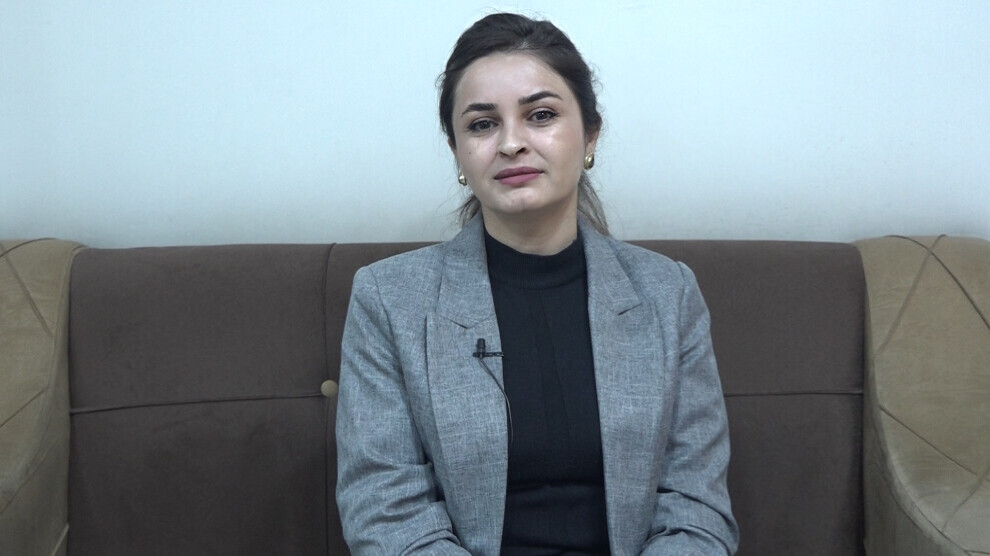
Asma Mohammed
Qamishlo— The joint presidency system, implemented since 2014, was not limited to the formal representation of women in municipalities but rather placed them at the heart of the decision-making process. It has directly contributed to improving the quality of projects, enhancing transparency, expanding the base of community participation, and ensuring a balanced distribution of resources and services to achieve justice among all segments of society, establishing women as key partners in local administration and planning.
In the context of the political and social transformations that the regions of North and East Syria have witnessed since 2014, the joint presidency system emerged as one of the most prominent features of reshaping the structure of local governance, particularly in the municipal sector, which is directly linked to the daily lives of citizens. The adoption of this system was not merely an administrative adjustment in the mechanism of distributing positions, but a structural step that redefined the concept of leadership within public institutions and introduced the principle of equal partnership between women and men into the core of the decision-making process.
From the city of Qamishlo, where the first municipality was established according to this model, the contours of a different experiment began to take shape on the ground—an experiment based on shared responsibility, enhancing transparency, and expanding the base of community participation. Over time, it evolved from an organizational idea into a deeply rooted institutional practice, reflecting a profound transformation in both administrative and social culture alike.
Establishing a New Administrative Model that Consolidates Women's Participation in Decision-Making
Berivan Omar, co-chair of the People's Municipalities in Qamishlo canton, stated that the joint presidency system, which began to be implemented in the institutions of the Autonomous Administration in 2014, constituted a deep structural shift in the nature of administrative work and decision-making mechanisms, particularly in the municipal sector, which represents the direct interface between the administration and citizens.
She explained that in its early stages, society was not accustomed to a leadership model based on equal partnership between a woman and a man, after decades of entrenching the concept of individual authority linked to a single person monopolizing decision-making and responsibility. She pointed out that this transformation was not merely technical but touched the cultural and social structure that defines the image of leadership and its role in the public sphere.
Omar noted that the Qamishlo Municipality was the first municipal institution to officially adopt the joint presidency system, and that the founding phase was accompanied by extensive debate regarding the effectiveness of this model and its capacity to manage complex service and organizational files. She affirmed that the success of the experiment was not achieved through administrative decisions alone, but through tangible results that emerged in the development of service projects, the organization of internal work mechanisms, and improved responsiveness to citizen complaints. Whenever administrative performance is clearly reflected in daily reality, the system becomes entrenched as a practical choice, not merely a new regulatory framework.
Omar added that the period between 2014 and 2015 constituted a pivotal phase in establishing the rules of joint work, during which powers were precisely defined, and the relationship between the joint presidency and other municipal bodies and departments was organized. This organization helped transform the idea from an emerging experiment into a stable institutional practice based on the distribution of responsibilities and the integration of visions. It enabled women to genuinely enter decision-making circles, participate in preparing strategic plans, determine project priorities, and follow up on implementation and evaluation.
She emphasized that women's participation in administration brought about a tangible shift in the nature of the relationship between the institution and society. Communication mechanisms became more open and transparent, and the presence of the least represented groups became more visible in the planning process. She noted that women in decision-making positions were able to include previously neglected social issues on the municipal agenda, expanding the concept of public service to encompass integrated developmental and social dimensions, going beyond the traditional view that confines municipal work solely to the technical aspect.
Omar explained that the impact of joint leadership was not only reflected in the content of projects but also included strengthening integrity standards and internal oversight. The participatory work mechanism limited unilateral decision-making and entrenched a culture of mutual accountability within the institution. She pointed out that this balance of powers helped reduce administrative errors, increase the accuracy of decision-making, and enhance citizens' trust in the local administration as a responsible and accountable entity.
The difference between individual administration and administration based on a joint presidency is evident in the nature of the adopted developmental vision. When two different perspectives are integrated, projects become more comprehensive and balanced, and resources are distributed according to criteria that consider the needs of all groups, including women, children, the elderly, and people with special needs.
From Skepticism to Trust... The Rise of Women as a Leading Force in Municipalities
Berivan Omar explained that the practical experience has proven women's ability to manage service and organizational files with high efficiency and to deal with daily challenges with initiative and responsibility. She noted that women initially faced social pressures and skepticism about their leadership abilities, but practical performance and tangible results were sufficient to reshape the stereotypical image associated with women's role in the public sphere and to consolidate their presence as an effective element in managing local affairs.
She affirmed that the joint presidency experience contributed to creating a new societal awareness among women about their rights and leadership potential, and produced a generation more confident in its ability to participate in decision-making. She considered that this transformation is not limited to the framework of Qamishlo's municipalities but constitutes a model that could be utilized in rebuilding local administration throughout Syria by adopting more participatory and equitable approaches.
Berivan Omar stressed that the joint presidency in Qamishlo's municipalities represents a practical model of inclusive and sustainable leadership that reflects the diversity of society and responds to its multiple needs. She affirmed that integrating women into decision-making positions is no longer a matter of symbolic representation but has become an administrative necessity to ensure the quality of services, enhance justice in the distribution of resources, and build institutions based on partnership and accountability, thereby laying the foundation for a more balanced and stable administrative future.