
General Strike Paralyzes Markets Amid Escalating Clashes in Iran
Protests in Iran entered their twelfth day amid rising tensions and violent clashes, with a general strike paralyzing Kermanshah, while demonstrations spread to universities and eastern Kurdistan regions.
News Center — Iran has been witnessing a wave of widespread protests for nearly two weeks, driven by a severe economic crisis, currency depreciation, and rising living costs. As the protests continue, strikes and demonstrations have expanded to include markets and universities.
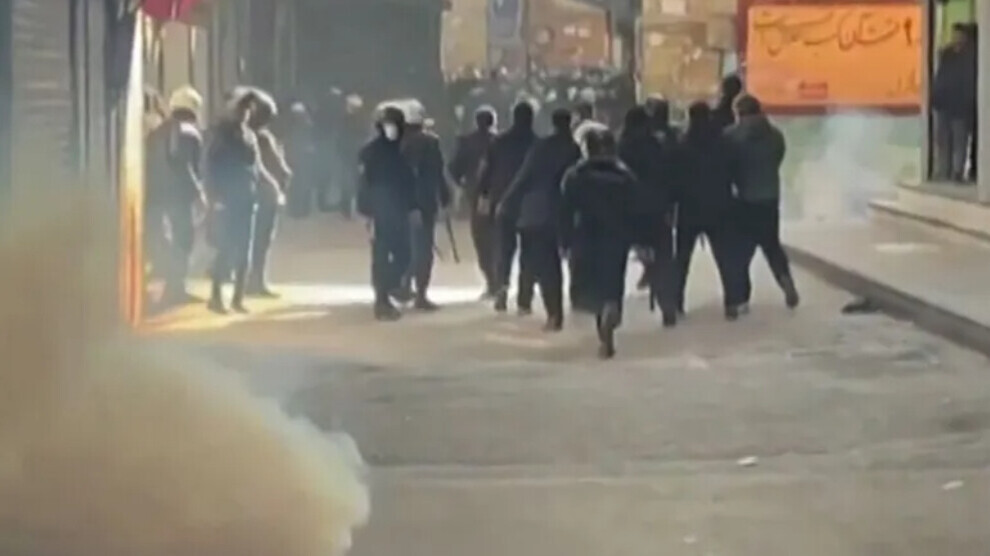
On Wednesday, January 7, the city of Kermanshah in eastern Kurdistan experienced one of the most tense days so far, as a general strike completely paralyzed commercial movement and the city’s streets turned into arenas of confrontation between protesters and security forces.
According to local reports, merchants closed markets from the early morning hours, with the strike affecting the Ojak, Garaj, Kashani, Elahiyeh, Nobahar, Maskan, and Farhangian Phase Two markets. Videos circulated on social media showed large gatherings in the streets of Kashani, Resalat, Elahiyeh, and Velayat, where protesters chanted slogans against the authorities.
Field sources reported that government forces used live ammunition and tear gas to disperse demonstrators. Meanwhile, protesters reportedly destroyed a statue of Qassem Soleimani in the city of Jenar Shahijan in Fars province.
Alongside the clashes, citizens resorted to symbolic forms of protest, including honking car horns in the streets. Several state-affiliated stores, including branches of “Ofogh Kourosh,” were closed over fears of damage as the strike expanded.
Eyewitnesses stated that groups of young men blocked roads and set fires to hinder the advance of security forces, while others attempted to disseminate photos and videos of the protests ahead of any potential internet shutdown.
Despite heavy security pressure, gatherings continued in the city, and the protests adopted new forms of civil resistance, keeping tensions high in Kermanshah.
Student Protests
In a related development, the University of Sistan and Baluchestan witnessed a protest gathering on Wednesday evening in front of the central library, where students chanted slogans condemning deteriorating living conditions and rising costs of life. Video footage showed heavy security deployment around the university campus, while units of the Revolutionary Guard in the city of Chabahar were placed on alert in anticipation of similar movements.
Meanwhile, five female political prisoners — Vareisheh Moradi, Zeinab Jalalian, Sakineh Parvaneh, Meteb Ahmadian, and Parisa Kamali — announced the start of a hunger strike as of Thursday, January 8, in solidarity with the general strike in eastern Kurdistan and in protest against the current conditions.
The duration of the hunger strike and the response of prison administrations remain unclear. Local reports indicate an expansion of the general strike across cities in eastern Kurdistan, with the closure of many markets and commercial centers.
According to local media, protests have spread to 111 cities and towns across 31 provinces, where direct confrontations between protesters and security forces have taken place. Security forces reportedly used tear gas and live ammunition, while some demonstrators responded by throwing stones.
As the protests continue to expand, the death toll has risen to more than 36 people, including children, while the number of detainees has exceeded 2,000 since the start of the movement. This comes amid presidential orders to intensify security measures, as the judiciary blamed foreign parties for inciting what it described as “riots.”