
Protecting Women’s Rights Begins with Awareness and Cannot Be Achieved Without Genuine Political Will
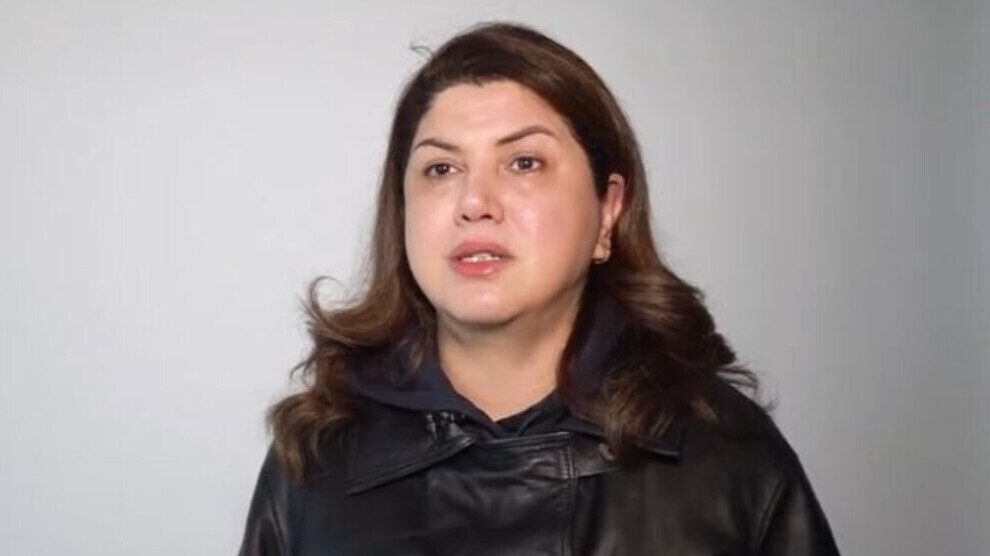
Basma Mohammed, Director of the Women’s Leadership Academy in Iraq, said justice and equality remain distant, as violations, weak women’s political participation, and law enforcement gaps make the struggle urgent.
Hivi Salah
Sulaymaniyah — Despite the existence of laws, the absence of their effective implementation, along with economic challenges, makes the path toward protecting women’s rights full of obstacles.
Over recent years, human rights and the protection of women’s rights have taken center stage locally and internationally, particularly in countries still facing legal and social challenges. This reality necessitates taking more serious and effective steps to implement laws, as women continue to face multiple forms of violence and obstacles in their daily lives.
In this context, Basma Mohammed explained that human rights constitute an essential pillar that every individual needs to live in peace and dignity within their society. Because these rights represent a fundamental foundation, local and international organizations exert significant efforts to safeguard human dignity and secure basic rights. “Nevertheless, we still witness— not only in the Kurdistan Region but across the Middle East—daily and diverse violations of human rights. Among the most prominent are the killing of women and the denial of their rights, in addition to the weak presence of women in political life, as women in positions of power do not have an effective role in exercising their rights within state institutions.”
She believes that women have not yet been able to fully secure the rights they are fighting for, despite the fact that an important part of the work has already been accomplished. What has been achieved is not insignificant; however, the road remains long, and much still needs to be done for women to obtain their rights fully and fairly.
“The Struggle to Claim Rights Is an Inevitable Necessity”
She pointed out that despite the presence of a number of good laws, they are not effectively enforced, which constitutes one of the most prominent problems. It is important, she said, for women to know which laws are absent or not applied so they can direct their efforts toward them. This undoubtedly requires continuous struggle until those laws are activated and implemented in practice.
She added, “This goal cannot be achieved through women’s awareness alone; it also requires serious coordination between authorities, parliament, and organizations to ensure the protection and enforcement of rights. While women must strive to claim their rights, this effort will not be complete without genuine political will working diligently in favor of women’s issues. Women’s rights must be a core priority, and organizations must work effectively to ensure these rights are realized on the ground.”
“Society Still Lacks Trust in the Work of Organizations”
Basma Mohammed explained that a recurring question is often asked: “What have organizations achieved in the field of protecting women’s rights?” She noted that the answer is not simple, as it has two dimensions. On one hand, organizations face numerous obstacles, most notably financial challenges that have intensified in recent years, whether in Kurdistan, Iraq, or globally, as economic crises have directly affected organizations’ ability to carry out their activities effectively.
She added that one of the main challenges is the lack of societal trust in the work of organizations; acceptance levels do not reach what is required. These are ongoing difficulties that organizations continuously face. Nevertheless, Basma Mohammed affirmed that, as a small part of this sector, they have made genuine efforts in the field of women’s rights, yet what has been achieved still falls short of aspirations, and the journey toward desired results remains long.
“Real Change Begins with Thought”
She emphasized that no real change can be achieved without first changing ways of thinking, as the mind is the starting point for all transformation. What happened to women in Basra and some other areas on New Year’s Eve is a clear example of the prevailing level of awareness in society. “Instead of condemning the perpetrator, we saw some media outlets blaming women simply for going out that night, which is unfortunate and reflects the persistence of a culture of victim-blaming rather than holding perpetrators accountable.”
She noted that intellectual work is the most difficult, as it is essentially a long educational process that begins within the family and extends to schools. Therefore, it is essential that those working in this field are qualified and aware of the nature of this work. “Unfortunately, important topics such as human rights are still not taught properly or by specialists, which limits students’ ability to understand and absorb them.”
She believes that it is not possible to definitively judge the success or failure of teaching rights education in schools without accurate data, but general observation shows that this subject remains marginalized and does not receive sufficient attention. “While subjects such as science and mathematics are given high priority, human rights should receive the same level of importance, as they are no less significant. From this perspective, teaching human rights in schools remains below the required level.”
Journalists Lack Basic Knowledge of Human Rights
Basma Mohammed noted that her organization initially focused solely on women’s issues, but as its work expanded into the broader field of human rights, there was no longer a separation between men and women. Ultimately, everyone is human, living, interacting, and working together, and both fathers and mothers share responsibility for raising children. Therefore, she stressed the importance of moving beyond gender-divisive perspectives.
She pointed out that some daily situations reveal a mindset that needs correction. Even in traffic accidents, people often say, “The driver is a woman,” as if men do not make mistakes or have accidents—a discourse that clearly reflects bias.
She emphasized the pivotal role of the media, stressing that media professionals need specialized training in human rights and the rights of women and children. Media mistakes seen daily can be dangerous and may sometimes cause social and family problems, as some journalists lack sufficient awareness of these issues. Therefore, it is essential for journalists to use precise, professional language and to understand how to convey news in a manner appropriate to the nature and context of the event.