
Day 17 of Protests: Massacres and Internet Shutdown
Iran has witnessed widespread popular protests for 17 days, met by military and propaganda-driven repression, amid a near-total internet blackout and documented massacres in several regions, as the regime portrays protesters as “foreign-backed terrorists.
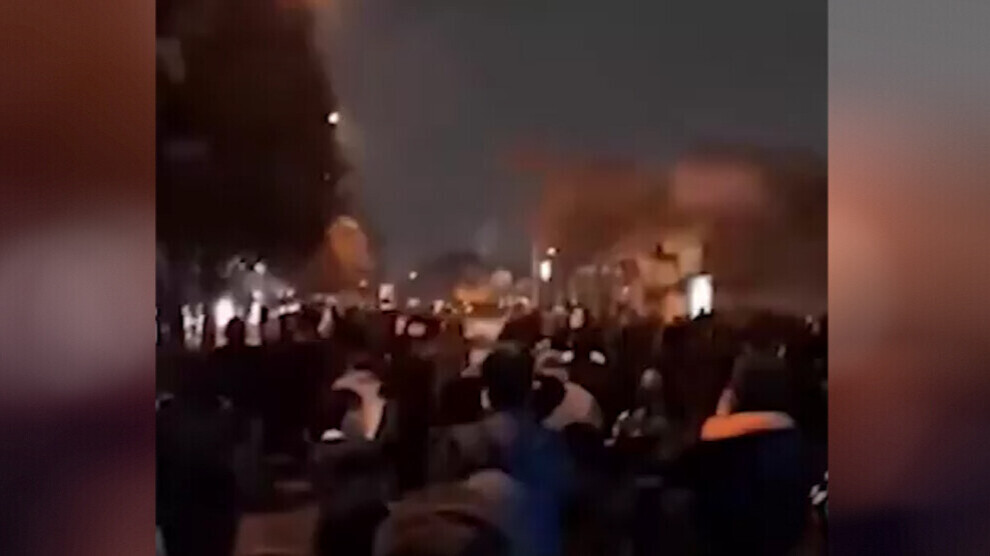
News Center – Human rights reports have revealed extrajudicial killings and widespread arrests as protests continue in Iran. Internationally, US statements have sparked controversy, which the regime has exploited to justify the violence. Meanwhile, the European Parliament has taken the unprecedented step of banning Iranian diplomats from entering its territory, adding a new political dimension to an already tense domestic situation.
On the 17th day of the popular uprising in Iran, the ruling regime continues to use its military and propaganda apparatus to portray protesters demanding their most basic human rights as "terrorists." While all Iranian cities are militarized and official media outlets promote a narrative of "returning calm" and "spontaneous marches," field reports, particularly from eastern Kurdistan, reveal organized massacres taking place amidst a heavy security presence and a near-total internet blackout.
The “Creating Enmity” Strategy to Justify Crime
One of the most tragic aspects of recent days is that internal repression in Iran intersects with international political maneuvering. Statements by the US government, including those of Donald Trump and his claims about “military and cyber support,” have provided the Iranian regime with a pretext to intensify its repressive machinery. The regime exploits this external rhetoric to distort the legitimate economic and political demands of the people, labeling them as “foreign-backed conspiracies,” in an attempt to justify the massacres it commits against civilians.
The Iranian regime continues to promote narratives about “discovering weapons shipments” and “arresting protest groups and leaders,” while its senior security officials announce the opening of communication channels with Washington. These claims become fuel for the official propaganda machine, which seeks to link peaceful protests in Kermanshah or the killing of a Kurdish worker in Tehran to what it describes as a “foreign conspiracy led by Mossad and the CIA,” in an attempt to discredit the popular movement and portray it as a security issue.
In Iran, every tweet from the White House is read as a license to shoot young people in the chest. The killing of five Kurdish citizens in Tehran, including a 17-year-old boy who was buried in his hometown of Afdanan under the slogan "Death to the dictator," according to the Kurdistan Human Rights Network, is just one example among many of this tragic reality.
The Kahrizak Massacre: A Symbol of Systematic Genocide
The most shocking aspect of these 17 days has been the release of videos from the Kahrizak morgue in Tehran and makeshift morgues and forensic centers in other cities. These images show piles of bodies of hundreds of protesters, with some videos suggesting the number could reach 400, confirming an extrajudicial mass killing.
Leaked reports from medical personnel indicate that many victims were not killed in battles, but rather by live ammunition or torture in makeshift detention centers. Similarly, the regime's hasty insistence on delivering bodies for free to the Kahrizak morgue and others is a clear attempt to quickly and quietly conceal evidence that could be used against regime leaders in international courts.
Digital Resistance: An Ineffective Weapon
For the seventh consecutive day, the Iranian regime has completely shut down the internet, resulting in a near-total communications blackout. This measure not only disrupts the coordination of protesters but also aims to impose strict censorship to prevent the world from learning the true extent of the crimes.
The families who were searching for their loved ones in the morgue corridors until yesterday, and who today chant anti-regime slogans during funerals and mourning ceremonies, have nothing left to lose. This is the point at which the machinery of repression, no matter how powerful its Russian weapons and Turkish counterinsurgency equipment, is powerless.
The regime thought that by cutting off the internet and creating an atmosphere of fear, it could imprison grieving families during funerals. However, the gathering in Behesht-e Zahra and the slogans against Khamenei and the rule of the Supreme Leader demonstrated that the grief of the bereaved had transformed into revolutionary anger. By cutting off the internet, the regime not only imprisoned human communication but also deprived millions of people of their livelihoods. Technical reports indicate that the regime blocked access to the global network, even at the cost of crippling its banking and administrative systems, to prevent the dissemination of images of the crimes committed in Tehran and the massacre in East Kurdistan.
Arbitrary Arrests and Intimidation
According to confirmed reports, more than 3,000 people have been arrested in various cities. The regime is attempting to quell the uprising by broadcasting forced confessions, threatening artists and athletes, and even threatening to confiscate factories whose managers have supported the people. The head of the judiciary, using language of "bloodthirstiness" and "mercilessness," has effectively ordered the suppression of any dissenting voice under the guise of "enemy agents."
Similarly, the head of the judiciary believes that by threatening an "unforgivable confrontation," he can extinguish the flames of the uprising, now in its seventeenth day, through repression, killings, and arrests. However, the nightly protests in most cities, the gatherings of families outside morgues, and the anti-Khamenei slogans at funerals demonstrate that fear has altered the course of the protests.
The main problem here is that by declaring a "national mourning period" for its security forces, the regime has effectively declared war on more than half the Iranian people. Government data that fails to name the hundreds of citizens killed reveals the stark contrast between "occupied sovereignty" and "occupied nationalities."
The Regime's Desperation Under the Guise of Power
While the regime's president and foreign minister speak of "armed terrorists" among foreign ambassadors, the reality on the streets of East Kurdistan, Sistan and Baluchestan, Rasht, Karaj, and Tehran is quite different. While the regime's propaganda machine portrays Revolution Square in Tehran and other cities as scenes of "loyalty to the regime," internal reports indicate the terror gripping the ruling elite. Abbas Araqchi speaks of "fair negotiations" and "open channels with Washington," while simultaneously labeling protesters at home as "ISIS."
These double standards reflect the strategic dilemma facing the regime. On the one hand, it seeks a deal with the "Great Satan" for its survival, while on the other, it kills young people for demanding freedom under the same American label.
Militarization of Cities, From East Kurdistan to Tehran
Reports from East Kurdistan, particularly from Ilam, Kermanshah, Saqqez, and other areas, indicate a full-scale military occupation. The presence of special units from the Revolutionary Guard and the deployment of heavy weapons in the main city squares are not aimed at confronting a foreign enemy, but rather at suppressing citizens demanding their identity and dignity. The murder of the 17-year-old Kurdish teenager demonstrates that the regime’s machinery of repression recognizes no red lines, not even when it comes to children.
On the evening of January 9th, at the height of the internet blackout, a video circulated from Tehran showing protesters performing a Kurdish dance around a street fire—a symbolic act of resistance and life amidst oppression. This epic dance has transformed from a cultural movement into a political statement linking the popular uprising to the traditions of the East Kurdistan movement, embodying unity and life, and rejecting the government’s official narrative.
"The Iranian Regime Is in a State of Clinical Death"
On the one hand, the Iranian regime deprives 90 million Iranians of access to information by shutting down the internet. On the other hand, when one of its propaganda channels is blocked, it cries out about "freedom of expression." This contradiction demonstrates that, for the regime, the media is merely a tool for deception and repression, not a means of seeking the truth.
International analysts, including members of the European Parliament, believe that the Iranian regime has reached a stage of "rigidity" and "clinical death" where it is no longer capable of social reconstruction. Economic collapse, global isolation, and, most importantly, the widespread bloodshed of innocent civilians have made this collapse irreversible.
Today, the Iranian regime faces a people who have sworn to restore their rights. Neither cutting off the internet, nor interfering with the Starlink service, the Revolutionary Guard’s teror in the streets can hide the crimes buried in the Kahrizak morgue and other cities. After the regime killed more than 600 people (according to conservative estimates) and perhaps thousands (according to field reports), it severed its last ties with society. Today, the Iranian regime lives in a "besieged fortress," a fortress whose walls are built of weapons and repression, but whose interior is devoid of legitimacy.