
Will the second phase of the ceasefire in Gaza achieve peace, or reproduce the crisis?
The second phase of the ceasefire aims to reassure Gaza’s residents and the international community about its continuity; however, internally, it could become a challenging and complex stage to manage.
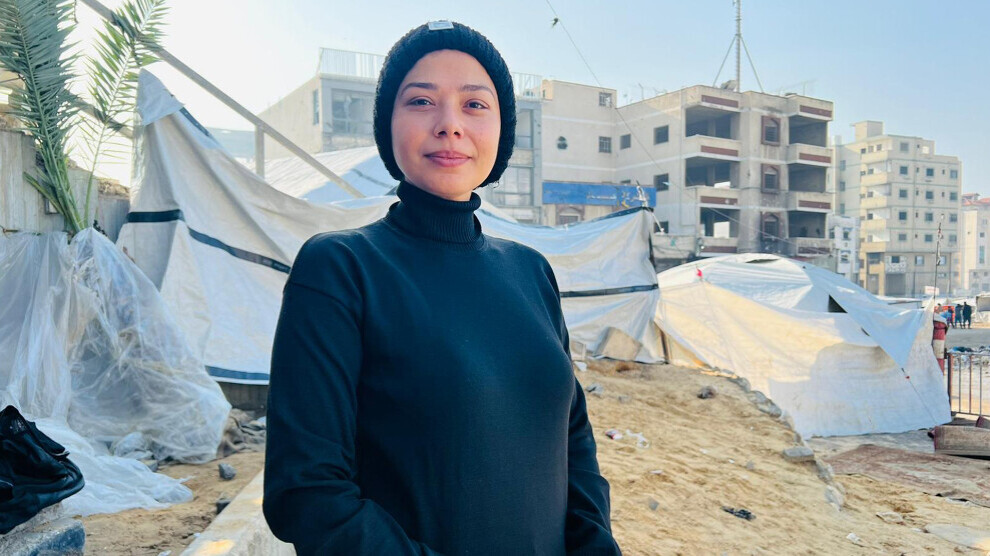
Rafif Aslim
Gaza_The U.S President recently announced preparations to begin the second phase of the ceasefire agreement in the Gaza strip on the fifteenth of this month,following the completion of arragements related to selscting names for the technocratic government and the peace Council.
As the second phase of the ceasefire approaches, several questions arise regarding the natural of this phase, the meaning of deploying international forces in the strip, and the fate of reconstruction and the future of the city.
Amid media tensions and discussions of disarmament, political affairs journalist and researcher Guevara Taha stated that what is being circulated about the second phase of the ceasefire in Gaza consists mainly of waves of tension manufactured by local and international media outlets, each according to its own agenda.
She noted that she believes this phase will revolve around illusory files that remain unclear to both local and international communities. However, Israeli media reports indicate plans to occupy approximately 20% of the Gaza Strip and not withdraw to the so-called red line.
She also believes that the fundamental condition upon which the second phase is based does not exist in reality—namely, the disarmament of Hamas, which she argues no longer exists and serves merely as a pressure card. “Israeli forces have destroyed most eastern areas of the Gaza Strip, from Rafah to Beit Hanoun. Consequently, the most important military sites belonging to Hamas have been eliminated,” she said, adding that any disarmament decision would undoubtedly be implemented under political clauses and within a specific timeframe, especially given the repeated confirmations by both the U.S. President and the Israeli Prime Minister.
Ongoing Assassinations and Humiliating Conditions for Civilians
Guevara Taha explained that the conditions imposed during the second phase constitute an insult to the Palestinian people following a bloody assault that has lasted for more than two consecutive years. “The attack has not ended to this day. There are ongoing assassinations and demolition operations in the eastern areas of remaining civilian homes. Residents have not been allowed to return since the ceasefire was announced in October 2025,” she added.
She described this phase as a maneuver aimed at passing certain political and military agendas in both the Gaza Strip and the West Bank. She further emphasized that while the second phase is intended to reassure Gaza’s residents and the international community about the continuity of the ceasefire, it will be extremely difficult and complex internally. Meanwhile, some international institutions and Palestinian factions will benefit the most, as they have historically gained from every attack or escalation on Gaza by pushing files under the banner of war and the Palestinian cause.
International Forces: A Soft Occupation
Regarding the deployment of international forces in Gaza, Taha stated that “the presence of international forces in another territory simply means that this is not an independent state.” She noted disagreements over the nationalities of such forces, which could be purely Palestinian, Palestinian-Egyptian, or involve other Arab countries. “If these forces are not purely Palestinian, we cannot describe them as anything other than a different form of colonization. The Palestinian cause itself has become colonized through Arab states and institutions that claim to support it,” she said.
She pointed out that this is not the first such experience. During the first truce in January 2025, Egyptian and American forces entered Gaza to secure the return of displaced people from the south to the north of the Strip. Therefore, she believes that the temporary deployment of such forces could be beneficial in organizing certain matters, potentially making the second phase smoother and more stable, and providing a degree of security for Gaza’s residents, as their presence would prevent targeting in and around their areas of deployment.
Hamas’ Position and the Possibility of Renewed Attacks
Taha believes that Hamas’ current position is both difficult and embarrassing. Since it took power, the Gaza Strip has not experienced a period of calm but has instead witnessed repeated military escalations, the shortest lasting 51 days and the longest extending for more than two years. “Neither Hamas nor other factions have issued a statement declaring the end of the assault; only a ceasefire has been announced,” she said.
Conversely, she considers it impossible for a renewed large-scale attack on Gaza to occur. Any future developments between the two sides, she argues, will follow mutually agreed-upon gradual steps. She explained that Israel is currently focused on attacking Iran, destroying Syria to eliminate remaining factories and financial hubs, and similarly targeting Lebanon and Hezbollah. “This offensive aims to control the Middle East through Gaza. What is happening is a religious war aimed at controlling land and reshaping the direction and compass of the entire world,” she added.
Humanitarian Aid and Medicine
Humanitarian aid, according to Taha, is directly linked to border crossings and control over them. She explained that medicine has been barred from entering the besieged city since February 2025, particularly supplies related to amputation treatment and antibiotics. This, she noted, is intended to increase the number of patients forced to seek evacuation with their families when the Rafah crossing opens, resulting in the displacement of large numbers of Palestinian families.
In conclusion, Guevara Taha stated that despite dozens of humanitarian aid trucks entering Gaza daily over the past two years, affected citizens see no benefit from them. She explained that aid distribution has become a business worth billions of dollars, leading to widespread theft. Many Palestinian traders and some political figures benefit from the current looting system. “The Gaza Strip has become the largest consumer of Israeli products, as alternatives are banned from entering the city, which is home to one and a half million people. This ultimately helps cover the costs of the Israeli army,” she concluded.