
Iraqi Activists Call for De-escalation and Prioritizing the Language of Dialogue
Women have paid the biggest price as a result of the conflicts in the Middle East, as Iraqi women affirmed that this increases suffering and limits the role of women in building peace.
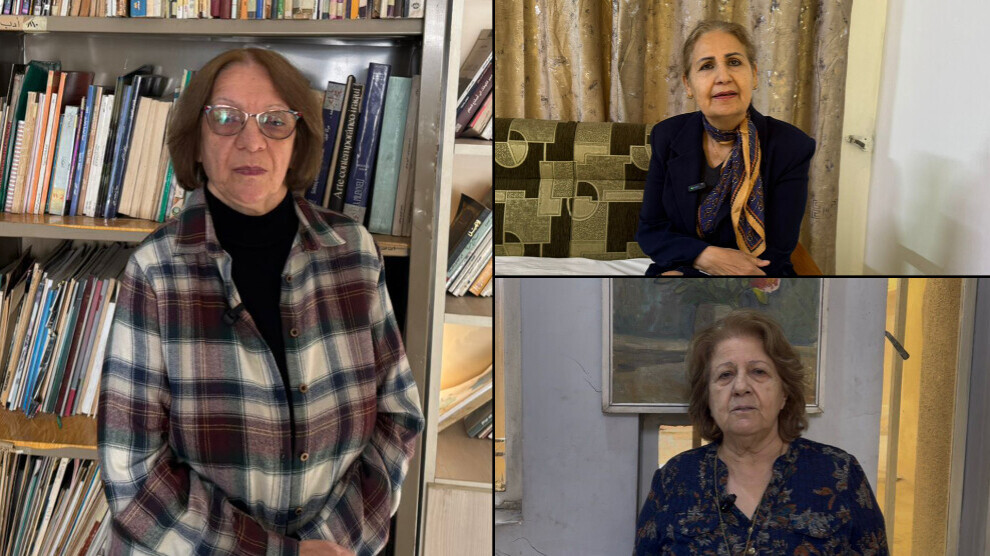
Rajaa Hamid Rashid
Iraq — Amid rising regional tensions and the ongoing cycle of conflicts in the Middle East, Iraqi women activists have stressed the importance of prioritizing the language of dialogue and adhering to international laws. They warned that the continuation of conflicts will only result in further human and economic losses, compound the suffering of women and children, and threaten the stability of Iraq and the entire region.
Women as Peacemakers and Primary Victims of Conflict
Academic and activist Dr. Jabbra Al-Taie affirmed that the region is experiencing worrying conditions, noting that periods of tension and conflict almost dominate the general scene, with their intensity varying from one phase to another. She explained that the nature of the political situations in Arab countries is characterized by contradictions according to each country's circumstances.
She pointed out that the UN Security Council Resolution 1325 on empowering women under the slogan "Women, Peace, and Security" affirms that women are peacemakers when security and stability are available to them. However, reality reflects a different picture, as women become the primary victims of wars and conflicts.
She explained that women, as the nurturers of generations, cannot fulfill their role optimally unless they are granted their rightful status, social security, and a dignified life. She noted that women's suffering is no longer confined to Palestine; the scope of conflicts has expanded since 2011 to include several countries in the region, where scenes of war and high numbers of women and child casualties are repeated.
Al-Taie touched upon the repercussions of the resurgence of ISIS in Iraq and Syria, and the tragedies it caused in displacement and refugee camps, affirming that women in Iraq and Syria have paid a heavy price, in addition to the suffering of Palestinian and Lebanese women amid ongoing conflicts with Israel.
She also noted that the region is still paying the price for historical agreements such as the Sykes-Picot Agreement and the Balfour Declaration, considering that external interventions and violations of state sovereignty further complicate the scene. "Any political change should stem from the will of the people themselves, not be imposed from outside."
She affirmed that Iraq, due to its geographical location, natural resources, and historical status as the cradle of civilizations, has remained an arena for successive conflicts and has not experienced long-term stability. Although Baghdad is known as the City of Peace, it has not truly enjoyed peace, noting that the country today lives in the middle of a volatile region, making it susceptible to the repercussions of regional conflicts, whether directly or indirectly.
She explained that "there are attempts to undermine the relative stability in Iraq, but the people who offered more than 900 martyrs in the Tishreen Revolution protests will not stand idly by," affirming that Iraqi women, who contributed to the 1920 Revolution, are capable today of defending their homeland and calling for peace in the region, including supporting the aspirations of Iranian women for security and peace.
Peoples Pay the Price
Meanwhile, Shmiran Marouki Odeisho, Secretary of the League of Iraqi Women, condemned the war waged on Iran, affirming her rejection of all wars. She called for adopting humanitarian methods and dialogue through international and regional institutions to resolve conflicts instead of resorting to weapons, pointing out that it is the people who pay the price for unjust wars, both in terms of human losses and the psychological, social, and economic impacts that extend for years.
She stated that Iraq, due to its proximity to Iran, is directly or indirectly affected by any escalation, even with the government's declared commitment to neutrality. She added that the most vulnerable groups, foremost among them women, children, and people with disabilities, are the most affected in times of conflict, as economic, health, and social burdens worsen, and indicators of security, stability, and freedom of expression decline.
Iraq's Interest Above All Considerations
For her part, activist Nidhal Touma pointed out that any attacks in the region negatively reflect on Iraq, given its economic, commercial, and political relations with neighboring countries. She affirmed that wars leave no true victor, but rather collective losses affecting current and future generations.
She stated that the current phase requires prioritizing reason and placing the interest of the people above private interests, especially in Iraq, which has been exhausted by conflicts. She called on political forces to unify efforts to protect the country and stop the bleeding, affirming that peoples are weary of wars and aspire to sustainable security and genuine peace.