
The Autonomous Administration Experience in Jazira Region: A Democratic Model of Multiple Nationalities and Cultures
In the Jazira Region of Rojava, the experience of the democratic autonomous administration manifests as a practical model that rejects centralism and opens the way for society to govern itself freely and justly.
Asma Mohammed
Qamishlo – The experience of the democratic autonomous administration in Jazira Region continues as one of the most prominent community models challenging traditional centralism and authoritarianism, presenting a new vision for organizing politics and administration on participatory and grassroots democratic foundations.
This experience, which emerged after a period of violent conflicts in the region, seeks to empower society to govern itself while preserving the dignity, freedoms, and cultural, social, and economic rights of all its constituent components.
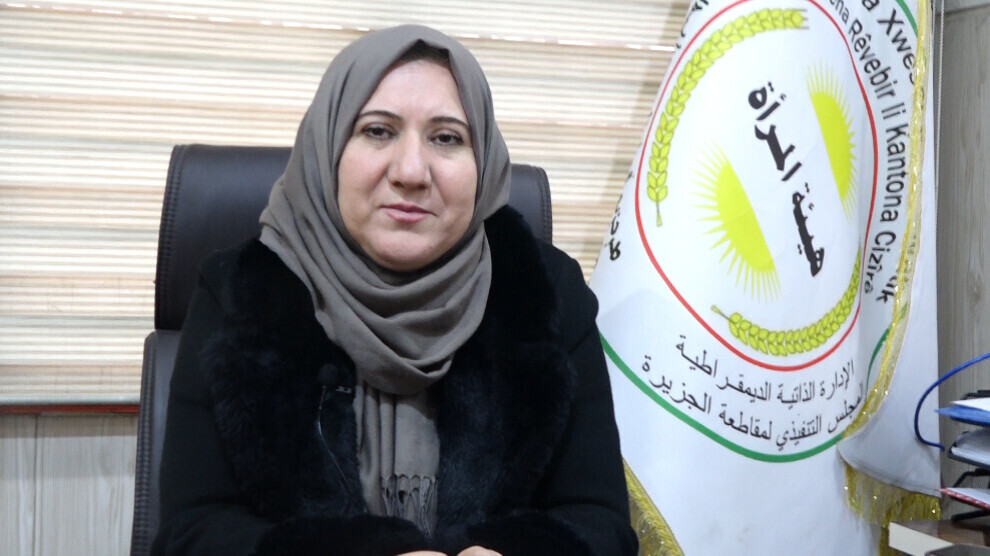
Rouhat Khalil, an administrator of the Women's Council in Jazira Region, stated that the autonomous administration model does not seek to be an alternative state, but rather "presents a renewed vision for managing society and politics," focusing on dismantling the centralization of power and transitioning from the traditional hierarchy of decision-making to a participatory democracy that emanates from the grassroots.
This model relies on local councils, municipalities, communes, and people's conferences as the foundation for managing public affairs. "The goal is not to create a hegemonic power, but to distribute power and accountability throughout society."
She pointed out that the future of this experience depends on "its ability to continue in the face of internal and external pressures, to develop institutions, deepen grassroots democracy, and build effective communication bridges with the broader Syrian society." Adding that this experience is not a static model, but a living experiment that evolves daily, offering a practical alternative to tyranny, violence, and political monopolization, as it preserves the rights, dignity, and freedoms of all constituent components.
Pillars of Distinction and Renewal
The fundamental difference in this model lies in its reliance on "genuine decentralization in administration and politics," far from the rigid centralized state that imposes a single color, a single language, and a single flag. "Democracy here is not formal, but a firmly established foundation emanating from local communities, allowing people genuine participation in decision-making, away from the formal appointments of unqualified individuals."
Widespread social participation is the essence of this experience, encompassing all components, unions, civil society organizations, women, and youth, extending from the communes through councils, institutions, and bodies, to ensure that every individual and component has an effective voice in the life of their community.
Confronting Centralism and Fascist Forces
Rouhat Khalil pointed out that the autonomous administration model "poses a direct challenge to centralized systems and fascist forces," because, as she says, "it challenges the logic of the monolithic nation-state based on centralism, a single identity, a unified opinion, and absolute power." Noting that this model presents an experience of multiple nationalities and cultures in a participatory manner, and is viewed as a threat to hegemonic discourses. It also protects social gains, especially for women and various components. "This experience is incompatible with the mentality of authoritarian systems or extremist forces, and it also contradicts the logic of the globally dominant capitalist state."
The Role of Women in the Autonomous Administration and a Strong Conclusion
Rouhat Khalil emphasized that the role of women in this system is not "cosmetic or secondary," but rather "structural and essential," embodied by the women's revolution that has proven women's capacity for successful leadership and sacrifice in all fields, through the principle of co-chairmanship between men and women. She added that there are independent women's councils and bodies working to protect women's rights, formulate policies, and monitor their implementation. "The liberation of society begins with the liberation of women, and any society where women are excluded cannot achieve balance or true democracy."
She explained that this model is not just a theoretical idea, but "a continuous journey of community development and creativity, reflecting the people's ability to govern themselves, and protect their dignity, freedom, and cultural and social identity."
Rouhat Khalil considered that this experience "represents a real glimmer of hope for the future of the Middle East, a model to be emulated in promoting justice, protecting rights, and empowering all components to participate effectively in shaping the shared future, so that every individual has value and a voice, and every community has its freedom and dignity."