
"Demsal's Pastry House"... A Women's Struggle with the Flavor of Heritage
Munira Aksoy and Anisa Aslantekin established their project in Mardin, an inspiring success story facing harsh economic conditions, affirming women's solidarity and financial independence through earning their own livelihood.
AKIN STERK
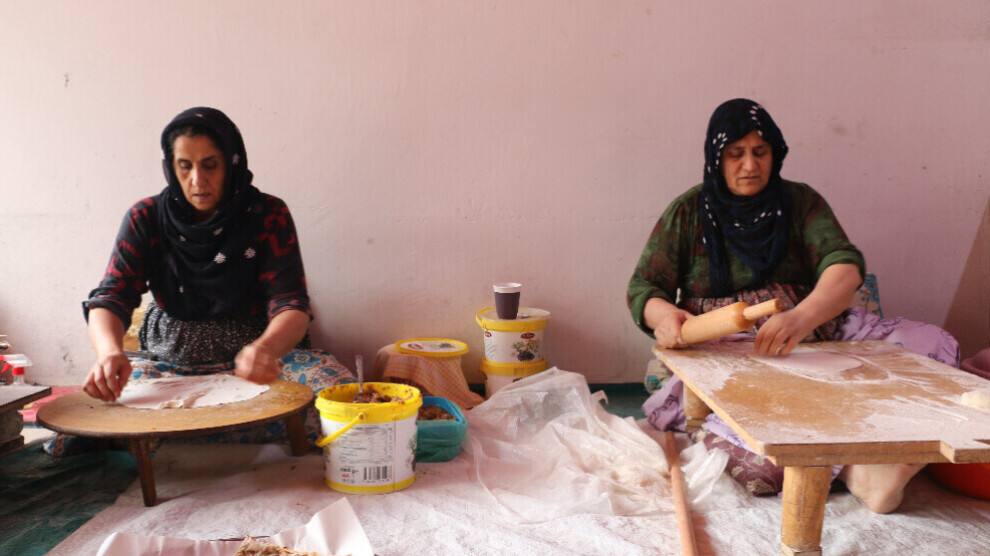
MARDIN– With strong will and self-reliance, Munira Aksoy and Anisa Aslantekin succeeded in establishing their own project, "Demsal's Pastry House," in the Kawsar (Qiziltepe) district of Mardin province, presenting a living model in the face of harsh economic conditions based on joint struggle and diligent work that extends from dawn until evening.
This small project reflects an inspiring success story that Munira Aksoy and Anisa Aslantekin summarize in their call for women's solidarity and the achievement of financial independence.
This experience comes as part of a historical and ongoing struggle of women, whose efforts have always been present in every detail of social life, from managing homes to production in fields and workshops, despite attempts at marginalization and the absence of economic equality. Through this step, Munira and Anisa prove that the pursuit of economic freedom is the strongest weapon for women to build their lives and stand firm in the face of the prevailing patriarchal system.
Munira Aksoy and Anisa Aslantekin undertake all stages of work, starting from kneading the flour and preparing the pastries, to baking them and fulfilling orders, without the economic burden dissuading them from continuing production. Under the banner of solidarity, they insist on highlighting women's efforts and empowering them to achieve their financial independence by earning their own living.
Munira Aksoy recounts that she previously worked in agriculture and household work during her life in the village, before moving to Kawsar 10 years ago, where she decided to establish her own business after a period she spent caring for her children at home.
She noted that she has been making pastries alongside her friend Anisa Aslantekin for two years, saying: "I used to feel bored when I stayed alone at home, so I thought about what I could do, and then the idea of this work came to me."
She mentioned that they initially opened a small shop in the neighborhood and worked there for four months, but they moved to a larger place due to a lack of resources, describing the situation in their first shop, which lacked water and electricity. "People were satisfied with our work, so we decided to rent a slightly larger place. Pastries are among our historical foods that used to be made in abundance in the past. Sometimes women are busy, so they order from us and we prepare them for them."
"So That Women Can Earn Their Own Livelihood"
Munira Aksoy explained that her roots and those of her friend Anisa Aslantekin go back to village life, and that she learned from her the method of making pastries, noting that their friendship, which has lasted for years, has today turned into a shared workspace.
She stressed the importance of women's economic freedom, recalling the roots of their relationship and the idea of their project, as their friendship began long ago during the life of migration and sheep herding between their two villages, and there she learned from her the craft of making pastries. This relationship was later consolidated after her friend moved and lived together in the village and then in the same building in the center for long years, so that this shared journey bore fruit in the idea of opening their own shop.
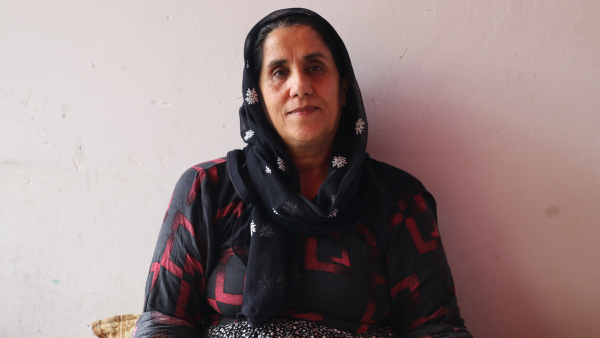
Munira Aksoy stressed the importance of women's ability to establish their own businesses, noting that women's work in the past was forbidden. She said: "We want women to establish their own businesses and earn their own livelihood, and that is why we opened this place. In the past, they saw women's work as shameful and did not allow us to work, but now the situation is different, and every woman has become capable of managing herself."
"The Economic Crisis Has Broken Our Backs"
Regarding their daily working conditions, Munira Aksoy mentioned that preparing pastries is hard work, but they endure the hardships because they love what they do. "Rolling the dough continuously, baking it, and preparing the ingredients is exhausting, but we love our work. We have gone through times in the summer heat when we worked until evening. This work has its difficulties, but when you love what you do, you no longer see those difficulties."
She noted that the economic crisis and increasing high prices have caused severe living difficulties in securing a livelihood and covering house rent and children's education expenses, as the sharp rise in prices of basic materials such as oil, meat, and flour, in addition to electricity costs and shop rent, has led to an inability to buy normally and manage affairs except with great hardship ".
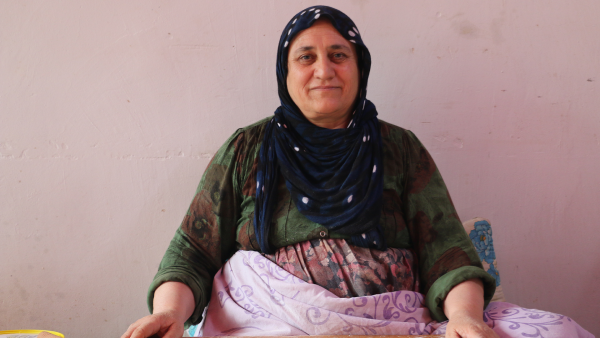
For her part, Anisa Aslantekin stated that working conditions and economic difficulties are putting pressure on them. "I opened this place in partnership with my friend, one way or another. Both of us love this work, no matter how hard and exhausting it is."
She explained that their homes and their shop are not their own property but are rented, which doubles their daily burdens, pointing to the harshness of the conditions. "Life is not easy, and we struggle for a long time to secure a livelihood, as the costs of rents and bills constitute a heavy burden that exhausts us."
Despite these challenges, she confirmed that preparing pastries goes beyond being a means of earning a living to represent a family heritage inherited by generations, stressing the importance of appreciating women's struggle. "We manage this project with great passion after it turned into a family tradition. We started here two years ago after our previous workplace was closed. All we hope is that women's efforts receive the appreciation they deserve, and that women remain able to achieve their independence under all circumstances."