
Israeli Airstrikes kill 14 in Gaza Amid Worsening Humanitarian Crisis
Fourteen people, including five children, were killed in Israeli airstrikes on Gaza, as UN warnings said the humanitarian crisis is reaching critical levels amid aid shortages and collapsing health services.
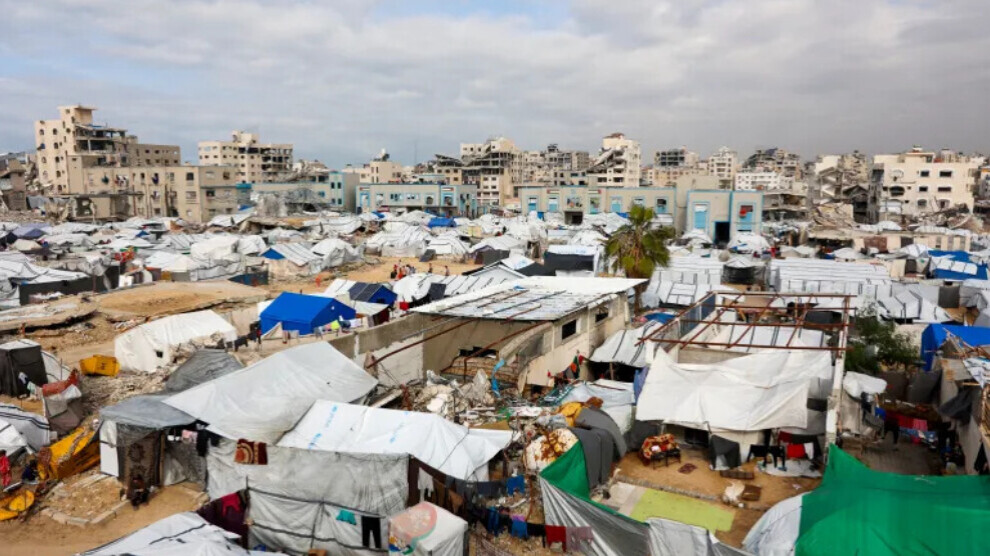
News Center — Israeli violations in the Gaza Strip continue despite the ceasefire agreement in force, with Israeli forces carrying out ongoing airstrikes and artillery shelling. At the same time, residents are facing humanitarian conditions on the brink of total collapse, as more than two million Palestinians live in tattered tents under a tight siege and deprivation of basic assistance.
Fourteen people were killed on the evening of Thursday, January 8, including five children, in Israeli airstrikes on the Gaza Strip, despite the ongoing ceasefire agreement between Israel and Hamas. The spokesperson for Civil Defense stated that a drone targeted a tent sheltering displaced people in the south of the Strip, killing four people, including three children. Another child was killed near Khan Younis in southern Gaza.
Israeli shelling of the Jabalia refugee camp in the north of the Strip killed an 11-year-old girl, according to the Civil Defense spokesperson. Another strike killed a person inside a school, while a separate airstrike targeted a tent sheltering displaced people in the same area, killing another person.
In central Gaza, two people, one of them a child, were killed by Israeli strikes. Later on Thursday evening, Israeli aircraft carried out an airstrike on a house in eastern Gaza City, killing four additional people, while rescue teams continue searching for a number of missing persons under the rubble.
After two years of war, Israel and Hamas reached a ceasefire agreement that came into effect on October 10, 2025. However, the truce has seen numerous violations, resulting in the killing of more than 425 Palestinians since that date.
Worsening Crisis
The media adviser to the United Nations Relief and Works Agency for Palestine Refugees (UNRWA) warned that the humanitarian crisis in the Gaza Strip is escalating to extremely dangerous levels due to the severe shortage of basic assistance, including shelter materials and medicines, stressing that residents’ lives are increasingly at risk.
He explained that tens of thousands of tents entered the Strip after the ceasefire, but they meet only a limited portion of the needs, noting that Gaza requires hundreds of thousands of tents to provide safe shelter for Palestinians.
He added that around 1.5 million people are currently living in dilapidated tents made of fabric or plastic, unable to withstand strong winds and harsh weather conditions. The suffering is further exacerbated by the destruction of infrastructure and the accumulation of sewage water in displacement camps, particularly in sandy areas and along the seashore.
He pointed out that thousands of tents have been erected near the coast, making them vulnerable to flooding due to high tides and waves, emphasizing that the entry of additional tents has become an urgent necessity that cannot be delayed.
The media adviser confirmed that the crisis goes beyond shortages of supplies, encompassing a serious collapse of the health sector, water contamination, and a lack of medical and laboratory equipment, making it nearly impossible to confront these challenges without a comprehensive and rapid entry of aid.
He said the agency has thousands of trucks loaded with aid stalled at the gates of Gaza and in UNRWA warehouses in Egypt and Jordan, containing food supplies sufficient for three months, in addition to tents, blankets, and clothing adequate for approximately 1.3 million people.
He stressed that the continuation of the current situation is pushing the Gaza Strip back to square one, noting that the solution requires an integrated package including food, shelter, medicines, medical equipment, laboratory tools, and imaging devices to save patients’ lives. He also warned that hundreds of thousands of patients face the risk of deteriorating health conditions amid the spread of intestinal diseases and malnutrition, in a context of widespread food insecurity among the population.