
Listening as a Forgotten Right… How Do Moroccan Women Reclaim Their Voices Before Justice?
In a society that sometimes imposes its silent judgment on women, listening becomes more than merely hearing; it is a fundamental human right that precedes any legal or social process.
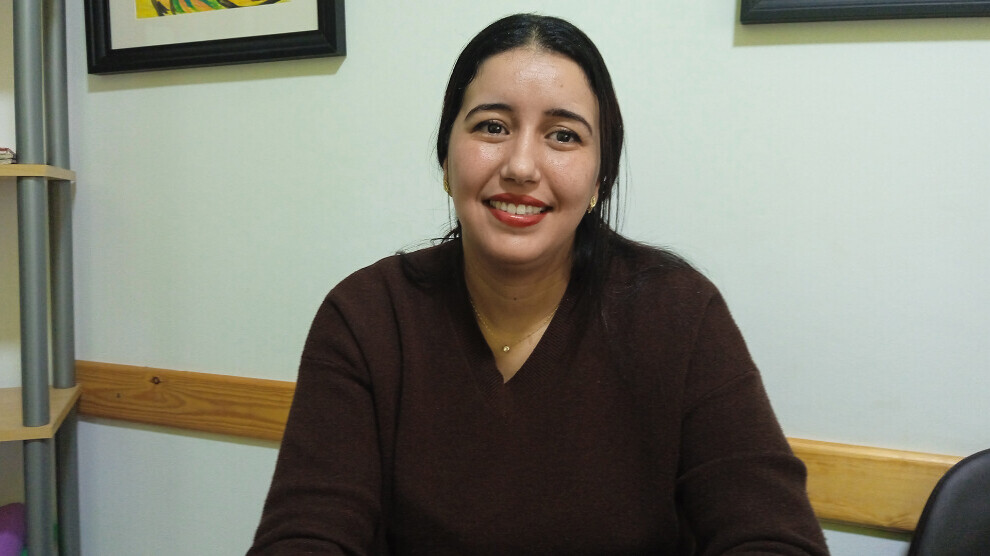
Hanan Harat
Morocco – Before any legal process, before complaints and procedures, many women who are victims of violence or social exclusion need something that may seem simple on the surface but carries deep impact: to be listened to. Years of silence, fear of stigma, and lack of trust in both their social and institutional surroundings make speaking out a courageous and costly act.
In the Moroccan context, where cultural and economic barriers intersect with fragile social protection systems, listening can mark a turning point that changes the course of an entire life. Many Moroccan women have found in NGO support spaces, psychological counseling sessions, or listening groups a moment of recognition that restored their self-confidence and broke years of silence linked to stigma and social fear.
What Happens When a Moroccan Woman Finds Someone Who Hears Her?
Somia A. (34), divorced for two years and mother of two, found herself facing harsh social judgment. She says: “Since my divorce, my life has changed. I feel that every look carries judgment, as if I committed an unforgivable mistake.”
Gradually, these silent judgments turned into isolation that affected her daily life and mental health, until she joined an online women’s support group. “When I entered the group, I felt heard… I spoke without fear and discovered that my experiences were not a shame.”
Participating in discussions and sharing experiences helped Somia regain her self-confidence and reintegrate into her social and professional life. “I learned how to take care of myself and protect my mental health. I now feel that my life has value, despite everything I’ve been through.”
Listening Spaces Between Support and Right
In Morocco, listening spaces play a central role in accompanying women victims of violence—not only through psychological support or legal guidance, but by providing a safe space that allows women to express their suffering without fear or judgment.
Listening spaces do not refer to a single unified institution, but rather to a network of initiatives mainly led by civil society organizations, particularly women’s associations, sometimes working with the support or partnership of official institutions.
Multiple field experiences show that the first moment of listening is often pivotal. Simply having someone ready to listen, confidentially, opens the door to rebuilding self-confidence and enables women to see options that were previously unavailable. However, according to field practitioners, listening cannot be improvised or based solely on empathy; it requires careful professional framing.
In this regard, Amina Bajja, coordinator of listening centers at the Challenge for Equality and Citizenship Association, who has worked in this field for five years, explains that she listens daily to between four and ten cases, either by phone or through in-person meetings at the association’s headquarters.
She emphasizes that listening within these centers is not limited to empathy or goodwill; it is a precise professional practice that requires specialized training, field experience, and a deep understanding of the complexities of gender-based violence. According to her, not just anyone can take on the role of listener, because unstructured listening may reproduce harm rather than alleviate it.
She explains that a woman entering a listening space for the first time is often in a fragile state—burdened by fear, lacking trust, and uncertain about how she will be received or the consequences of speaking out. “Many women come without prior knowledge of what listening centers are or what their role is. They carry fears related to the exposure of their secrets or being socially judged, which makes providing a safe space based on confidentiality and respect essential to breaking the silence.”
Recognizing Listening as a Human Right
Amina Bajja believes that the first moment of listening represents a decisive turning point in the lives of women victims of violence—not because it offers immediate solutions, but because it provides human recognition often absent in their social surroundings. “For a woman to find someone who listens without condemnation, thinks with her about her situation, and reassures her that she is not alone, marks the beginning of restoring self-confidence and the ability to make decisions.”
She notes that listening enables workers to gain a deeper understanding of the psychological, legal, and social complexities of a woman’s situation and helps guide her toward pathways best suited to her reality, rather than imposing ready-made solutions that may not fit her circumstances. Listening also serves as a fundamental entry point for advocacy for women’s rights, as it allows for the collection of data and understanding patterns of violence and violations they face.
She explains that the barriers preventing women from seeking help are not limited to psychological fear, but also include social and economic factors, most notably financial vulnerability and lack of independence. “Many women hesitate to take any step for fear of losing shelter or livelihood, or due to the absence of legal or psychological support, which ultimately pushes them to surrender to violence and continue living within it for many years.”
Amina Bajja, coordinator of the listening centers, affirmed that building trust and safety through listening is not a secondary stage, but the foundation upon which any subsequent intervention is built. “Recognizing listening as a professional practice and a human right for women remains a fundamental condition for confronting violence and ensuring dignity.”