
Endless Displacement: Afrin Woman’s Testimony of Pain and Resilience Enduring
From Afrin to Shahba and then to Qamishlo, a path of forced displacement marked by massacres, siege, and bitter cold, amid international silence and the absence of guarantees.
Asmaa Mohammad
Qamishlo — Since 2018, the Syrian city of Afrin has entered an open-ended trajectory of forced displacement and systematic violations due to the attacks launched by the Turkish state and its affiliated armed groups, in one of the harshest experiences endured by civilians, particularly women.
This was not a temporary or passing ordeal; rather, it turned into a continuous series qof displacement, fraught with danger and heavy with loss, in the absence of any international protection or legal accountability.
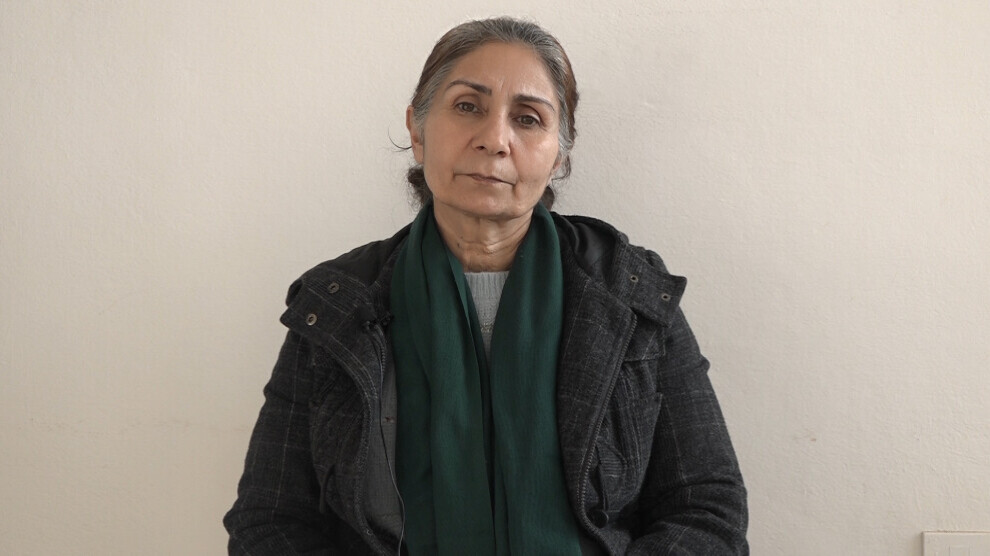
The testimony of Farida Eibo, a member of the Kongra Star (Women’s Conference) coordination in Afrin and Shahba, reflects this tragic path and documents the repeated waves of displacement and the popular resistance that did not break despite bombardment, siege, and massacres. She describes the 2018 attack on Afrin as “a comprehensive and organized assault,” targeting the city from all sides. Civilians and military forces engaged in a long and decisive resistance in defense of land, identity, and dignity. As she explains, “Civilians tried by all available means, despite limited capabilities, to protect their city and prevent its fall, but the intensity of aerial bombardment and the excessive use of force ultimately determined the military outcome.”
After 58 days of continuous resistance, civilians were forced to flee under shelling and warplanes, in scenes marked by fear, chaos, and loss, heading toward the Shahba region. This displacement, she stresses, “was not a choice, but a necessity for survival, amid direct targeting of civilians.”
Repeated Displacement
The Shahba region was far from ideal; it was “a completely devastated area,” lacking basic necessities for life. It had previously suffered ISIS attacks, which led to the displacement of its original residents and the destruction of its infrastructure. Nevertheless, Afrin’s displaced residents settled there in the hope of a near return to their homes. However, daily artillery shelling and ongoing security threats made life in Shahba unstable and dangerous.
As the number of displaced people increased, camps were gradually established until they reached four in total. Some families were forced to live in destroyed or partially ruined houses. She points to the suffocating siege imposed on the area, which prevented the entry of food, medical supplies, and fuel, “exacerbating the humanitarian crisis and turning daily life into a constant struggle for survival.”
Despite the siege and hardship, residents remained in Shahba for nearly seven years, clinging to the hope of returning home, considering displacement a “temporary condition” that could not become permanent reality. Yet recurring threats and ongoing violations revived “the specter of displacement once again.”
She describes what later befell Shahba as exposure to “the threat of genocide,” forcing residents into a third displacement amid genuine fear of massacres and abuses, especially given what civilians had previously endured in terms of killing and forced uprooting. “The decision to remain near their areas was a compelled choice, aimed at facilitating return should any guarantees for civilian protection become available.”
The three waves of displacement occurred under the harshest weather conditions. The first exodus from Afrin took place in March amid cold and rain. The displacement from Shahba occurred at the beginning of December, followed by another on December 18. Several children and elderly people died due to freezing temperatures, poor shelter conditions, and the lack of heating and healthcare. “Families were forced to stay in schools, shelters, and camps under inhumane conditions. Some children and elderly lost their lives due to illness and cold, and the psychological and physical effects of displacement remain evident to this day.”
Great Hopes for Return
Farida Eibo noted that at the beginning of 2025, following political changes, significant hopes emerged for the return of displaced people to their homes, especially after the issue of refugee return was included in announced agreements. “People lived with daily hope of return—today, tomorrow, this month—but those hopes quickly faded. External interventions and renewed attacks by jihadist groups of Hay’at Tahrir al-Sham led to a fourth displacement, this time toward the city of Qamishlo, amid panic and fear of genocide.” She emphasized that civilians did not know what their fate would be, amid complete international silence and the absence of any party guaranteeing civilian protection.
She criticized the silence of the international coalition and human rights organizations, describing it as “indirect complicity in the crimes committed against the Kurdish people,” especially amid ongoing kidnappings, killings, and the presence of wounded, martyrs, and missing persons whose fate remains unknown.
The Kurdish people, across all age groups, she affirmed, “did not stop resisting. Men and women, youth and elders, participate in protecting their neighborhoods, organizing night patrols, and taking part in marches and events to express their attachment to their existence and their right to life.”
Women, however, were the most affected by displacement and war. “Many lost their husbands, sons, and brothers and were forced to shoulder life’s burdens alone.” The suffering of women was “doubled—psychologically, socially, and economically—yet they remained at the forefront of resilience.” She added that the Rojava revolution restored women’s rightful status and granted them confidence and determination to participate in political, diplomatic, military, and social spheres. Women, she said, were the cornerstone in maintaining social cohesion during displacement, raising morale, and organizing communities in the face of chaos and fragmentation.
She believes that “the deliberate targeting of Kurdish women and the violations committed against fallen female fighters reflect the extent of hatred and fear of women’s will and leadership role. These crimes constitute blatant violations of all international laws and norms, in the absence of accountability.”
Farida Eibo, member of the Kongra Star coordination in Afrin–Shahba, concluded by affirming that Kurdish women, despite forced displacement, massacres, and violations, remain committed to their cultural, social, political, and human rights and will not relinquish them. “Women’s resistance continues in Afrin and in all parts of Kurdistan. Defending women’s rights is defending society as a whole, because any targeting of women is an attack on the foundations of justice, democracy, and freedom.”