
'Jineolojî ‘ as a Women’s Revolution against Nietzsche’s and Foucault’s' Genealogy’
The debate over Genealogy and Jineolojî exposed more than linguistic confusion; it revealed society’s need to rethink knowledge, power, and women’s marginalization within histories long shaped by male perspectives.
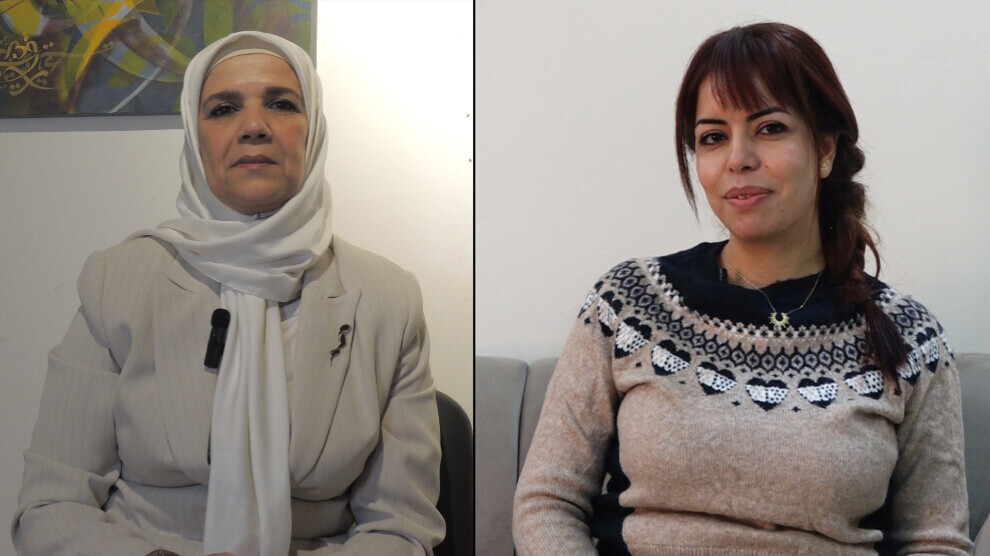
News Center — In recent years, a striking debate has emerged within Libyan cultural and philosophical circles around two terms that sound similar but belong to two entirely different worlds: Genealogy, associated with Friedrich Nietzsche and Michel Foucault, and Jineolojî, a field of knowledge that emerged from Kurdish women’s struggles and evolved into a new epistemological project seeking to reconstruct the sciences from a woman-centered perspective.
This phonetic similarity has caused widespread confusion, yet it has also opened the door to a deeper discussion about the relationship between knowledge and power, and about women’s place within a history largely authored by men.
To explore this debate, our agency conducted interviews with Libyan philosophy researcher Widad Al-Shukri and Zahida Mamou, a member of the Jineolojî Academy in the Middle East. Through these discussions, Al-Shukri explains that genealogy—“the science of origins” in Nietzsche’s and Foucault’s work—is a tool for exposing how power produces concepts and reshapes consciousness. Meanwhile, Mamou emphasizes that Jineolojî—“the science of women”—grants women the right to write their own knowledge and to reconnect humanity with land and society, free from authoritarian mentalities.
“Genealogy Is Not a Search for Origins”
Widad Al-Shukri begins by clarifying that genealogy in the thought of Nietzsche and Foucault has nothing to do with biological lineage. “We are not talking about a family tree,” she explains, “but a tree of concepts.”
She notes that Genealogy, in its philosophical sense, is a critical method that investigates the history of ideas not to uncover pure or innocent beginnings, but to reveal how concepts were shaped under the pressure of power and social struggle. “Foucault rejects the idea that concepts emerge naturally,” she says. “Every concept—from madness to prisons to sexual identity—is the result of power struggles. Power determines what becomes knowledge and what is erased from memory.”
To clarify further, Al-Shukri refers to Foucault’s famous book Discipline and Punish, citing his detailed description of the execution of the French prisoner Robert-François Damiens in 1757. Foucault’s aim, she explains, was not sensationalism but to show that punishment was a “spectacle of power” rather than an application of justice. “Foucault wanted to demonstrate that prisons were not created to reform people, but to discipline bodies. The same applies to schools, hospitals, barracks—every social institution is, at its core, a disciplinary apparatus.”
She adds that Nietzsche had preceded Foucault in this path through his discussion of “master and slave morality,” and that Heidegger also called for studying the history of concepts. However, Foucault was the one who transformed genealogy into a practical tool for exposing power within knowledge.
How Did Libyan Feminists Appropriate Foucault’s Tools?
Al-Shukri then turns to what she considers a pivotal issue: how feminist movements adopted this methodology, despite Foucault himself not writing explicitly about women.
“Feminists noticed that Foucault treats concepts like ‘man’ and ‘woman’ as neither natural nor neutral,” she explains. “This opened the door to a fundamental question: if concepts themselves are products of power, then who wrote history—and why were women excluded from producing knowledge?”
She notes that feminists did not limit themselves to asking, Why didn’t we write history? Instead, they went further: Who wrote history in the first place? What structures governed its formulation? And why do traditional classifications between men and women persist?
She cites philosophers such as Judith Butler and Sandra Harding, who used genealogy to uncover mechanisms of exclusion, and highlights the role of Moroccan sociologist Fatima Mernissi in bringing this debate into the Arab intellectual context.
Al-Shukri concludes by stressing the importance of teaching genealogy at universities: “Not because it is an intellectual trend, but because it equips young people with tools for critical thinking—tools that allow them to understand epistemological structures rather than receive them passively.”
Jineolojî: When Women Decide to Write Their Own Science
On the other side of the discussion, Kurdish women did not stop at critique. Instead, they established their own field of knowledge as a response to women’s historical marginalization. This began with Abdullah Öcalan’s proposal in 2008 of Jineolojî—a Kurdish term meaning “the science of women.”
Zahida Mamou explains that the science proposed by Öcalan and adopted by Kurdish women’s movements “is not feminist studies in the traditional sense, but a project to reconstruct knowledge from a woman’s perspective after thousands of years of male-dominated thinking.”
She emphasizes that Öcalan presented Jineolojî as an independent science with its own methodology, tools, and questions—not merely a theoretical current. “The question he posed was both simple and profound,” she says. “Why are women excluded from producing knowledge? And how can a new science reconnect human beings with nature and society?”
Mamou notes that Jineolojî was first introduced into school curricula in North and East Syria, then expanded to universities and specialized research centers.
Between Humanity and the Earth
Mamou also points to the resemblance between Jineolojî and Geology—the science of the earth—highlighting the symbolic interconnectedness of these terms. She explains: “When we look at Nietzsche’s vision, we find this radical depth as well, though expressed differently. Nietzsche approaches genealogy from an ethical and philosophical angle through what he calls the ‘tree of morality,’ returning to early human history to explain how concepts of good and evil are formed and how culture and ethics evolve over time. His method involves digging deep—returning to origins to understand the present—just as a geologist reads the layers of the earth.”
She adds that when Nietzsche’s vision is placed alongside Öcalan’s thought, geology transforms from a science of earth layers into a science that reads the layers of society and humanity. “Öcalan argues that any research in this field must involve a return to origins: How did humans acquire their moral systems? How did culture form? And how did the identities of women and men evolve through history?”
Mamou notes that Öcalan’s framework begins with the concept of the “natural society,” where all beings existed in balance before the emergence of a masculine, authoritarian mentality that laid the foundations of class society and disrupted relations between women and men.
This vision did not remain theoretical. It became an educational curriculum and a lived experience in North and East Syria, where Kurdish, Arab, Armenian, and Syrian women are engaged in a unique experiment. Women are not passive recipients of knowledge, but active producers—through resistance, on the battlefield, and in shaping a new ideology that places women at the forefront of social transformation.
Through this approach, Jineolojî, the “science of women,” becomes a discipline that unites philosophy, science, spirit, and emotion. It does not rely solely on rational analysis, but is grounded in human experience in all its dimensions, seeking to create a balance between analytical thought and emotional depth.