
Women’s Musical Heritage in the Writings of Bouthaina Ghribi
Journalist and writer Bouthaina Ghribi wrote about Saliha not only for her exceptional voice, but because her life story reflects a woman’s transformation from fragile childhood to resilient artistry within Tunisia’s musical and social history.
Nazihat Bousaidi
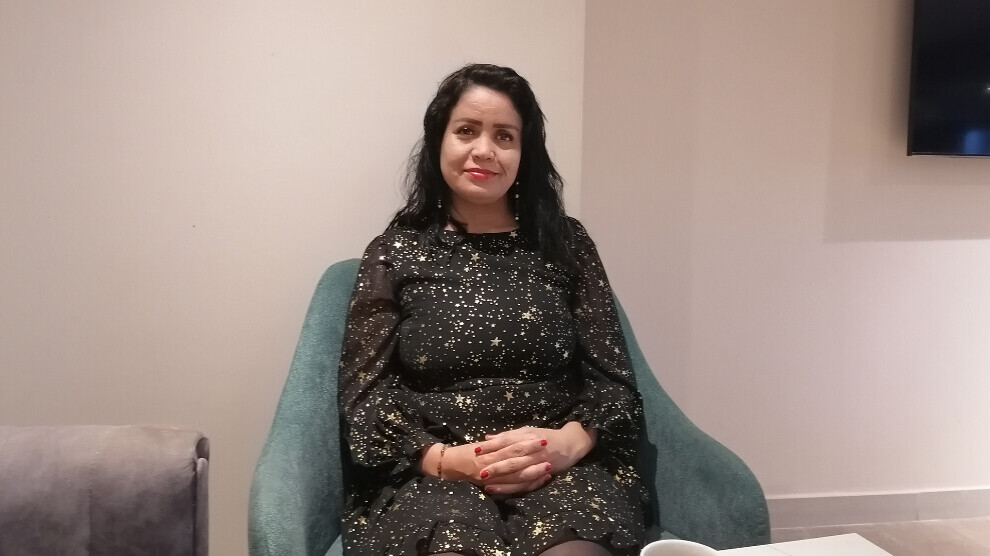
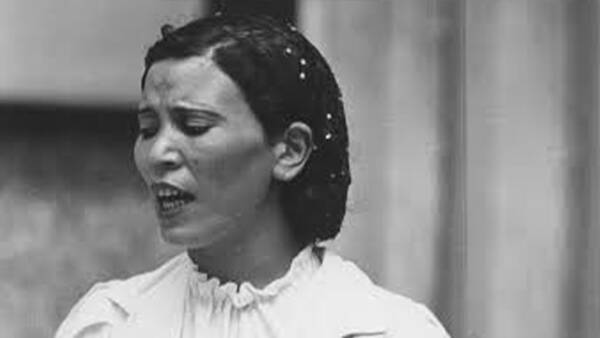
Tunis — Tunisian journalist Bouthaina Ghribi authored a book about the late artist Saliha (Sallouha bint Ibrahim bin Abdelhafidh), the owner of a soulful voice marked by a clear Bedouin tone. The book covers all stages of her life, from a difficult childhood to art and fame.
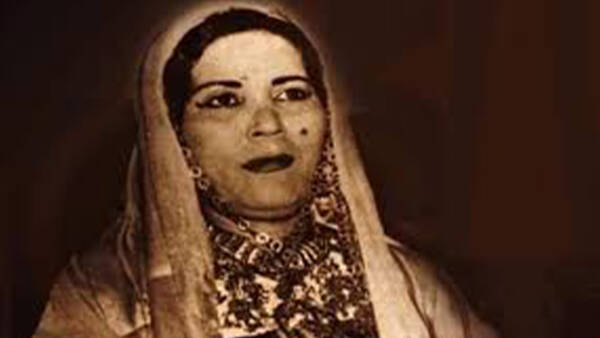
Bouthaina Ghribi’s writings address the lives of female artists who shaped the memory of Tunisian art. She is currently working on a new book about Habiba Msika, one of the most prominent singers and actresses of the first half of the twentieth century in Tunisia, delving into the circumstances of her death after being killed by her husband.
Regarding her choice to write about Saliha, Bouthaina Ghribi said that she was not merely an exceptional voice in the history of Tunisian music, but a woman with a very important biography that condenses the transformations of a woman who lived between a fragile childhood and solid, resilient art.
She explained:
“In my book Sallouha Saliha: A Biography Between Two Shores, I tried to read Saliha’s journey not only as an artist, but as a model that shows how the social and political context shapes personality, and how a simple child can transform into a great artist.”
She noted that Saliha’s rise to the world of art was not easy, as she was subjected to various forms of harassment and moral violence, deprived of many things, and forced to make concessions in order to endure in a field that was not merciful to women.
“That is why I see her as a fighter, not just an artist.”
She considered that Saliha “contributed to preserving Tunisian musical heritage during the founding period of La Rachidia in the 1930s, when it was not easy to find a voice with the depth and raw quality needed to immortalize this heritage. Her presence was not an artistic luxury, but a cultural necessity. Saliha embodies many images: the image of my generation, the image of future generations, and the image of women who came before us. She is a Tunisian woman who lived from the 1930s to the 1950s, a time marked by colonialism and the absence of organizations defending women’s rights.”
A Complete History and the Story of an Entire Society
Bouthaina Ghribi said:
“Once I asked myself: Saliha died at the age of 44, yet she left a name with great weight in Tunisian memory. Today, we live longer lives, but often pass without leaving a trace. Saliha was also a woman living in a context harsher than mine, yet she achieved so much.”
She explained that “this personal question led me to her. As for the objective reasons that pushed me to write about her, every document I found reshaped Saliha before me and drove me to further research, until I felt that she was not just an individual, but an entire history and the story of a whole society.”
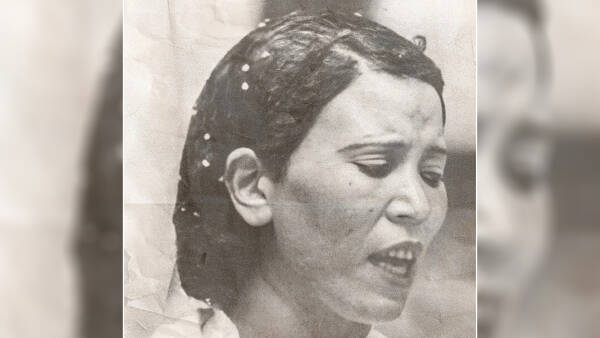
She pointed out that what most shook her and persistently urged her to write was Saliha’s last concert in 1953. At the time, Saliha was staying in hospital after undergoing surgery, and the doctor warned her against singing because of its impact on her life. However, a Maghrebian concert was organized for the first time in Tunisia, and she decided to leave the hospital without consulting the doctor. She sang before the audience, her face marked by fatigue and exhaustion, holding onto a chair. People at the time wondered: did Saliha sing, or did she cry?
She explained that “her last song was Maridh Fani (A Mortal Patient), and she passed away about half a month later,” noting that Saliha opened the door for her to write about struggling female artists. After Saliha, she chose to write the biography of artist Habiba Msika, a controversial figure whose story she believed was incomplete.
Art Was Not Isolated
She added that what motivated her was the alarming normalization of violence. When she researched the death of Habiba Msika, she found many comments justifying her killing, even from women, such as: “She deserved it,” “She betrayed him, so he killed her,” “He had the right.”
She considered this a reaction that raises serious questions, such as: “What psychological and social structure makes us justify violence?” And did her husband really kill her?
She explained that the story, in her view, is full of gaps and deserves serious investigative research, reminding that female artists of that era were not merely voices, but active agents in a political and social context.
“Art was not isolated from what was happening in Tunisia, and it is important to read that period through the roles women played in it.”
Bouthaina Ghribi also noted that her obsession since childhood was how to express herself. She grew up in a conservative environment and had to find forms of expression. She began with poetry, then theater—which embraced her for ten years—followed by journalism, academic research, and finally writing.
She said:
“For me, writing is not just expression, but thinking. It is a stage of calm, and an attempt to leave a mark.”
Perhaps her ambition is one day to present a theory in media and communication, or an idea that makes a difference.
She added:
“At the Tunis International Book Fair, I met a young woman who told me: I want to write, but I can’t. I told her: Just write. Don’t think about publishing houses or reactions. Pour your state onto paper as it is. A sincere text will find its way to people.”
“Write, rebel, dare, and do not remain silent, as long as you respect the language,” she said in a concluding message. Addressing parents, she stressed that they must play an important role in shaping a child’s personality, because a child is formed in their first environment and must be cared for and their talents refined.
“I was lucky because my father used to take me to the theater and encourage me to read and attend cultural clubs.”