
The Sudanese Thobe: An Indelible Memory and an Identity Defying Conflict
Sudan’s thobe is a millennia-old symbol of identity. Though conflict has impacted its daily wear, it endures as a carrier of political and cultural messages and recognized global heritage.
Mervat Abdel Qader
Sudan – The Sudanese thobe will remain impervious to extinction in the face of global fashion trends. It is the garment that combines dignity and femininity, bridging the legacy of grandmothers and the ambitions of granddaughters.
The Sudanese thobe is not just a piece of fabric wrapped around a woman's body. It is a story extending over thousands of years, narrating a history, an identity, and a collective memory. It is the official and authentic attire of the Sudanese woman, a symbol of respect, and a distinctive mark in the folk culture rich with heritage and traditions.
The Tale of the Sudanese Thobe
When a Sudanese woman enters any gathering, the thobe, with its majesty and colors, precedes her. The rituals begin with a graceful movement as the woman places the end of the thobe, locally called "Al-Raas" (the head), over her shoulder. She then skillfully wraps it around her waist and body, completing the picture by placing the final end over her head with a dignity that adds a touch of mystery and beauty.
The thobe did not emerge by chance; it is the product of an ancient civilizational fusion. Its roots trace back to the ancient Kushite civilizations, where engravings show queens (Kandakes) wearing garments resembling the contemporary thobe. Historically, the thobe was made from pure Sudanese cotton and was known by names such as "Al-Ginja" and "Al-Firka."

Nubian queens wore it as royal attire befitting their status. To this day, it carries special connotations for every occasion. It varies in colors and fabrics and may be embroidered with precious stones and crystals to reflect luxury and refined taste.
With the evolution of life, new fabrics and innovative colors were introduced, making it more diverse and keeping pace with global fashion without losing its roots. During the renaissance era, Swiss and English fabrics entered, giving rise to luxurious "Total" fabrics, which became a fundamental pillar in every Sudanese woman's wardrobe. The thobe became famous under names reflecting current events; we find thobes named after battles, officials' visits, or even modern inventions, making it a "newspaper that walks on earth."
The Language of Colors and Occasions
The Sudanese thobe does not speak one language; its color and fabric change with the situation and occasion. The "White Thobe" holds a special place, associated with female teachers and employees, symbolizing purity, seriousness, and dignity. It became the attire for widows, but it is also a symbol of peace and optimism.
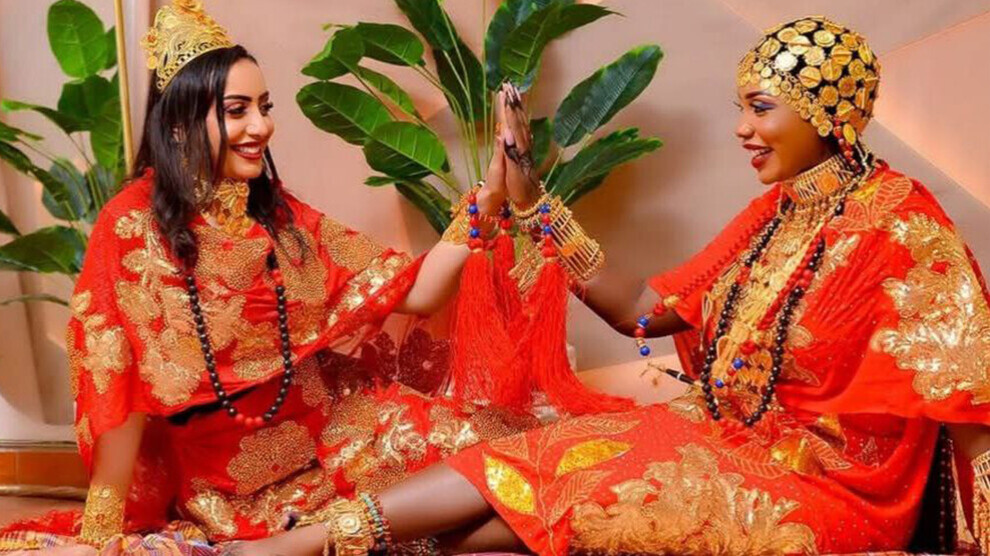
Meanwhile, the red "Gartook" thobe is an ancient wedding ritual dating back to Pharaonic Nubian origins. It symbolizes new life and protection from the evil eye and envy. It is an essential piece in Sudanese weddings, worn by the bride to announce the beginning of a new life.
It is accompanied by traditional accessories like the red "Hareera" (necklace) symbolizing connection, the golden crescent referring to light and blessing, and the aromatic "Dhareera" symbolizing purity. Despite the sanctity of the color red, some designers like Mahaet Al-Shafei have worked on introducing new colors, such as blue and white, and added changes to the traditional thobe's form to keep pace with the times—a move that sparked debate before society gradually accepted it.
As for thobes with bright colors, they fill wedding houses and social visits. Women excel in choosing colors that suit their brown skin tones, from warm "Burgundy" to refreshing "Turquoise."

The Thobe as a Symbol of Resilience
The thobe has also served as a political and cultural message. At Sudan's independence in 1956, Mahaet Al-Shafei pointed out that the Sudanese thobe was no longer just formal attire; it began to carry specific messages through its design. It became a symbol bearing specific connotations and symbols. In the December Revolution, the white thobe returned as a symbol of the revolutionary woman. Even in war, thobes were designed carrying messages of support, confirming that the thobe is not merely attire but a means of expressing stance and identity.
We saw the world marvel at the image of the "Kandaka" in the popular movement wearing the white thobe and reciting poetry, reminding the new generation that this garment is a cultural weapon protecting identity from fading.
However, the conflict left its mark. Displacement and seeking refuge in neighboring countries led to a decline in wearing the thobe in daily life, as it became restricted by work and mobility conditions. Nevertheless, the presence of Sudanese women abroad contributed to spreading Sudanese culture. The thobe appeared in international festivals and celebrations and became desirable even among non-Sudanese women. Mahaet Al-Shafei confirmed this, noting that it became very restricted regarding movement, work, and the conditions of displacement and asylum. Women cannot wear it during long and arduous displacement journeys or in other countries, which led to a decline in wearing the Sudanese thobe.
Although the conflict diminished some rituals and customs and led to the destruction of museums and libraries, identity was not completely erased. The thobe remained alive, worn by women inside and outside Sudan, and is being reintroduced with modern designs that make it easier to wear and more attractive. "The presence of Sudanese women in multiple countries contributes to highlighting Sudanese culture, especially introducing national attire through festivals and celebrations."
She explained that she worked on new designs for the Sudanese thobe to help girls unaccustomed to wearing it, as well as foreign women, to wear it easily. "The conflict did not completely erase Sudanese identity, especially concerning Sudanese folk and heritage attire. Rather, it contributed to transferring and showcasing it globally."
But the Sudanese thobe remains a symbol of the Sudanese woman's identity, a witness to her history and struggle, and to her ability to preserve her heritage despite challenges. Designer Mahaet Al-Shafei directed a message to Sudanese women to preserve Sudanese identity and not allow it to be erased, especially the Sudanese thobe, the symbol of the Sudanese woman's identity. She called on Sudanese thobe designers to preserve authenticity while embracing innovation, so that the Sudanese thobe remains present in the largest forums and festivals, not just as local attire, but as a global identity carrying the spirit of Sudan.