
From Darfur, an Iraqi Activist Affirms: The Humanitarian Situation Is Extremely Dire in Conflict Areas
Iraqi activist Nouf Assi, who has been assigned to a mission in Darfur amid the ongoing conflict in the region, affirms that “humanitarian work in conflict zones is both beautiful and difficult at the same time, and it requires flexibility, courage, and o
RAJA HAMID RASHID
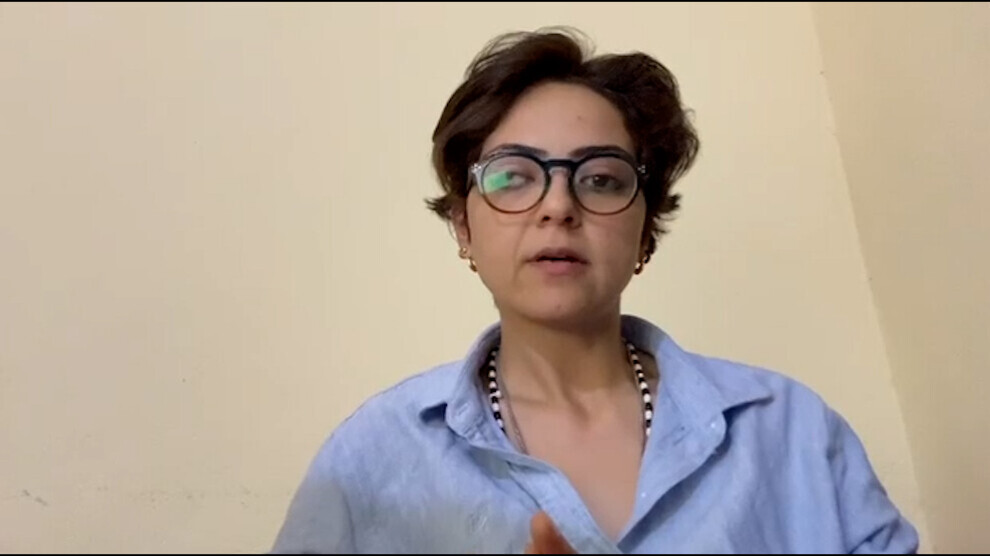
Iraq — Nouf Assi works in the field of emergency humanitarian relief, specializing in protection and women’s empowerment programs in emergency settings. She is currently present in the Darfur region of Sudan as part of her field missions, through which she has become accustomed to working in conflict zones and humanitarian crises across several countries.
Nouf Assi says that she is often among the first responders in emergency situations, as she is deployed with the initial team to establish humanitarian operations, build programs, and set up essential services until conditions stabilize.
She explains: “We arrive at the beginning, secure services, and ensure their continuity until local teams are able to manage them.”
A Mission at the Heart of the Conflict
Nouf Assi’s mission to Darfur came amid the conflict unfolding in Sudan. She conducted a field assessment to identify the most pressing challenges facing women and girls, based on which she began designing an appropriate protection program. She notes that she is currently in the phase of building the team, in preparation for providing services that contribute to supporting women and girls and alleviating their suffering as much as possible.
Personal and Family Roots
Regarding the motivations that led her into this field, Nouf Assi says that growing up in Iraq, amid two wars and successive conflicts, had the greatest impact: “Our generation was born in a time of war, and humanitarian work was the space where I found myself and my ability to express.”
She also points to her family’s influence on her career path. Her mother volunteered as a nurse during periods of war, her father—an Arabic language teacher—participated in campaigns in several countries during the 1970s, and her older sister was an activist and volunteer with humanitarian organizations, including the Iraqi Red Crescent. She affirms that this environment made her involvement in humanitarian work natural and well understood within her family.
From Volunteering to International Professionalism
Nouf Assi began volunteering at a young age, alongside the growth of humanitarian activity in Iraq after the events of 2003. Before and during her university studies, she participated in many initiatives, including a project to establish a library for children at the Central Children’s Hospital in Baghdad, particularly for children with cancer, where they spent time supporting them psychologically and assisting them with their studies.
After graduating, she worked with an Iraqi organization and contributed to the development of several projects, most notably the “Baghdad Dar Al-Salam” project, which lasted for ten years and focused on promoting volunteerism, spreading a culture of peace among youth, and developing their talents. The project later expanded to several Iraqi provinces and became known as (IQ Peace).
Later, she specialized in women’s empowerment programs and gradually transitioned from local to international work. She worked in Iraq, South Sudan, and during the Syrian crisis, before further specializing in emergency response, a field that requires rapid response and program design within very short timeframes.
Throughout her career, she has worked in several countries, including Bangladesh, Yemen, Libya, Zimbabwe, Afghanistan, and Sudan, and also contributed to establishing the protection program in Gaza.
Challenges Facing Women in Humanitarian Work
Regarding the challenges she has faced, Nouf Assi confirms that women in this field encounter difficulties related to societal acceptance, the nature of mobile work, and lack of stability—issues that are often more readily accepted when the worker is a man. She notes, however, that her family’s support played a key role in overcoming these challenges.
She points out that among the most significant difficulties she faced were related to holding an Iraqi passport and the challenges of obtaining visas, in addition to “cultural constraints in some countries, especially when occupying a leadership position. In certain cultures, it is difficult to accept a woman as a manager.” She explains that she tries to overcome this with flexibility, by building human relationships with work teams and creating a cooperative environment despite the harsh conditions.
A Harsh Humanitarian Reality in Darfur
Nouf Assi describes the humanitarian situation of women and girls in Darfur as extremely dire. Women suffer from harsh conditions inside camps, and many face serious risks, most notably violence and sexual violence. She emphasizes that the scale of needs is enormous, amid the absence of the most basic necessities of life and the limited presence of organizations due to weak funding.
Daily Risks and Difficult Experiences
Nouf Assi notes that she faces difficult situations on a daily basis, especially in insecure areas. She recorded this interview after contracting typhoid as a result of contaminated water, amid the spread of diseases such as malaria and cholera, deteriorating security conditions, and the difficulty of roads that may take several days to reach certain areas.
She adds that living in primitive environments, sleeping in tents for months, and dealing with harsh conditions—including insects and scorpions—are not things everyone can endure, but they are part of the reality of humanitarian work in conflict zones.
Unforgettable Humanitarian Moments
Regarding the most impactful experiences in her career, Nouf Assi recounts an incident that occurred in one of the camps, when a nine-year-old girl approached her and hugged her while crying, feeling safe. “She sat on my lap until she calmed down and told me her painful story.” She affirms that such human moments remain engraved in memory and serve as a motivation to continue.
Life Lessons
Nouf Assi highlights the lessons she has learned from her work, most notably patience, adaptability, appreciating the simple details of life, humility, understanding people, and the importance of psychological support for workers in this field. She emphasizes that seeking psychological therapy is not a flaw, but a necessity given the pressures and harsh experiences humanitarian workers face.
Nouf Assi concluded her remarks by stating: “Humanitarian work in conflict zones is both beautiful and difficult at the same time. It requires flexibility, courage, and openness, but in return it offers a spiritual reward beyond measure, despite its harshness.”