
Disregard for Watercourses Behind the Severity of Floods
The floods that swept through several Tunisian cities following the arrival of Cyclone Harry at the beginning of this week caused significant human, material, and psychological damage.
NAZEEHA BOUSSAIDI
Tunisia — This is not the first time floods have struck Greater Tunis and some coastal governorates. However, this time they claimed five lives and revealed the sea’s desire to advance toward the mainland in an unprecedented tidal movement that damaged many seaside tourist facilities.
Among the affected coastal areas was the northern suburb of the capital, specifically the city of La Marsa, where Sidi Bou Said, Al-Tabaq neighborhood, Al-Rabee neighborhood, and Al-Bahr Al-Azraq were submerged in water. This required two full days of pumping and cleaning efforts by both municipal authorities and residents.
Residents’ Practices Complicated the Situation
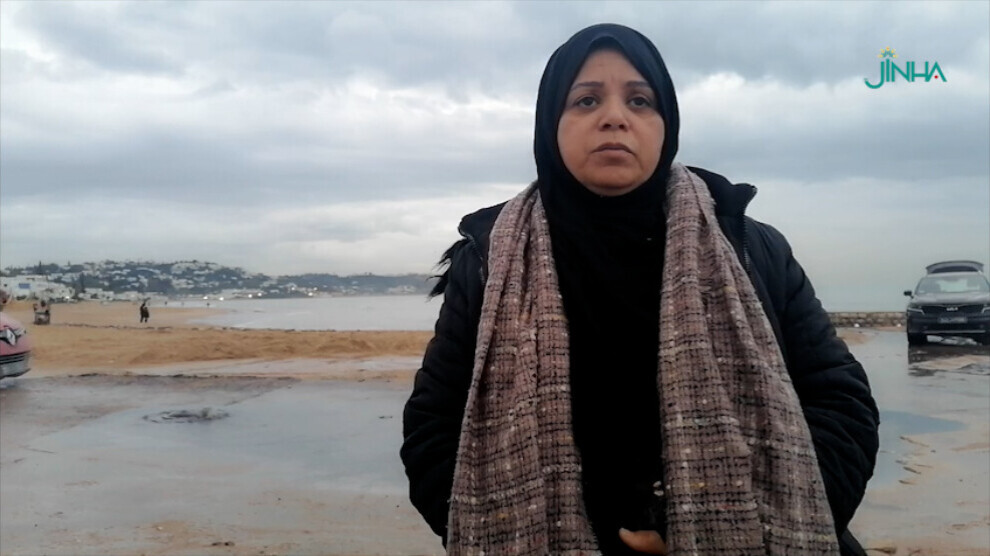
To better understand the floods, their causes, consequences, and possible future solutions, our agency spoke with urban planning and city development specialist Latifa Tajouri. She stated that the floods in Tunisia and La Marsa “are not unprecedented, as similar events have occurred before, but the scale of the losses, fear, and horror experienced by residents this time was extremely significant.”
She explained that Cyclone Harry was not the sole cause and that there is a collective responsibility. “Institutions responsible for cleaning drainage channels faced many difficulties because citizens dump waste into valleys, even dry ones. Moreover, intervention was not swift enough, and roads cracked, turning into large potholes, allowing water to enter homes — including my own.”
She believes that the urban disasters Tunisia is witnessing today, including the tragedy affecting several cities such as La Marsa, cannot be understood without revisiting the concept of “water memory.” A city, she explains, is not merely an accumulation of solid materials, but a living entity that breathes through its water channels and historical layers. “What we are experiencing today is a conflict between ‘concrete urbanism’ that seeks erasure and the ‘memory of water’ that refuses to forget.”
Latifa Tajouri added that traditional Tunisian cities respected the “sanctity of watercourses,” whereas modern urban planning, influenced by narrow functionalist schools, treated water as an enemy to be expelled or a prisoner to be confined in underground pipes.
She elaborated: “When we witness drowning tragedies today in La Marsa (such as the drowning of a child in a manhole during previous floods), we realize that we have lost this spiritual connection. In the mindset of the contemporary technical and architectural planner, water has shifted from being a ‘divine gift’ and a delicate social system to a ‘technical burden’ that we attempt to eliminate by filling channels and narrowing valleys. Building over waterways is not merely a technical mistake by an architect, but a form of ‘visual blindness’ that ignores the fact that the watercourse we buried will not accept burial. Instead of water remaining beneath buildings as a stable foundation, it rises above them as a destructive force because we failed to respect the ‘engineering of creation’ that assigned water its rightful place and flow.”
As a resident affected by the floods, she explained: “We live on Tayeb Sayala Street in the Al-Hukkam neighborhood of La Marsa, where large quantities of water accumulate from surrounding areas such as Sidi Bou Said and Jabal Al-Khawi. The area requires frequent cleaning and dredging throughout the year, yet we faced a real disaster when water entered our homes, damaging all furniture. We exerted enormous effort — especially us women — in cleaning, providing psychological support to our terrified children, and caring for elderly family members who panicked due to lightning and rushing water.”
“The Problem Lies in Our Relationship with Water”
Regarding the causes of heavy rainfall and flooding, Latifa Tajouri stated: “Floods are the result of climate change, according to climate specialists. They were expected, and warnings had been issued, yet we witnessed delayed intervention by the relevant authorities and a lack of preparedness amid deteriorated infrastructure incapable of absorbing sudden crises.”
As an urban planning specialist, she emphasized that “the core issue is that our relationship with water and its symbolism has shifted from sacred to polluted and despised. We try to cover and bury it under roads and sidewalks to facilitate functional urban expansion — an approach promoted by a particular school of urban planning whose failure is evident today, especially in La Marsa.”
She stressed the need to revise these plans by adopting new strategies inspired by the concept of the “sponge city,” which absorbs water through expanding green spaces capable of retaining rainwater, alongside developing deeply studied plans for water storage. “Today, amid a climate crisis and severe water scarcity, and our inability to store rainwater, we must change our strategies and implement precise plans that address the problem.”
“Our Relationship with Water Begins with Education and Socialization”
She explained that water repeatedly proves itself to be unconquerable and unburied, and that cities must restore a respectful relationship with water by valuing it as a vital resource for life. “Our relationship with water begins with education and socialization — teaching the preservation of water resources — and also extends to urban planning, legal frameworks, and legislation aimed at protecting Tunisia’s water wealth.”
She noted that the draft Water Code is currently under review and expressed hope that it would not conflict with the Urban Planning Code, which emphasizes the importance of water resources and prohibits construction over valley surfaces and adjacent sidewalks. “However, these distances are often not respected, making citizens partly responsible for the problem. We also observe demographic expansion in cities where covering valleys becomes mandatory, while illegal construction is tolerated.”
She believes that legislation must be revised and harmonized to serve regional needs, urban sustainability, water resource preservation, and infrastructure resilience. She also stressed that citizens must act responsibly toward land and water resources, which are not solely their right but the right of future generations. “Public maritime property must be respected, as the sea has the right to expand naturally through tidal movements.”
Respecting Nature
She pointed out that “in the past, our ancestors respected the cosmic order and the sea’s right not to be confined, maintaining safe distances between homes and the shoreline — practices passed down through generations. Today, buildings stand dangerously close to the sea because our relationship with it has changed. It has become a symbol of leisure, luxury, aristocracy, and social status. Humanity now besieges the sea, denying it freedom. When nature becomes enraged and the sea reclaims its rights, disasters like those we experienced occur.”
She also emphasized the importance of preserving municipal areas and protecting valleys, especially when dry, as citizens often dump household waste, market refuse, mechanical debris, and construction fill into them, obstructing water flow and causing floods.
Women as the Driving Force
In conclusion, urban planning and city development specialist Latifa Tajouri affirmed that women are the primary drivers of social culture. They play a crucial role in raising children to respect their environment, their relationship with place, and their sense of belonging. This upbringing grows with them and reduces the risks of valley pollution and environmental degradation in general. “Women bear a significant responsibility, but they also carry the heaviest burden during disasters, as they are the ones expected to protect their families.