
Women’s Day in Tunisia…Glossy Slogans and a Bitter Reality
Journalist Taqwa Al-Falhi affirms the Personal Status Code was a legislative revolution,but it remains ink on paper as Tunisian women still face violence,unemployment,and marginalization.
IKHLAS AL-HAMROUNI
Tunis — On August 13 of each year, Tunisia celebrates Women's Day, commemorating the promulgation of the Personal Status Code in 1956 and the rights it established that made Tunisia a pioneer in women's rights in the Arab and African context. But the question remains: Does this celebration reflect the reality of Tunisian women and their aspirations today, or has it become a symbolic occasion disconnected from their social, economic, and legal challenges?
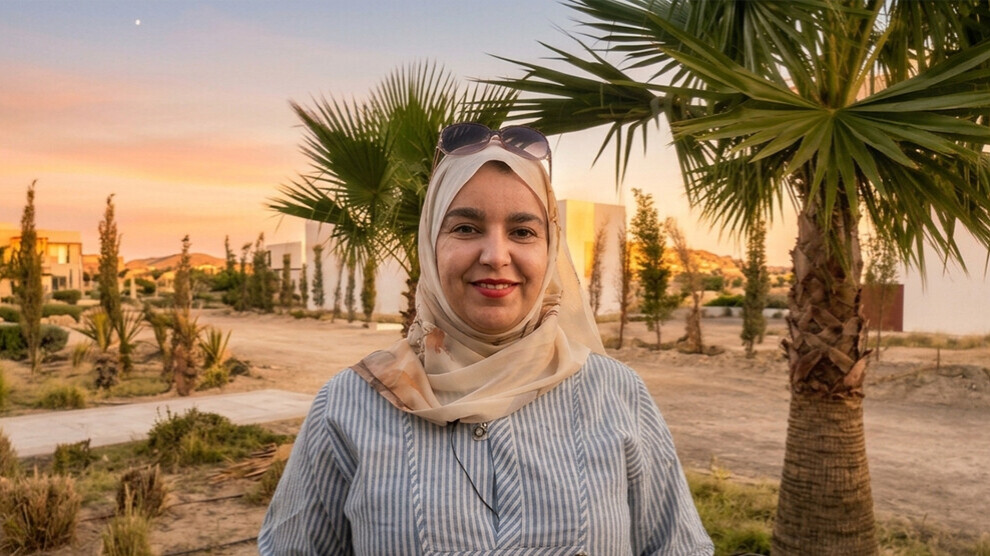
In this context, Tunisian journalist Taqwa Al-Falhi, a native of the city of Kasserine, believes that "this celebration is merely glossy slogans that hide a painful reality for Tunisian women, especially in rural and interior regions." She adds: "The National Women's Day has become a national occasion celebrated in all forms, events, and initiatives, but in the countryside and some cities, it conceals a painful reality for Tunisian women."
Significant Disparity in Rights
She explains that the Personal Status Code constituted a legislative revolution and a historic gain for Tunisian women, with its most prominent achievements being the prohibition of polygamy, making divorce a judicial matter, and setting the marriage age at 18. However, she affirms the existence of a gap between the law and its application, especially in interior and rural regions, where customs, traditions, and limited access to the judiciary prevent women from obtaining their rights, unlike in major cities.
Regarding the reasons for the non-application of these laws, she says: "The reasons for the delay in implementing some laws are multiple, the most prominent being the absence of political will. The state is content with celebrating the Code's achievements on August 13 and neglects the activation of laws that might provoke social controversy, such as equality in inheritance."
She adds: "There are specific legal texts, such as Article 23 of the Personal Status Code, which still stipulates that the husband is the head of the family, even though the 1993 amendment established the principle of cooperation between spouses. The phrase 'head' still reflects a view of inequality and legally makes the woman subordinate to the husband."
Article 23 obliges the husband to provide for the family, with the wife contributing if she has means, while Article 31 guarantees compensation for material and moral harm to a woman harmed by divorce. Article 53 bis also imposes penalties for non-payment of alimony. However, the problem, in her view, lies in implementation, as women face difficulties in obtaining their judicial rights, especially regarding alimony, even though the law does not distinguish between working and non-working women.
Among other reasons, Taqwa Al-Falhi points to the historical debate surrounding the Code: "The latter has become a sacred revolutionary text that cannot be touched. This hinders any serious discussion about amending it, and this is one of the reasons for the delay in implementation. Furthermore, despite the abundance of feminist and rights movements in Tunisia, their pressure remains limited because the state does not involve them in decision-making or in discussing necessary reforms, due to its lack of support for the activities of feminist movements."
The Government Is Not Serious in Enforcing the Law
Taqwa Al-Falhi also addressed the law on violence against women, issued in 2017, yet violence cases remain high and reporting is weak. "Regarding women, the state is generally content with issuing laws that do not serve as effective tools for implementation. Despite the fact that the 2017 law on violence against women expanded the concept of violence to include physical, psychological, sexual, economic, and political violence, made violence a social rather than merely a family crime, and abolished the philosophy of leniency under the pretext of preserving the family, reality shows that cases brought to court represent only a small fraction of violence cases."
She says: "The obstacles to the actual implementation of this law are weak reporting due to fear of traditions and social stigma, lack of trust in the judiciary, absence of adequate protective environments and shelters, insufficient psychological support from structures responsible for supporting and protecting women, judicial leniency with perpetrators in some cases, and impunity for offenders, which prevents the actual application of legal texts," indicating that the government "is not serious enough in field implementation."
Among the manifestations of the falsity of slogans, she addresses the wage gap and difficulties in accessing decision-making positions: "Official discourse treats women as a homogeneous category, as if all women benefited from theoretical gains to the same degree, which is incorrect."
She emphasizes that rural women suffer double marginalization, despite representing 77% of the agricultural workforce, often working without contracts or social coverage and with lower wages than men. Unemployment among women, especially higher education graduates, is significantly higher than among men.
She points to the persistence of discrimination in inheritance, which perpetuates women's economic dependency, in addition to weak property ownership. Regarding decision-making positions, despite women's presence in the civil service, top leadership positions remain largely monopolized by men, due to obstacles preventing women's access to decision-making centers.
She adds: "Official discourse hides these obstacles and difficulties under the cover of past achievements and does not look at the painful present of Tunisian women, nor does it acknowledge the economic and social gaps women suffer from."
Necessary Measures
Taqwa Al-Falhi proposes a series of measures to make women's gains a tangible reality, most notably activating laws related to equality, especially in inheritance, reviewing Article 23 of the Personal Status Code, and strengthening the implementation of the law on violence against women by providing shelters, legal and psychological support, and tightening penalties against perpetrators. She also calls for addressing women's unemployment, improving the conditions of women workers in the agricultural sector, ensuring women's access to decision-making positions, promoting a culture of equality and rights awareness, and supporting feminist and rights movements to enhance their capacity to influence and push for change.
Returning to Women's Day, she says: "The celebration of Women's Day remains formal as long as economic and social gaps continue to face women, and as long as women still face difficulties in obtaining fair wages, leadership positions, and genuine legal protection."
She affirms that these national celebrations and "non-activated" laws are not enough if culture does not change and political will to improve the situation of Tunisian women is not available, because today they are waiting for tangible actions, not glossy slogans, and real implementation, not theories on paper.