
How Did a Young Tunisian Woman Redefine the Meaning of Disability?
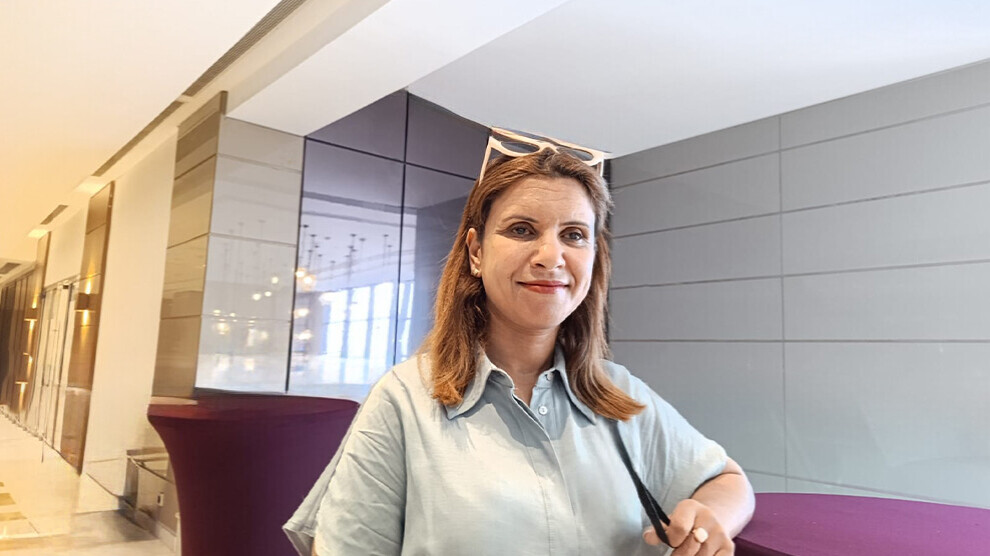
A young Tunisian woman who lost her sight entirely in a car accident defied disability to become a well-known content creator, earning her the title "Maker of Happiness."
NAZIHA BOUSSAID
Tunis — The saying that "disability lies in the mind, not the body" resonates with many human experiences, but civil society activist and member of the "Absar" association, Leila Kacemi, has given this idea a living, extraordinary embodiment after losing her sight. She did more than simply defy her circumstances — she redefined the very meaning of vision, insisting that inner peace and contentment can reach levels among people with disabilities that fully able bodies, hollow in determination, could never grasp.
Speaking about her experience with visual impairment, civil society activist Leila Kacemi says: "I could see, I was continuing my studies, and living a normal life — until I was in a car accident in 2003. After a long treatment journey and multiple surgeries that continued until 2010, I lost my sight permanently and began a new life, completely different from before. I worked to make full use of all my senses and everything around me so I could adapt to this new life."
She recounts: "I lived through the bitterness of losing my sight at seventeen — an unbearable pain for a girl at that age. Despite the harshness of the shock, I chose to face the challenge; I continued my education until I got my job, and entered the world of content creation. Today, through my videos, I aim to prove that life remains beautiful despite its shortcomings, and that positivity, determination, and persistence are enough to overcome any obstacle and turn it into hope."
She didn't hide that she initially felt frustration and depression, and fell into a spiral of questioning: "How did this happen to me? Why? Why me specifically?" She noted that the thought of staying home all the time constantly crossed her mind, but she quickly convinced herself that visual impairment wasn't the end of the world as long as there was will — so she decided to go out and continue living, in a new way.
She added: "Currently, I work at the Regional Health Directorate, serve as a deputy on the Local Development Council, and have recently become an influencer and content creator on social media. I live my life normally — I get up every morning, prepare my breakfast, get myself ready, and head to work without anyone's help."
Returning to the details of how she lost her sight, she said: "I was hit by a car in the street and fell on my head. That fall caused inflammation in both corneas, and since I already suffered from eye pressure, my condition deteriorated. I spent years going to doctors and undergoing surgeries until I lost my sight completely at the age of twenty-four."
Defying Disability
Many people associate blindness with total dependence on others, especially when it comes to women and their complex responsibilities juggling home, work, and errands. But Leila Kacemi breaks this pattern; she affirms that a blind woman — whether born with her disability or having acquired it — is fully capable of managing her own life, and even believes that those born without sight have the advantage of having adapted to it since childhood.
She says: "The role of those around me is limited to helping me browse social media to describe images I can't see. Beyond that, I start my day preparing my own breakfast, then head off to work despite the lack of accessible infrastructure. I rely entirely on my smartphone, which has become my substitute eye — through it, I learn about objects and colors, and even when shopping for clothes, it's my primary guide."
Isolation is no longer an option; the internet and modern technology have opened new doors to independence for people with visual impairments around the world. Leila Kacemi affirms that technology today has become a light in the darkness of the path — mapping routes and determining directions with precision, alongside the emergence of revolutionary innovations like smart glasses, digital watches, and the smart cane, which have become technological eyes that see on their behalf and grant them freedom of movement.
Maker of Happiness
Leila Kacemi's relationship with technology didn't stop at making her daily life easier — she turned it into a platform for change through creating meaningful content that inspires people with visual impairments and encourages them to adapt and persevere. She says: "My main motivation for entering this world is to break society's stereotypical view; I want everyone to understand that we are perfectly ordinary people, fully capable of giving and achieving just like anyone else."
Regarding her early days online, she revealed the scale of the obstacles she faced, saying: "In the beginning, I ran into a lack of acceptance from some followers, and faced bullying and mockery stemming from a lack of awareness of how painful such behavior is for people with disabilities. Despite that, a full year of persistence and effort paid off in changing this stereotypical image — I succeeded in convincing my audience that visual impairment is a health condition that could affect anyone, and I crowned this success by becoming a source of positive energy, to the point where people started calling me the 'Maker of Happiness.'"
Leila Kacemi considers her greatest achievement to be changing the awareness of passersby on the street — those who moved past rejection and now compete to offer her help, whether crossing the road or finding a place to sit.
Asked about the message she wants to convey to her followers and to everyone, she said: "Love yourself as you are. Love yourself, because those around you will love you too. Get to know your abilities and the things you're capable of doing. Turn your spirit into something that can change things within you — and tomorrow, you can change society."
Regarding her civic activism, Leila Kacemi noted her role as an active member of the "Absar" association, where she focuses on the media and awareness-raising side, working to deliver accurate information to the public. She concluded by describing the association as her "second family," which supported her in overcoming obstacles, praising its role in educating people with visual impairments about their rights and responsibilities to ensure their full integration into society — something she sees as a first step even more important than economic empowerment, embodying the saying: "Don't give me a fish; teach me how to fish."