
From the Womb of the Syrian Crisis…The Syrian Women’s Council Builds a Feminist Force Across Regions and Affiliations.
Since 2017, the Syrian Women’s Council has built a unified feminist movement across regioins, defending women’s rights and ensuring their role in shaping Syria’s future.
ASMA MOHAMMED
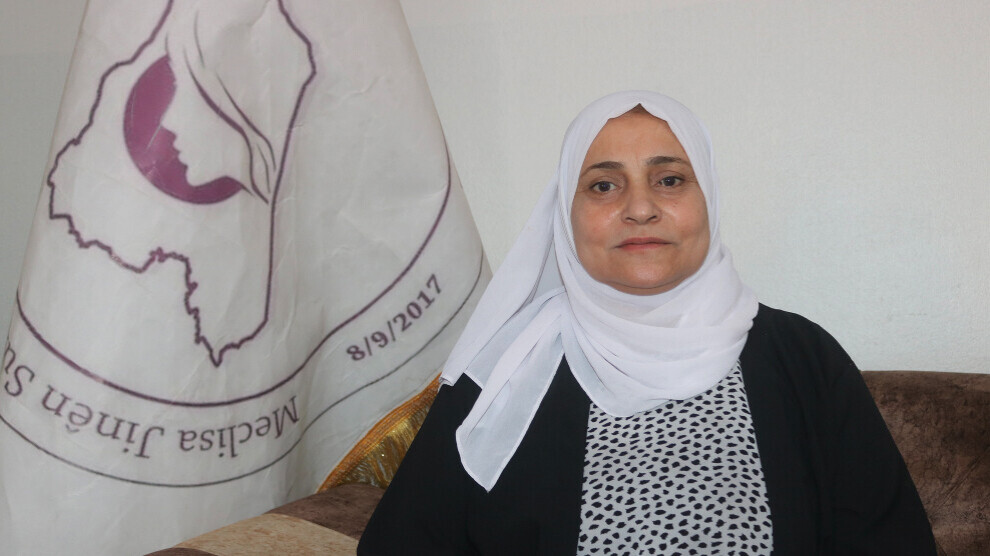
Qamishlo_Mona Youssef, an administrator of the Syrian Women’s Council, affirmed that the Council continues its efforts of unify the Syrian feminist movement and enhance women’s participation in various spheres of life, based on a vision that aims to build a genuine partnership that guarantees women’s presence in shaping Syria’s future and decision-making.
Over the past years, Syria has witnessed profound political and social transformations accompanied by a long war that has left harsh effects on society as a whole. Amid these circumstances, Syrian women have emerged as one of the groups most burdened by the demands of the stage, facing economic and service collapse that directly affected the details of their daily lives. Women’s suffering was not limited to the humanitarian aspect; they also faced a decline in opportunities for political and social participation, placing them at the forefront of the equation of societal resilience.
Justice, Equality, and Citizenship
In this context, Mona Youssef, an administrator of the Syrian Women’s Council in the Jazira office, affirmed that the establishment of the Council came in response to an urgent need imposed by the harsh conditions that Syrain women endured during the years of crisis. She noted that these circumstances drove Syrian women activists and rights defenders to seek an inclusive feminist framework capable of unifying efforts and defending women’s rights in an organized and sustainable manner.
She explained that the Council was launched from a strategic vision based on unifying the Syrian feminist voice and building a broad network of relationships with civil society and human rights organizations, with the aim of creating a feminist force capable of influencing public policies and decision-making.
Mona Youssef affirmed that the Council approaches women’s issues as an essential part of the project of democratic transition and state-building, stressing that any political or constitutional project that does not guarantee the actual participation of women will not achieve justice or sustainable stability.
The Council's Vision and Objectives
She added that the Council focused on reaching women in villages and remote areas, based on the conviction that genuine empowerment must include all women without exception, taking into account the differing circumstances between regions. Within this framework, the Council launched training programs and workshops on feminist leadership, project management, and capacity building, in addition to community dialogue sessions and safe spaces for exchanging experiences.
Regarding geographic expansion, Mona Youssef explained that the Council began its work in North and East Syria but has been able over the past years to build an organizational presence in a number of Syrian regions through offices, committees, and women's representations, despite security and political challenges. It also organized forums and dialogue seminars in which hundreds of women participated to discuss issues related to Syria's future, particularly transitional justice and institutional reconstruction.
Mona Youssef affirmed that the constitutional file is among the most important files for Syrian women, as it constitutes the legal framework that determines the form of the state and citizens' rights. Women demand clear constitutional guarantees that ensure full equality and actual participation in state institutions, alongside the revision of laws that contain discriminatory provisions, foremost among them personal status laws. She considers that achieving justice requires comprehensive legal reform that enhances women's status and role.
Continuing Work Despite Challenges
Despite the challenges facing women's work in Syria, Mona Youssef noted that the Council has achieved important accomplishments, most notably the unification of the women's voice, the enhancement of communication among women in different regions, and the building of a broad cross-border network of relationships. It has also contributed to highlighting women's issues in local and international forums, conveying women's suffering to human rights bodies, and participating in the preparation of documentation reports on the violations they have endured.
In conclusion, Mona Youssef, an administrator of the Syrian Women's Council, stressed that the upcoming phase requires a higher level of organization, coordination, and joint work to ensure a genuine and effective presence for Syrian women in all stages of state-building, as essential partners who cannot be overlooked in shaping the future of the new Syria and drawing its political, social, and economic contours.