
Children wait, fathers absent: Sweida detainees' hunger strike worsens tragedy
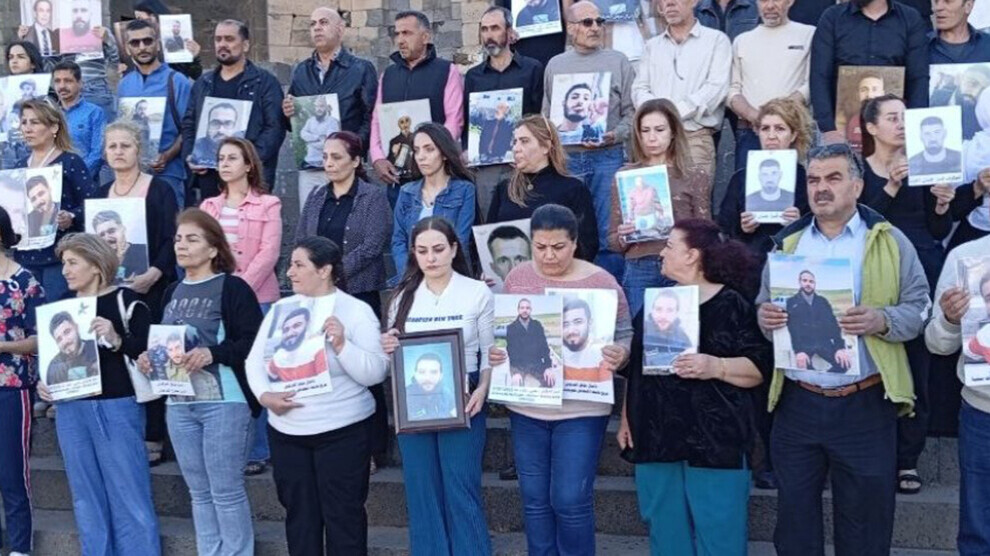
Concern escalates in Syria's Sweida as detainees continue hunger strike and abductions recur, amid growing popular and human rights demands to reveal the missing's fate and end months of ambiguity.
ROSHEL JUNIOR
As-Sweida_ As the debate over the file of detainees and forcibly disappeared persons from Sweida is open-ended hunger strike in protest their continued detention.
Hundreds of sons of Sweida are still forcibly disappeared by the Syrian interim government, amid a complete absence of legal procedures, with many of them deprived of the right to defense or to appear before a judge. Testimonies from families and human rights activists indicate that there is a large number before a judge. Testimonies from families and human rights activists indicate that many these young men are held in the Adra Central Prison without any legal justification, while others were arrested in separate incidents following the massacres that the city witnessed.
In a notable development, the families of the detainees announced that their sons inside Adra Prison had begun an open-ended hunger strike to protest their arbitrary detention. One detainee said in a phone call to his wife: “We are twenty young men from Sweida who have stopped eating either we die here or we get out.This statement reflects the extent of the despair that the detainees have reached after long months of waiting without any glimmer of hope.”
Fear, absence, and endless waiting
In an interview with our agency, Yusra Abu Rayed, mother of detainee Jaber Nasser Naim, said that the last phone call she had with her son was on May 27, during which he told her that the Sweida detainees in Adra Prison had begun an open-ended hunger strike to protest their continued detention without any explanation of the reasons for their arrest, and without being brought before any court or judge – a flagrant violation of their fundamental rights. She noted that her son was arrested on November 1 last year while returning from Damascus at a security checkpoint, even though he has no legal or security issues.
She explained that she received no information about him for two months despits her attempts,before she was able, through the International Committee of the Red Cross, to find out that he was being held in Adra Prison, and that communication with him is limited to one call every twenty days.
she describes that period as the hardest in her life, feeling a deep emptiness in her home, recalling the days when he stood by her side and carried the family’s worries. “I would sleep and wake up not knowing if my son was alive or dead… the pain tore my heart every moment.” She points out that her son, an engineering student and fatherless, was the sole breadwinner of the family, and that his arrest was based on his religious identity, plunging the family into a state of constant fear and anxiety.
She expressed her solidarity with all the mothers waiting for their detained sons, affirming that their suffering is one, and that their patience grows heavier with each passing day without knowing the fate of their children, calling on the relevant authorities to release their detained sons.
"My daughter was born and he doesn't know her features"
For her part, Yasmin Flehat says that her detained husband told her during a call on the 27th of last month that he, along with twenty other detainees, had begun a hunger strike. She noted that his voice was unusually exhausted, and that he has not been brought before any court since his arrest.
She explained that her husband was arrested when she was seven months pregnant, and that their baby girl is now three months old without him having seen her or held her in his arms. "He dreamed of holding his daughter, but to this day he doesn't know what she looks like… my heart burns for him and for our children."
She adds that her husband grew up an orphan, and she fears that her children will live the same experience. "I don't want my children to grow up without a father as he did… I don't want orphanhood to be repeated in our family."
No clear charges
Thana Faraj, sister of detainee Maher Faraj, says that her brother has been missing since July 15 last year. She explained that the family was looking for a means of transport to leave the area, so her brother brought a car from the town to help them, but he was surprised by a patrol from the General Security near the military police. He was injured during the incident and taken to a hospital in Daraa, before being transferred to Adra Prison.
According to her account, several people informed the family that he was inside the prison, but they are still deprived of any communication with him or official information about his health and legal status. She noted that the passing of eleven months since his disappearance has exacerbated the family's suffering, asking why his detention continues despite his having committed no crime. She pointed out that the family would have accepted any legal procedures if clear charges had been brought against him or if he had undergone a proper trial.
Thana Faraj appealed to the relevant authorities and human rights organizations, foremost the International Committee of the Red Cross, to intervene to reveal the fate of the detainees and guarantee their fundamental rights, noting that arrests at checkpoints continue.
"His youngest child was born while he was behind bars"
Ghada Al‑Ghadhban, mother of detainee Imran Al‑Ghadhban, recounts that her son has been detained for more than nine months after being stopped at a checkpoint belonging to the Syrian interim government following the July 2025 events. She says the family spent four full months without any information about his whereabouts, despite their repeated inquiries.
She indicates that she later managed to communicate with him, and he told her that he was being held in Adra Prison, noting that he is a father of three children. His father died during his detention, while his youngest child was born while he was behind bars.
She noted that her son sounded exhausted during their last phone call, and told her that the detainees had begun a hunger and thirst strike to protest their continued detention without being brought to justice or knowing the charges against them. She added that her grandchildren ask about their father daily, while the family lives in fear over the health and humanitarian conditions of the detainees, calling on the relevant authorities and human rights organizations to intervene urgently.
"His health condition cannot tolerate the absence of medicine and medical care"
Halwa Al‑Muhaithawi, wife of forcibly disappeared agricultural engineer Salah Al‑Afif, says that her husband remained in his home to protect his property before the interim Syrian government arrested him on the basis of his Druze sect, without any legal justification.