
The Druze Woman… Between Deep-Rooted Resilience and the Challenges of Modern Leadership
Numerous experiences, including the historical legacy of Druze women, prove that women’s presence in pivotal moments is no coincidence, but an extension of deeply rooted identity, resilience, protection, awareness, and unwavering strength.
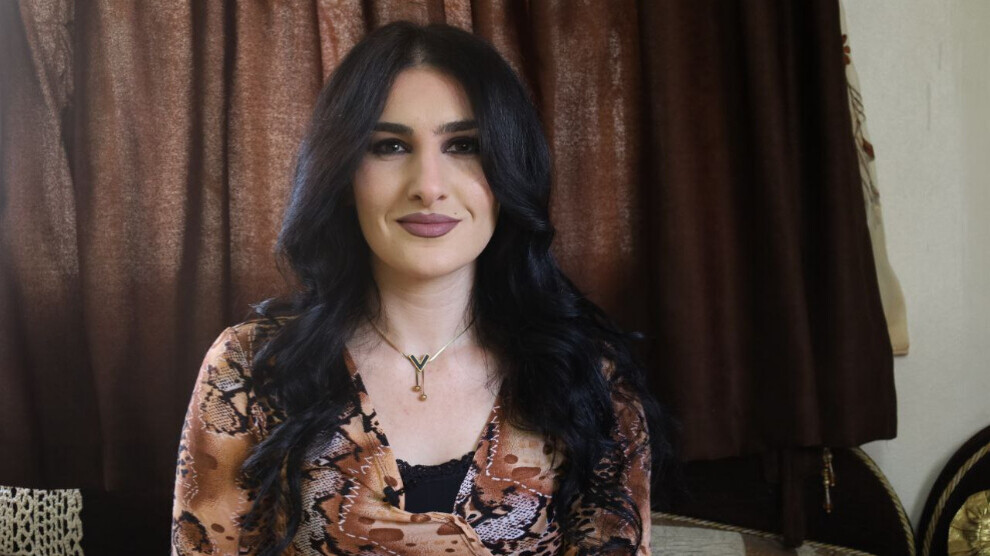
Roshel Junior
As-Suwayda — In societies shaped by crises and wars, leadership has never been an easy choice for women; rather, it has been a heavy responsibility imposed upon them in the most difficult moments. A woman leader faces not only the challenges of public work but also the burden of societal expectations that demand she remain steadfast, strong, and capable of confrontation under all circumstances. The strength granted to her as a mark of trust from her community sometimes turns into immense psychological pressure, as she is expected to fight with her voice, her intellect, and her sense of belonging — and to remain on the front lines no matter how fierce the storm.
Among the most prominent obstacles facing women leaders is society’s fear for them, which may be misunderstood as doubt in their abilities. There is also the difficulty of accepting women in positions of political and media confrontation, particularly in environments accustomed to seeing men as protectors and defenders. Balancing reason and emotion in critical issues poses another constant challenge, as women leaders are often judged with double scrutiny regarding their rhetoric and positions.
The Druze Woman… The Land, Not the Shadow
Rama Reda, originally from Jabal Bashan, a graduate of Al Jazeera Media Institute and holder of a diploma in International and Humanitarian Law from Laval University, as well as a diploma in Middle East Foreign Policy from Harvard University, offered our agency a special reading of the historical and contemporary role of Druze women. She affirmed that their presence has never been marginal but has always been an essential component of society’s fabric.
She believes that the Druze woman “was never a shadow in history; she was the land itself,” describing her as a “guardian of identity and faith.” The Druze community, she explains, is characterized by cohesion and religious particularity, and women have always been — and remain — central to that cohesion.
A Historical Role in Confrontation
Historically, Druze women played a pivotal role in managing land and household affairs during the absence of men in times of war. They were the center of education and the source of preserving faith and values. During the Great Syrian Revolt led by Sultan Pasha al-Atrash, women contributed by hiding revolutionaries, securing supplies, and strengthening the internal front — confirming that their presence was at the heart of confrontation, not on its margins.
Rama Reda sees the strength of Druze women as influenced by the harsh nature of the mountain environment, which shaped their resilient character and accustomed them to bearing responsibility under exceptional circumstances.
She points out that Druze women have broken two contrasting stereotypes: that of the traditional Eastern woman and that of a politically closed society. “Today,” she says, “journalists, lawyers, political activists, and local and international leaders stand at the forefront, asserting their presence through knowledge, awareness, and the ability to craft discourse that addresses both domestic and international audiences.”
She emphasizes that this presence is not based on appearance, but on intellect, competence, analytical ability, and the capacity to shape public opinion.
The Compass… Belonging Before Politics
Regarding political direction, she explains that the compass already exists — rooted in faith and belonging to the land before being tied to temporary political positions. She describes the current phase as “a matter of blood, not merely a matter of differing opinions,” which requires responsible discourse that combines rational analysis with a firm stance.
She notes that she has sometimes been described as emotional in tone, yet she strives to balance rational political analysis with the emotions connected to a cause that deeply affects her people and community. The Druze woman, she adds, does not so much direct the compass as continue her ancestors’ role in protecting fundamental principles.
Community Trust… A Costly Strength
Rama Reda highlights that Druze women enjoy clear trust within their community, where education is highly prioritized and a woman’s academic degree is regarded as a fundamental value before marriage. However, this trust comes with doubled responsibility, as she is expected to remain strong in all wars and circumstances.
She clarifies that society’s fear for her may sometimes be perceived as underestimation, but it actually stems from care and concern. Nevertheless, accepting the idea that a woman will stand at the forefront of political and media confrontation remains one of the greatest challenges she faces.
A Message on March 8
On the occasion of International Women’s Day, she sends a message to women: to be strong, to master their tools, and to recognize that knowledge is both intellect and action, and that merit is built on competence, not beauty. Beauty may grant acceptance, she says, but it does not create a lasting impact.
She calls for confrontation when the time demands it, and for diplomacy when it is required, affirming that a woman is part of the land and must assert her presence through awareness.
Resilience in Times of Massacres
Rama Reda recalls stories of women during periods of massacres, when they alone bore the responsibility of protecting their children and moved from place to place in search of safety. “Every story confirms that strength is not incidental to the Druze woman; it is deeply rooted in her upbringing and identity.”
She concludes by saying that this inherited upbringing — “My mother was like this, I am like this, and I raise my children this way” — is what guarantees the continuity of identity, affirming that women will remain equal to responsibility: steadfast, unwavering, and never surrendering.