
Raised on Fear... How Does Society Repress Girls Through Their Mothers?
In traditional societies, women struggle between awareness of their rights and social pressures, where repression is reinforced through upbringing, fostering inferiority and obstructing the creation of a psychologically and socially balanced generation
Rochelle Junior
As-Suwayda — In societies still governed by a patriarchal mindset, girls are raised from childhood on fear and restriction, and on absolute acceptance of the authority of the father and brother in their daily lives — from their clothing and voice, to their right to discuss and express opinions. Any attempt at objection is immediately labeled as “poor upbringing,” and often the mother alone is held responsible for this flaw, while society as a whole is absolved from accountability.
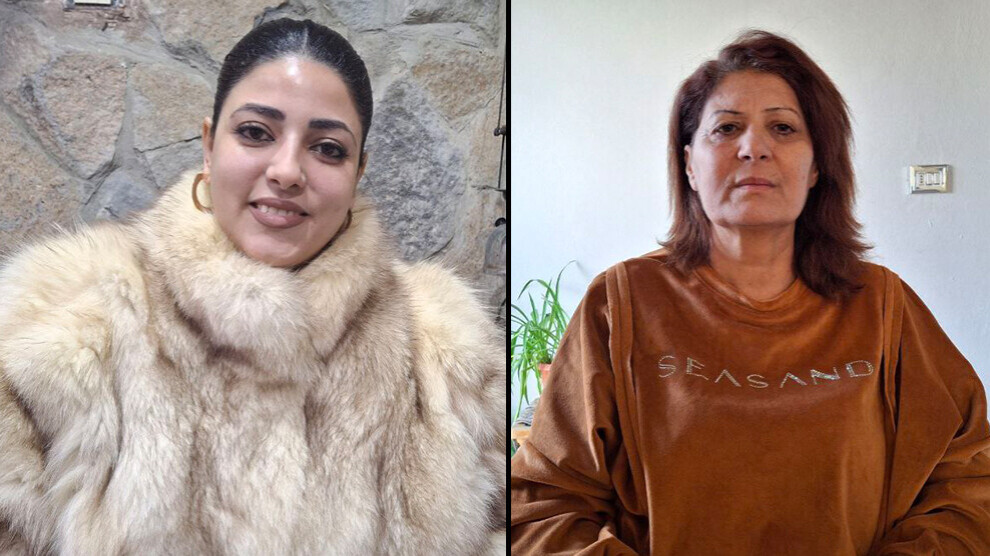
Activist Amal Al-Jabr says society still views girls as “deficient,” no matter their education or awareness, while viewing boys as necessary for the continuation of the family name, future protection for the mother, and a fundamental pillar in inheritance and the household. She emphasizes that this concept instills a persistent sense of inferiority in girls.
She notes that the mother, despite being the primary victim of this system, is often forced to reproduce it, teaching her daughter that her true place is in her husband’s home, that she must lower her voice, obey her husband, father, and brother, and serve without discussion — not out of conviction, but out of fear of society’s gaze and stigma.
Women Between Awareness and Social Oppression
Amal Al-Jabr explains that educated and employed girls, despite knowing their rights and duties, are crushed under societal pressure and forced into silence regarding any injustice or violence they face, fearing accusations of poor upbringing or deviance. Even in inheritance matters, the rights of many women are squandered due to fear of their husband, brother, or being burdened with responsibilities they are deemed unable to bear according to prevailing patriarchal notions.
She says, “Even though men know that it is often the daughter who will care for them in old age, her rights are squandered in everything. In many cases, women voluntarily relinquish their rights under pressure, as if they are incapable of handling financial or legal responsibility.”
She emphasizes that the mother’s role must be different — that she must teach her daughter not to repeat the repression she experienced and to equip her with “the weapons of knowledge, strength, and conscious freedom.” A girl’s freedom, she says, does not mean chaos but is built on principles and foundations.
Transmission of Unprocessed Experiences Across Generations
For her part, Reem Al-Ghajri, a graduate in psychological guidance currently pursuing a professional doctorate at a private university, addressed the issue of parenting mistakes being transmitted across generations. She emphasized that proper upbringing requires strategic awareness and courage in confronting social and cultural pressures, and that the environment in which a child grows up is the most important factor in shaping their personality and mental health.
She explains that a mother who lived a childhood full of fear, restriction, and control often unconsciously reproduces these experiences with her children. She considers what was practiced on her as correct and finds change difficult because she has been molded into a social framework that does not allow her liberation. The result is that children emulate these patterns, believing the mother is always right, thereby entrenching unhealthy parenting errors.
Social and Cultural Pressure
Reem Al-Ghajri pointed out that traditional societies, despite entering a stage of development, still suffer from inherited parenting mistakes ingrained by nature. This social pressure hinders the formation of healthy relationships and makes transitioning from a weak stage to an advanced one in development difficult. She stressed that excessive repression leads to psychological problems and that the solution lies in the presence of specialized psychological support teams, alongside awareness and cultural seminars that promote freedom of expression.
She noted that men have contributed to reinforcing patterns that limit women’s roles, often canceling their effective role in favor of focusing on the masculine side. This missing balance negatively affects children, where girls become trapped by their mothers’ restrictions, causing them to act out beyond permitted boundaries as a reaction. Reem Al-Ghajri believes the solution lies in creating balance between men and women, as studies have proven that women possess high capabilities, but repression and fear limit their emergence.
Confusion Between Protection and Control
Protection, as Reem Al-Ghajri says, is a natural feeling every mother has a right to, but when it turns into control, it weakens the girl psychologically. Parenting requires diplomatic methods and clear strategies because imposition breeds aversion, and inconsistency in upbringing creates an unhealthy psychological state in the child.
She explains that change in parenting requires courage because the mother often bears alone the consequences of any new method she chooses, while the father blames her if undesired results appear. This is a common mistake — parenting is a shared intellectual product and cannot succeed except through the cooperation of both mother and father.
Reem Al-Ghajri criticizes burdening girls with the weight of “honor,” emphasizing that this concept must be reconsidered because it is not tied to a biological factor. Studies prove that women have a significant and effective role, and a girl raised on sound foundations will not err. Therefore, parenting methods must be strategic and conscious, clarifying to both girls and boys what is right and wrong without coercion, because coercion generates negative reactions and complex psychological factors.
Environment as a Fundamental Factor
She says the environment in which a child grows up is the most important factor in shaping their personality. If the environment is healthy and parents guide them with a clear, consistent strategy, the child will be psychologically and socially sound, and the girl will become mature and aware, capable of facing societal challenges.
In conclusion, she emphasizes that proper parenting cannot rely solely on the legacy of the past but requires courage to change, cooperation between parents, and balance between the roles of men and women. A healthy environment and conscious upbringing are the path to building a new generation that is psychologically and socially balanced, free from the parenting errors inherited from previous generations.