
Why are women’s vioces vital in times of war?
Women’s narratives are the voice of life amid destruction, a necessary rüptüre that challenges and unsettles the dominant, male-centered narrative of war.
Shilan Qasemkhani
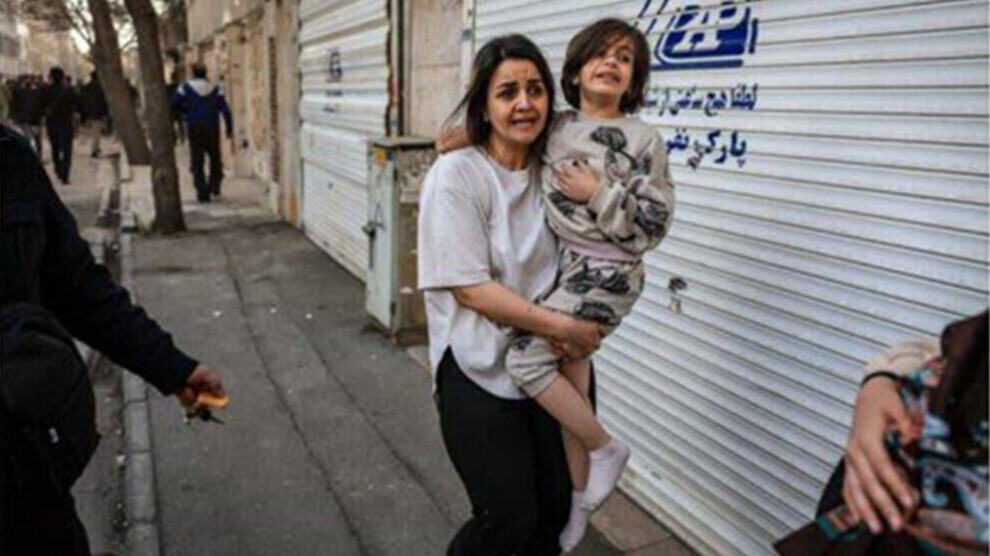
News Center — Wars are usually told in a language of power dominated by a masculine tone—spoken through leaders, states, and military analysts. In these narratives, war appears as a series of operations, frontlines, and balances of power. Yet real life cannot be reduced to such frameworks. War unfolds simultaneously inside homes, within bodies, and in human relationships—and these experiences often appear more clearly in the stories of women and children.
The Importance of Women’s Narratives
Amid news of missile attacks and military analyses, a woman wrote on social media:
“I am afraid to go into the bathroom, and at that moment a missile might fall and I die. I don’t want anyone to see my naked body.”
This short sentence may seem insignificant in the official narrative of war; there is no place for such words in military reports. Yet this simple statement reveals what is often erased from war narratives: the female experience of war.
War, with all its overwhelming violence, pushes women further to the margins, postponing their voices to a “later time”—a time that often erases the achievements of feminist movements that insist women’s issues are not secondary.
In authoritarian societies such as Iran, this marginalization intensifies during war. War not only amplifies military violence but also reproduces existing hierarchical social structures. In such conditions, women are often the first to be excluded from the center of narrative, as if the only experience worth telling is the masculine one of combat and heroism.
However, the stories that have spread on social media in recent days paint a different picture of war—one not seen on military maps, but in the daily anxiety people endure. In moments when systems of oversight and accountability collapse, this breakdown becomes an opportunity for some men to perpetrate violence against women.
One woman wrote:
“My ex-husband took my son to a safe place, and I agreed because I had to stay in the city and work. But after a few days, I discovered he brought him back. Now he doesn’t answer my calls, and my son’s phone is off. From anxiety, I feel like I’m losing my mind.”
This account reveals that when social order collapses and communication is cut, fear, instability, and violence seep into private life. No one feels obligated to protect women’s rights or hold perpetrators accountable during wartime.
For many women, war is not just fear of bombardment—it is a series of overlapping insecurities: concern for children, maintaining daily life, caring for family members, and often confronting hidden violence that intensifies during crises.
In such an environment, a woman’s body itself becomes an invisible battlefield. The earlier statement about fearing death in the bathroom reflects this reality. In many societies, including Iran, the female body is constantly subject to social control and surveillance. Even in death, this control persists: fear of exposure, violation of privacy, and humiliation.
For this reason, women’s narratives often disrupt the official image of war. They bring war down from the level of strategy and power to the level of lived human experience. In these accounts, war is not merely a military confrontation, but a process that reshapes everyday life at its deepest levels.
Feminist readings of war emphasize that official narratives not only ignore women’s experiences but also present events from a masculine perspective that asserts itself as the only voice.
Feminism, by contrast, highlights the importance of storytelling “from below”—the voices of those who live war as a tangible daily reality, not as a political strategy. For many women, war means managing life amid destruction: maintaining the home, caring for children, enduring constant anxiety, and striving to preserve a minimum of human dignity.
This is clearly reflected in the short, scattered stories written by women—simple accounts that may lack an explicit political message, yet derive their power from their simplicity. They reveal how war infiltrates the smallest details of daily life.
Women’s Narratives… A Crack in the Official Story
In recent years, Iranian society has witnessed a major movement under the slogan Jin, Jiyan, Azadî (“Woman, Life, Freedom”), symbolically linking the female body, everyday life, and freedom. Today, as the shadow of attacks spreads across the region, there is a risk that these demands will once again be marginalized.
Wars are often moments when social debates are postponed. Society is asked to unite, and critical questions are sidelined. Yet history shows that such postponement often silences the most vulnerable voices—those drowned out by the noise of war.
For this reason, documenting women’s wartime narratives is not merely a literary or emotional act—it is a political necessity. These stories challenge the abstract image of war and remind us that behind every military analysis lie real human lives.
Women’s narratives translate war from the language of power into the language of life. They remind us that war does not occur only on frontlines—it inhabits homes, relationships, and even the most intimate moments.
If the history of war is written only in the language of states and armies, it will remain incomplete. A large part of war’s truth is recorded in places rarely seen.
As long as women continue to tell their stories, silence will never fully prevail. Every woman’s account of war creates a crack in the official narrative—a crack that allows us to see the human truth of war from within.