
Women researchers: empowering women, enhancing dialogue are pillars for building a safe society
Baghdad University seminar “The Role of Women in Building a Violence-Free Society” highlighted empowering women psychologically and academically to enhance dialogue and reject violence, affirming protection and participation as pillars of societal peace.
RAJAA HAMID RASHID
IRAQ – Participants in the seminar addressed the educational, psychological, and leadership roles of women in combating violence, emphasizing the necessity of empowering and training them in stress management to build a safe society and spread the culture of dialogue and tolerance.
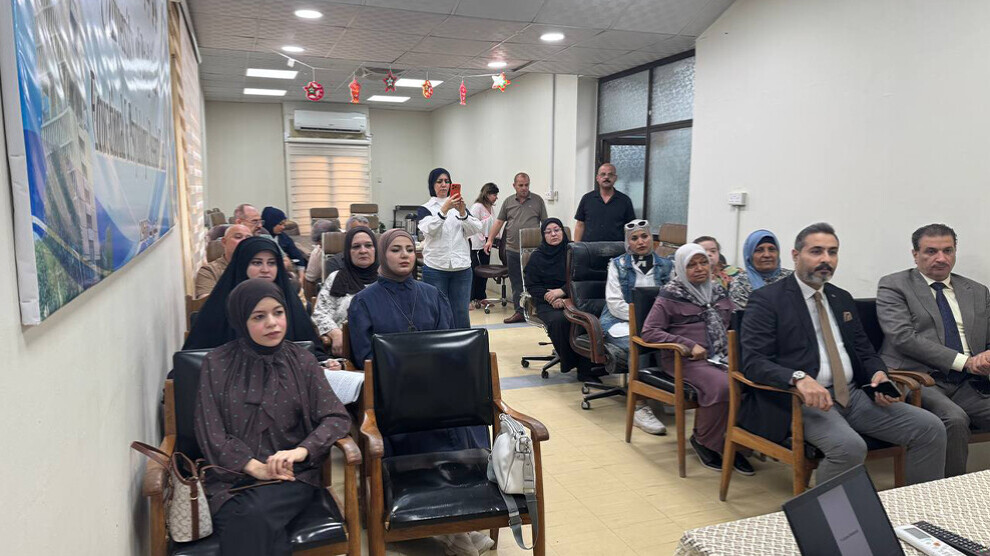
Academic women researchers confirmed the importance of the pivotal role that women play in building the family, educational institutions, and society, by contributing to spreading awareness and enhancing the culture of dialogue and tolerance, during a seminar organized by the Center for Educational and Psychological Research in cooperation with the Center for Women's Studies at the University of Baghdad, under the title "The Role of Women in Building a Violence-Free Society," yesterday, Tuesday, 27 October, in the Center's hall at the university.
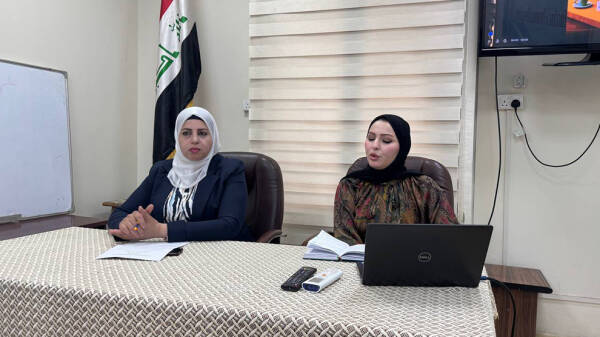
Dr. Hadeel Fadel explained that building a violence-free society is not limited to reducing violent behaviors, but requires preparing an environment dominated by respect and understanding, noting that women play an important role in achieving this goal, whether within the family or in educational, professional, and social institutions, as a fundamental partner in spreading awareness.
She explained that women's role in building a violence-free society is embodied in multiple fields, most prominently the educational and family role through raising children to respect others, accept difference, and resolve conflicts through dialogue instead of violence, with emphasis that the responsibility for upbringing falls on both parents together, in addition to her psychological and emotional role in enhancing awareness of mental health and developing stress management skills and positive handling of disputes, contributing to building relationships.
She added that women's awareness-raising and cultural role consists in spreading awareness of various forms of violence, especially psychological, verbal, and social violence, and correcting beliefs that justify violence or diminish its seriousness. Meanwhile, academic and educational women contribute to entrenching the values of respect and equality, enhancing safe environments for students, and participating in research and awareness activities related to violence prevention, alongside her social and leadership role in supporting community initiatives, supporting women exposed to violence, participating in decision-making, and proposing policies and measures that protect individuals from violence and discrimination.
Stress Management and Achieving Balance
For her part, Dr. Rana Talib Yassin from the Center for Women's Studies addressed the topic of stress management and achieving balance in various fields, explaining that women face pressures as a result of the multiplicity of roles and responsibilities they undertake within the family. "The accumulation of these pressures without adopting appropriate methods to deal with them may lead to tension, emotional outbursts, and difficulty communicating with others, in addition to increasing the possibilities of conflicts arising when combined with other social or behavioral factors."
She stressed the importance of managing psychological stress as one of the skills that help women achieve balance between life's requirements, organize their emotions, and deal with difficult situations, noting that the impact of these skills is not limited to the individual, but extends to the family, university, workplace, and society, as spreading the culture of dialogue and tolerance contributes to preventing violence and strengthening relationships.
She reviewed the most prominent sources of stress facing women, including academic pressures related to exams, research, assignments, and time constraints, social and family pressures resulting from responsibilities, disputes, and social expectations, in addition to pressures resulting from the multiplicity of tasks and the difficulty of balancing work and personal life, and emotional pressures that include anxiety, frustration, fear of failure, and feelings of exhaustion.
She also addressed methods of managing stress and achieving balance, foremost among them organizing time and arranging priorities, organizing emotions, and paying attention to mental and physical health, confirming that these skills help women deal with their daily responsibilities in a more organized and conscious manner, and enhance their ability to confront challenges and reduce the negative effects of stress.
She shed light on women's role in spreading the culture of non-violence through stress management, controlling anger and emotions, adopting dialogue and effective communication, solving problems through peaceful means, and requesting appropriate support when needed. She explained that women can contribute to building a safe environment within the family, university, and workplace by teaching children and students to respect others, encouraging cooperation, rejecting bullying, humiliation, harassment, and verbal and physical violence, and enhancing the culture of respecting difference and social solidarity.
She stressed that the responsibility for building a violence-free society does not fall on women alone, but is a shared responsibility between women and men, the family, educational and media institutions, and societal bodies, confirming that achieving this goal requires understanding the causes of violence, developing skills, enhancing the culture of dialogue, holding harmful behaviors accountable, and providing a safe environment that rejects all forms of abuse.
Recommendations
The seminar concluded with a set of recommendations, most prominently organizing periodic training workshops to develop stress management and emotion regulation skills among female students and employees, activating the role of psychological and educational counseling in universities and educational institutions, spreading the culture of dialogue, respecting the other opinion, and resolving conflicts through peaceful means, alongside encouraging institutions to provide safe and supportive educational and professional environments for women, and enhancing awareness of various forms of violence, including psychological and verbal violence and bullying.
The seminar also recommended encouraging women to seek psychological and social support when facing pressures or being exposed to violence, and strengthening partnership between the family, the university, and community institutions in building a violence-free environment, ensuring the provision of necessary support and protection and entrenching the values of respect and cooperation.
The seminar affirmed at its conclusion that women's role in building a violence-free society transcends upbringing and awareness to include all aspects, and that empowering women, providing psychological and social support for them, and enhancing opportunities for their effective participation represent fundamental pillars in spreading the culture of dialogue and respect and rejecting violence, within the framework of a shared societal responsibility based on protecting rights and preserving human dignity. Women cannot be asked to contribute to building a safe society without guaranteeing a safe and supportive environment for them, for empowering and protecting women is not just a result of a violence-free society, but is one of the fundamental conditions for building it.