
"Archive of Life"... A Platform Documenting the Stories of Gaza Victims, Most of Them Women and Children
"Untold Palestine" and the Journalists' Syndicate launched "Archive of Life" to document Gaza war victims' stories through families' voices, turning silent numbers into stories preserving memories and unfinished dreams against oblivion.
NAGHAM KARAJA
PALESTINE_ With the voices of their families and loved ones, the "Archive of Life" project documents the stories of war victims in the Gaza Strip in Palestine, recovering the details of their lives and dreams, and giving the female journalists who were killed during the war a space to preserve their human and professional biographies.
The "Untold Palestine" platform from the Gaza Strip in Palestine launched the "Archive of Life" project in cooperation with the Palestinian Journalists' Syndicate, to document the stories of Palestinian victims through the voices of their families and loved ones, completing the "We Are Not Numbers" campaign that the platform's team launched in November 2023, during which it documented about a thousand stories, most of them of civilian victims from women and children, alongside a special space for the female journalists who were killed during the genocide war.
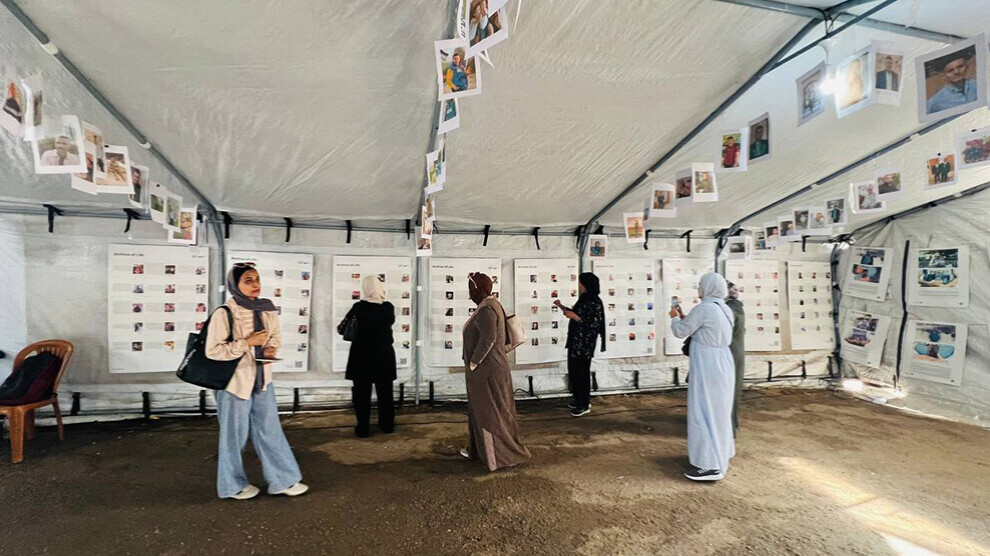
Young Yara Hassan stands in front of the "Archive of Life" panels, holding a printed paper bearing the image of her ten-year-old brother Mohammed, who was killed in an Israeli raid while he was filling a gallon of water at the entrance of a shelter center for the displaced. Yara recalls the details of the day of his killing: "I wanted to document the story of my brother Mohammed so that his memory remains present, and his life is not reduced to the news of his killing. The day of his martyrdom coincided with his birthday, and he was wearing new clothes, and these are details I will never forget. I wanted people to know Mohammed as we knew him, a child with a life and memories, not just a number among the victims."
From Numbers to Stories of Life
With the first days of the war, the numbers of victims escalated, amid extremely difficult field and humanitarian conditions. Faced with this increase, the "Untold Palestine" team began searching for a different way to document the victims, one that does not limit itself to narrating the circumstances of their killing but re-presents them as persons who lived dreams, daily details, and human relationships.
Iman Jadallah, who is in charge of preparing the "Archive of Life" project, says that the idea began with the first days of the war, when the numbers of victims began to increase day after day. "We tried to communicate with the families of the victims to document their stories in a different way. We did not want to limit ourselves to narrating the circumstances of their killing, but we wanted to know who they were, what dreams they had, and what they were planning to achieve in the future. From here, the 'We Are Not Numbers' campaign was launched."
She notes that the team worked voluntarily and faced challenges in collecting and documenting the stories, confirming that the specificity of the initiative lies in giving families the right to narrate the stories of their loved ones in the way they choose. "We do not write the stories from our personal perspective, nor do we impose on families a certain way to narrate the stories of their loved ones. We take the information and details they wish to share, then document them and publish them through the platform."
With the increasing communication of families with the team, the idea developed into the "Archive of Life" project. Iman Jadallah explains that the team moved from waiting for families' initiatives to field searching for the stories of victims, by visiting their relatives and communicating with colleagues and acquaintances, alongside receiving stories, photos, and memories through social media.
From Initiative to Archive
Wafaa Abu Hajjaj, from the "Untold Palestine" platform team, says that the "We Are Not Numbers" campaign was launched with the aim of humanizing the lives of the victims and giving their families the space to narrate their stories in their own way. "The team documented about a thousand stories, most of them of civilian victims, focusing on the details of their lives before their killing, what they loved, and what they wished for their future, instead of limiting their stories to the circumstances of their killing. We wanted to know who they were and what they were thinking of doing in the future. Every victim has a story that transcends the moment of their killing, and their family and loved ones are the most capable of narrating it."
Female Journalists as Victims in Memory
The Palestinian female journalists who were killed during the war are present in a special space within the archive, among them Mariam Abu Daqqa, Heba Al-Abadla, Marwa Muslim, alongside other female journalists, each of whom has her own story and professional and human experience. These stories are not limited to documenting the circumstances of the female journalists' killing, but recover aspects of their lives, work, and relationships, through the testimonies of their female journalist colleagues who knew them and worked with them, and who share details about their personalities, memories, and situations that brought them together.
These testimonies give the archive an additional dimension, as the colleagues not only narrate the stories of losing their fellow professionals, but contribute to preserving the memory of female journalists who were part of the Palestinian media scene and continued to perform their work under conditions of war and danger. Through this space, each female journalist becomes more than a name in the statistics of the dead; she is a possessor of professional experience, a voice, memories, and relationships that left an impact on her colleagues and surroundings.