
Women of Qamishlo Rise in Historic Uprising to Defend Hard-Won Gains
From Northern Kurdistan to Kobani, Rojava, and the Kurdistan Region’s borders, Kurds unite through unprecedented women-led and popular mobilization, affirming readiness for sacrifice and the strength of popular will against shelling and attacks.
Asmaa Mohammed
Qamishlo – At a pivotal moment in the history of popular resistance in the Autonomous Administration of North and East Syria, the women of Qamishlo took to the front lines, embodying the will of society to defend the land and identity, defying shelling, threats, and international silence. What the city has witnessed in these days is not merely a fleeting reaction, but a collective epic that affirms that the Kurdish people are united, ready to make sacrifices, and capable of confronting any threat, no matter how great.
In a scene unprecedented in the region, the women of Qamishlo and the masses of the Kurdish people launched an exceptional popular mobilization, defying shelling, threats, and international silence, making women the first line of defense for land and identity.
The mass mobilization that extended from Northern Kurdistan to the Region, and from Rojava to Kobani, revealed an unbreakable will and astonishing unity. The voices of the people rose, declaring that defending rights and achievements is not an option but an existential duty, and that no conspiracy or attack will deter them from protecting their land and society.
Kurdish Unity in One Decisive Moment
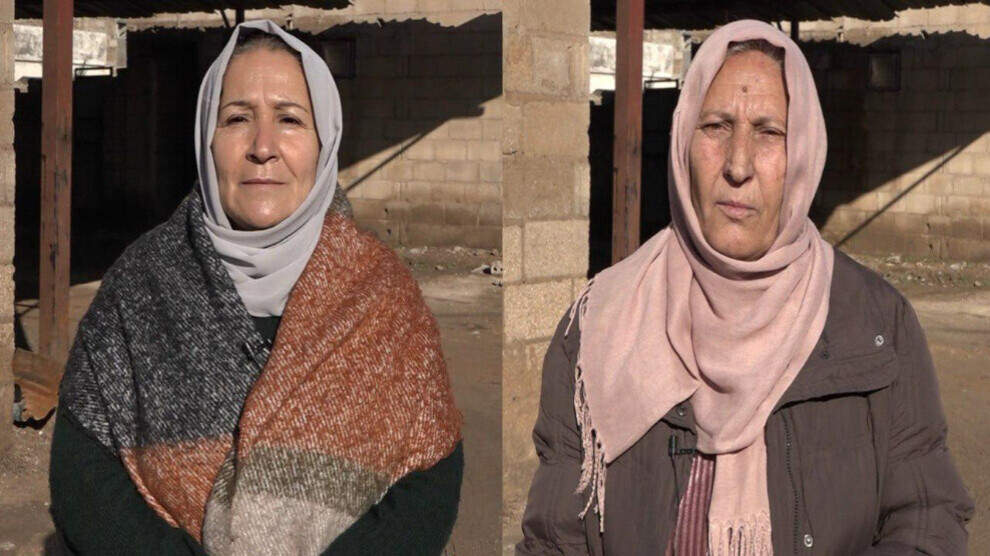
Salha Kalash, one of the women of Qamishlo who rose up against the attacks, said that what the region is witnessing these days goes beyond an ordinary scene to constitute a historic turning point in the course of popular resistance. She emphasized that the scale of women’s response to the call for support exceeded all expectations and disrupted the calculations of the enemies.
She explained that the sight of women joining from various areas, in massive numbers, is enough to leave one stunned by the level of awareness and responsibility. “A single call via social media was enough for the city to witness a flood of women heading to the squares of solidarity, a clear expression of unity of decision and purpose. The women did not join as scattered individuals, but as one force standing behind their army and forces, defending the gains achieved through years of struggle and sacrifice.”
She confirmed that the popular rallying today revolves around the military leadership and field commanders, in a scene reflecting complete trust in the choices of resistance and readiness to sacrifice in order to protect land and existence. She noted that “the wave of solidarity was not limited to Rojava, but extended from Bakur to Kobani, and from Bashur to the borders of the region, with supportive groups arriving, reflecting Kurdish unity in one decisive moment.”
Salha Kalash considered what is happening to be a true epic of heroism being written in these days. “The stage requires a high level of awareness from society and an absolute rejection of all forms of betrayal and complacency. Today we are in a state of war; everyone is concerned, everyone is ready, regardless of the sacrifices. Readiness has reached its highest levels, and the popular will is decisive in confronting any escalation.”
She pointed out that the experience of the Sheikh Maqsoud resistance formed a living model of steadfastness, where residents faced one of the fiercest attacks—supported by airpower—with simple weapons, and continued to resist for long days despite the imbalance of power. “This experience entrenched a firm conviction that willpower is stronger than weapons.”
She condemned the international silence regarding the crimes committed against civilians. “What is called human rights has completely disappeared from the scene, despite the public killing of children, women, and the elderly before the eyes of the world.” She pointed to international double standards, where humanitarian slogans are raised in some places while the Kurdish people are left to face their fate without any accountability or serious action.
Salha Kalash concluded by affirming that Kurdish society will stand tall, will not bow its head, and will remain united across all arenas of confrontation. “Unity of ranks is the fundamental guarantee of steadfastness, and this land will be protected by the will of its people, no matter how intense the challenges become.”
“The Martyrs Are the Essence of the Cause”
For her part, Dalal Badour said that the current phase represents a true test of loyalty to the blood of the martyrs, stressing that any attempts to impose political solutions at the expense of the essence of the cause are categorically rejected. “The General Commander of the Syrian Democratic Forces, Mazloum Abdi, rejected proposals presented to him to assume political or administrative positions within the Syrian interim government, adhering to the choice of his people and refusing to bargain over the blood of the martyrs or the legacy of resistance.”
She noted that this stance reaffirmed unity of ranks and consolidated public trust in the path of resistance, especially in light of recalling the experience of the Sheikh Maqsoud resistance, which constituted a living model of popular steadfastness in the face of the fiercest attacks and entrenched a culture of defending the land regardless of sacrifices. “The martyrs are not numbers; they are the essence of the cause and its trust, and the people will not relinquish their right to freedom and dignity.”
Residents went out to field shifts, she confirmed, even before their official announcement, as the shifts entered their third day, covering neighborhoods, communes, and local councils, in a clear expression of high readiness and collective will. “These shifts are not a temporary measure, but a fateful stance that determines the future of the Kurdish people and their right to exist.”
She clarified that the state of popular cohesion is not limited to the city of Qamishlo or Rojava alone, but extends across the entire Kurdish geography, where the people unite in confronting shelling and attacks. “The cause is one, the fate is one, and relinquishing rights is no longer an option after all the sacrifices that have been made.”
Despite attempts to sow discord among the components of the region, Dalal Badour emphasized that the unity of society in all its components—Kurds, Arabs, Syriacs, and Christians—constitutes the fundamental pillar of steadfastness, as all stand in one trench defending freedom and the rights of oppressed peoples. “The shifts and popular movement will continue as long as the threats persist. The people, in loyalty to the blood of the martyrs and the legacy of resistance, are moving forward on their path to the end, raising the slogan: Either life with dignity… or resistance until victory.”