
The African Forum in Tunisia Calls for Strenghthening the Peace and Security Agensda
“At the close of the sixth African Forum, participants reaffirmed commitment to Resolution 1325, urging protection for women and stronger inclusion in peace efforts, along with a safer environment for their work.”
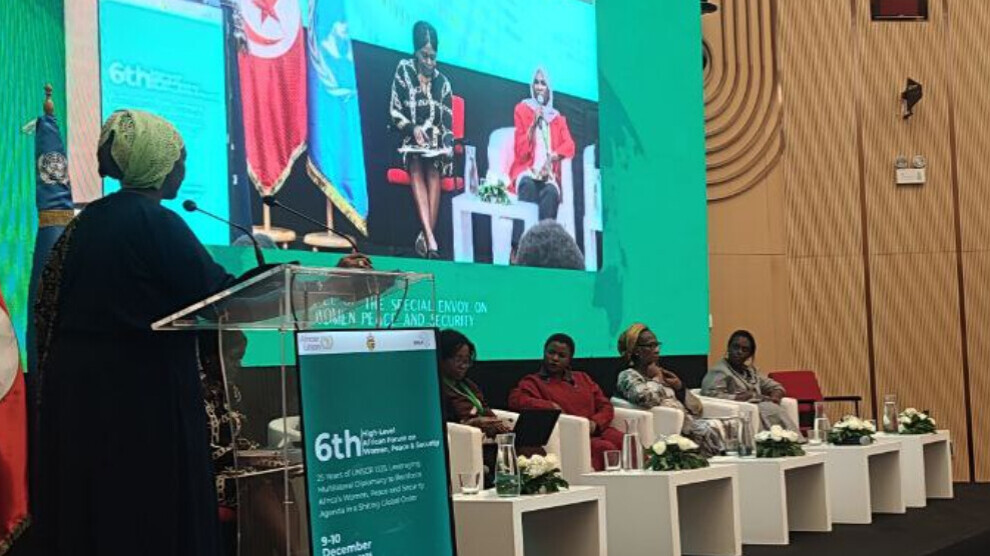
Tunisia — As part of the 25th anniversary of UN Security Council Resolution 1325, the African Forum was held for the first time in Tunisia, outside the African Union headquarters. The forum called for empowering women as a cornerstone of peace and security on the continent, embodying African unity principles, and strengthening cooperation to achieve peace, security, and development.
The sixth session of the African Forum on Women, Peace, and Security concluded at the International Diplomatic Academy in Tunisia, which hosted the event on December 9–10 under the theme:
“25 Years of UNSC Resolution 1325: Enhancing Multilateral Diplomacy to Consolidate the Peace and Security Agenda in Africa Amidst a Changing Global Order.”
Strengthening Women’s Participation in Peace and Security
This marks the first time the African Forum is held outside the African Union headquarters. Egyptian Minister of Family and Women, Asmaa Al-Zeinī, highlighted Tunisia’s commitment to strengthening friendship and cooperation with African countries on bilateral and multilateral levels.
The attending countries reaffirmed their commitment to Resolution 1325, adopted in 2000, which emphasized the essential role of women in maintaining international peace and security and called for their equal participation in decision-making.
Ethiopia’s representative, Saba Hagos, said she leads the “Ethiopian Women’s Table” initiative, which aims to actively strengthen women’s participation in the peace process. The initiative serves as a women’s umbrella platform to enhance the role of Ethiopian women in peacebuilding through awareness, guidance, participation in negotiations, and changing social norms that hinder women’s presence in public life.
She emphasized that the initiative operates in cooperation with the United Nations and international bodies to support the Women, Peace, and Security agenda and to achieve economic and social empowerment for Ethiopian women.
The initiative—considered the first of its kind in Ethiopia—has worked to significantly increase women’s involvement in conflict resolution, highlighting women’s role in creating peace within local and international peacekeeping operations.
Challenges and the Future of Women in Peace
Ghalia Sassi, Director of the Women’s Rights Institute in Libya, affirmed that the forum—held for the first time in Tunisia and outside the African Union headquarters—comes as part of the 25th anniversary of UN Security Council Resolution 1325, which works to empower women and advance their participation in conflict resolution and peace processes. She stressed that the forum summarizes 25 years of achievements born from collective African struggle and cooperation, showcasing strong experiences on how to ensure genuine women’s participation in peace and fully integrate them into peace processes.
Sudanese human rights activist Rabab Baldo noted that Sudanese women are suffering from what she described as the “damned war” and exhausting conflicts that hinder the implementation of this agenda. She explained that protection and prevention from violence have become a primary concern for women, especially due to the sexual violence and rape committed by militias, in addition to other violations and various forms of abuse.
Climate Change
Gender expert Nadia Belal from Algeria stated that women are victims of climate change, noting that their voices are no longer heard despite their human right to expression, freedom, and access to the natural resources they depend on. She explained that climate change has impacted women severely, depriving them of work and turning them into victims struggling to survive with the limited resources available—if available at all. This, she emphasized, requires plans to support women and integrate them into sustainable development programs to protect both them and the environment.