
The Absence of Justice... How Impunity Exacerbates the Targeting of Women in Syria
Activist Lamees Munther says Syrian women face systematic collective punishment, not isolated crimes, amid official denial and silence fueling fear and eroding justice.
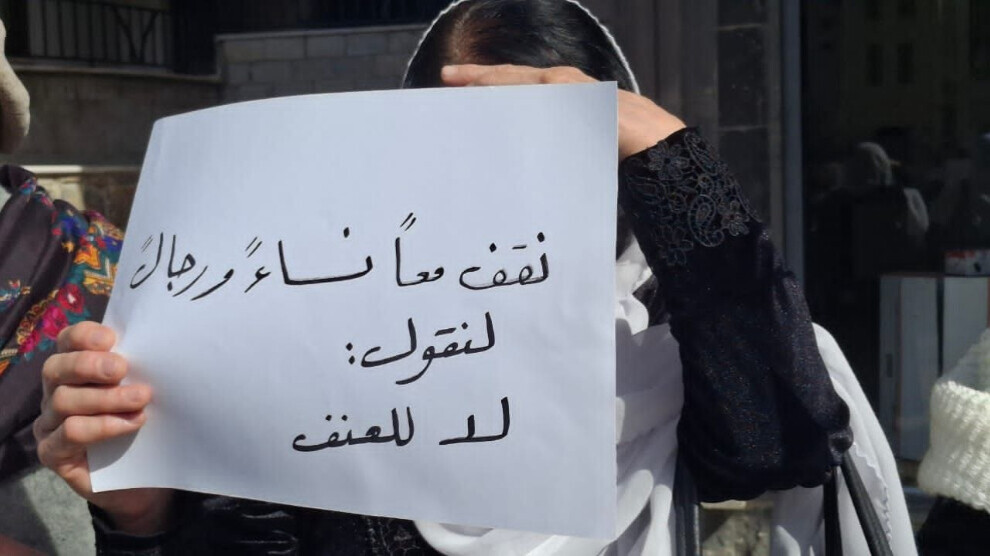
ROSHELLE JOUNIOR
As-Sweida — Under the weight of a scene in which fear mixes with terror and the pace of grave violations accelerates, the contours of a widening crisis are unfolding in Syria, pushing women to the forefront of direct targeting. Abductions are no longer isolated incidents or individual crimes but have become a systematic tool of domination, used to break the will of communities and tear apart their social fabric.
With the increase in human rights reports documenting enforced disappearances, organized sexual violence, forced marriages, and targeted attacks on women belonging to specific ethnic and sectarian groups, fears are escalating over the expansion of the impunity circle and the collapse of whatever remains of the sense of safety and protection.
In this context, engineer and civil activist Lamees Munther, a member of the "My Home Is Your Home" organization, affirms that the period following the fall of the Syrian regime on December 8, 2024, witnessed a dangerous surge in waves of violence and abduction targeting women, particularly women belonging to specific ethnic and sectarian groups.
She believes that the targeting of women in armed conflicts is not a random act but part of a strategy aimed at striking the social structure of communities by targeting their most sensitive elements. In these contexts, the female body becomes a space of conflict and a political message used to intimidate the community and undermine its ability to protect its members.
She explained that the abduction of women is exploited within a broader system of redrawing maps of influence by weakening the internal bonds of targeted communities and pushing them toward a sense of helplessness. Women, as the axis of the family and symbols of collective identity, become a means of producing fear and demonstrating control, especially when they belong to minorities facing double threats—targeted both as women and as bearers of an identity that is to be subjugated.
Between Human Rights Documentation and Official Denial
She noted that the escalating fears are based on solid human rights documentation that has gathered testimonies from survivors and families of abducted women whose fate remains unknown. The organization "Syrians for Truth and Justice" documented in a study titled "Abduction in Syria: Alawite Women Most Targeted" cases of sexual violence, forced marriage, and direct threats.
She pointed out that these findings contradict the official narrative, which attempted to downplay the scale of the phenomenon. The spokesperson for the Ministry of Interior announced that only 43 cases had been recorded, all of whom had returned except one. However, testimonies from families reveal a clear failure in handling complaints—and even the accusation of victims that they left for personal reasons, in an attempt to close files and alleviate public pressure.
Violence Against Women: Between Gender and Collective Identity
Lamees Munther stressed the need to distinguish between two levels of violence. The first is gender-based violence, which targets women because they are women and aims to enshrine discrimination and inequality. The second is identity-based violence, where women are targeted as part of a group that is to be punished or subjugated. In traditional societies, where women carry the symbolism of "group honor," attacks on them become acts directed against the entire community, making women's bodies a tool for producing collective fear and imposing new equations of domination.
Protection and Accountability... Non-Negotiable Requirements
Lamees Munther believes that confronting the crisis begins with revealing the full truth, providing effective protection mechanisms within society, support networks capable of intervening, and documentation systems that preserve evidence. Survivors also need legal, health, and psychological support to restore their ability to rebuild their lives.
She warned against discourses that justify the targeting of women under sectarian or political pretexts, affirming that an environment of hatred is what allows violence to become "justified" practice. Accountability is a political and legal necessity that cannot be bypassed if the goal is to prevent the recurrence of violations.
International Law... A Clear Framework for Accountability
Lamees Munther affirmed that abduction crimes and violence against women fall squarely within the scope of international conventions, foremost among them CEDAW (1979) and UN Security Council Resolution 1325, which considered violence against women in conflicts a direct threat to civil peace. Thus, the targeting of women becomes a crime that affects the stability of societies and requires responses that go beyond condemnation toward practical measures for protection and accountability.
She pointed out that the path to justice is based on the cumulative efforts of international and local bodies, such as the Independent International Commission of Inquiry and the Independent and Impartial International Mechanism, in addition to civil society organizations that play a pivotal role in preventing the erasure of truth.
Impunity and the Collapse of Trust in Protection
She says the crisis lies not only in the escalation of crimes but also in the inability of the interim Syrian government to handle complaints, particularly those concerning Alawite women. This failure has created a growing feeling among members of the sect that they are outside the umbrella of legal protection and that the danger threatening their women is directed against the community as a whole. With official denial, fear deepens and women withdraw from public space under the pressure of security risks and social pressures.
She believes that crimes of abducting women must be an integral part of comprehensive transitional justice pathways, and that accountability must include all parties without exception—whether violations were committed before or after the regime's fall. The violence witnessed in the coastal areas, Homs, Hama, rural Damascus, Jaramana, Ashrafiyat Sahnaya, and Sweida reveals that violations were extensive and multi-layered, making their integration into justice pathways a necessity, not an option.
In conclusion, she stressed that protecting women and ensuring their rights according to national and international standards is a fundamental condition for achieving civil peace, and that justice for women is not a separate demand but part of a broader justice that encompasses the entire society.