
Feminist Activist: The Kurdish Women’s Struggle Is a National Struggle.
A feminist activist from Halabja affirmed thet the struggle of Kurdish women is parth of the broader national struggle, noting that women continue their efforts to strengthen their role in economic, political, and social spheres despite ongoing challenges
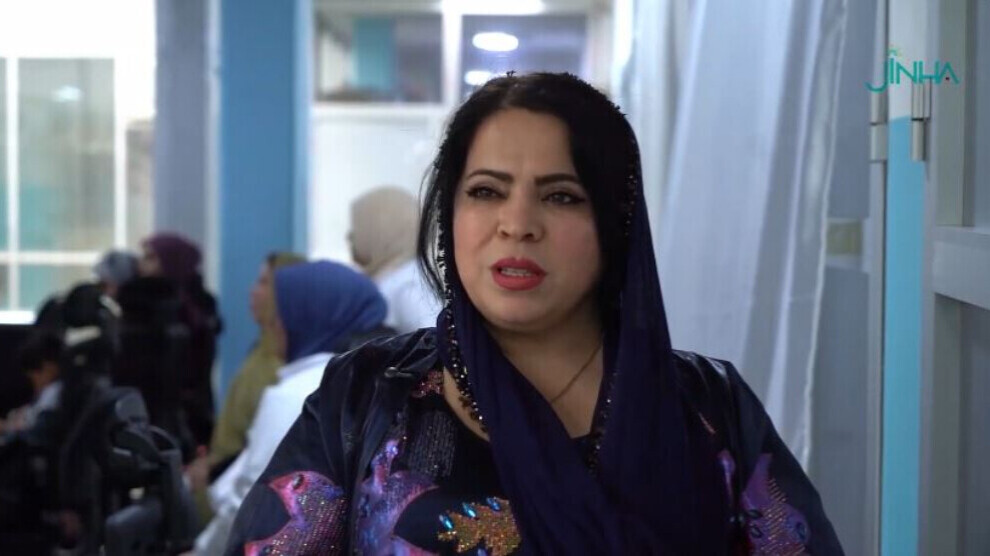
Mehriban Salam
Halabja — Women are confronting marginalization and targeting with determination, defending one another’s rights after reaching the conviction that unity and collective struggle against different forms of oppression require raising the level of their activism, particularly within the national struggle.
Speaking on this issue, feminist activist Shara Abdul Karim from the city of Halabja in the Kurdistan Region of Iraq said that women’s struggle “is not limited to defending their femininity and dignity; it is also a national struggle,” stressing that women have been able to defend both their rights and their homeland.
“Women Are Pioneers Economically, Socially, and Politically”
Regarding women’s struggle and progress across various fields of life, she explained that women have suffered economically just as men have due to ongoing crises. However, they continue their path because they realize that “if women do not control their own economic resources, they will not be able to make their own decisions.”
She added that economic challenges persist, yet women “have managed to consolidate their political presence through their courage and abilities.” She emphasized that positions and ranks are not granted simply because they are women; many have reached these positions through their own efforts and competence, including in political offices.
On the social level, she said women have succeeded in “overcoming social barriers and making great efforts” in confronting tribal mentalities that once viewed women as secondary members of society.
“Today women must take further steps. The image has changed significantly, and women are no longer seen merely as dependent on men as they once were,” she added.
“The Situation Is Unstable, but Women Continue Their Journey”
Regarding the future of women, Shara Abdul Karim noted that women’s progress depends on two key factors: “the first is women’s abilities, determination, and self-education; the second is providing a supportive work environment that encourages their participation.”
She concluded by expressing optimism about women’s future, saying that more women will be able to work and participate actively in the coming years.
“We are proud that Halabja is administered by women, and that the work environment there has become more suitable for them,” she said.