
Iran cannot be democratized with bombs,annd ongoing attacks only deepen the regional crisis
The Iranian people seek to change the regime through continued uprisings, but international intervention_through the war waged by the United Stated and I
Elif Akgül
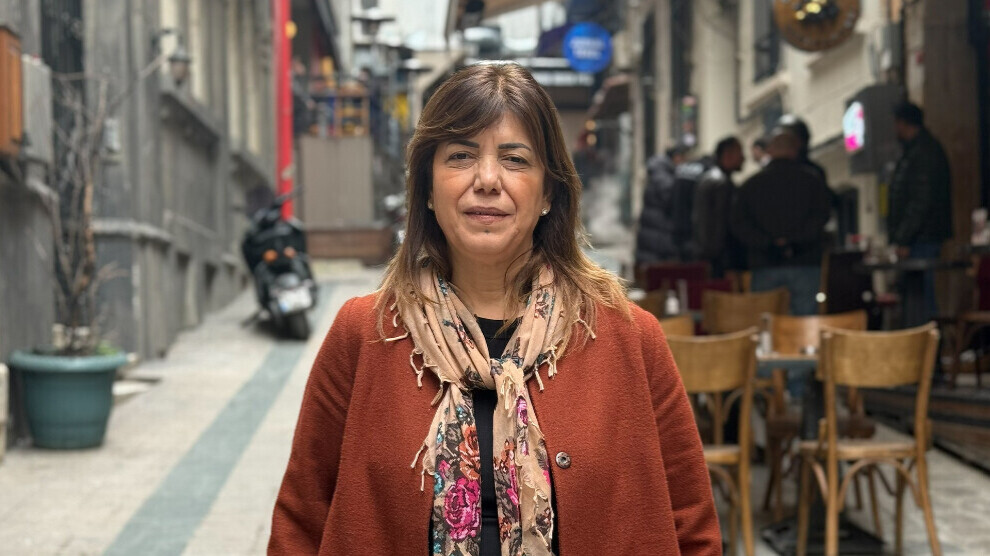
Istanbul — The co-spokesperson of the Peoples’ Democratic Congress (HDK), Meral Danış Beştaş, described the war unfolding in the Middle East as resembling a third world war. She stated that it is not merely a regional tension but a complex crisis with global repercussions and tangible economic consequences.
As the United States and Israel continue their attacks on Iran, Turkey is simultaneously strengthening its defenses. Within this context, Beştaş said there is a historic opportunity for the Kurdish people to achieve greater freedom, as the trajectory of the Kurdish issue is shifting alongside the expansion of the regional war affecting Kurdistan.
Beştaş noted that the escalation of war directly influences the political balance in the Middle East, Turkey’s foreign policy, and internal debates on democracy. She stressed the need to assess the path toward resolving the Kurdish issue while taking regional developments into account, pointing to the historical background of Kurdish struggles across the region.
“We Are Living Through a Global War”
Discussing the scope of conflicts in the Middle East and the balance of international powers, Beştaş said recent developments should not be viewed as a conflict between only two states.
“In reality, we are at the center of a large-scale war. The war in the Middle East cannot simply be described as attacks by the United States and Israel on Iran. Iran is also launching intense attacks on Gulf countries, and Hezbollah in Lebanon has entered the war. In fact, we are living through a global war.”
She added that the conflict affects everyone, particularly economically, noting that the world is currently on alert due to disruptions in oil shipments caused by the closure of the Strait of Hormuz.
Beştaş also commented on the statements of Donald Trump, saying they have recently been contradictory. According to her, the world has become accustomed to the inconsistent approach of the U.S. president.
“At times he says the United States will withdraw, then the next day he says the war will continue until the end. Shortly afterward, he claims that all objectives have already been achieved. These contradictory remarks about a war that has devastated lives and the future of millions reflect the current state of global politics,” she said.
“A Country Cannot Be Democratized with Bombs”
Beştaş emphasized that military interventions against Iran “will not bring democracy or freedom.” She argued that criticism of the Iranian system should come from the people’s struggle for freedom rather than foreign intervention.
“A country cannot be reformed by attacking it with missiles, bombs, and heavy weapons. Even if the attack on Iran becomes more intense, will freedoms flourish? Will the country become more democratic? A country cannot be democratized with bombs, S-400 systems, F-35 aircraft, or missiles.”
She noted that Iran has a population of about 90 million and that the history of the Islamic Republic of Iran must be studied carefully due to its deep political and historical background.
According to her, the current attacks have only increased tensions, complicated international relations, and negatively affected global economic stability, particularly energy markets.
Beştaş clarified that opposing foreign intervention does not mean supporting the Iranian government. She criticized the Iranian political system while rejecting outside interference.
“As the Peoples’ Democratic Congress, we strongly oppose intervention by the United States and Israel. However, this should not be interpreted as support for the ruling clerical system. In Iran, massacres have occurred during mass protests, and the country has come to be known as the ‘Republic of Executions,’ where Kurds and political opponents are frequently executed.”
She also referred to the global protests that followed the death of Kurdish woman Mahsa (Jina) Amini, during which the slogan “Jin, Jiyan, Azadî” (Women, Life, Freedom) spread internationally. She called for Iranian society to live in a free, equal, and democratic environment.
“Turkey Has Experienced Serious Fluctuations in Foreign Policy”
Assessing Turkey’s defense policies and its relations with NATO, Beştaş said there are contradictions in Turkish foreign policy. She argued that discussing the purchase of Patriot missile defense system during wartime signals that Turkey lacks a consistent foreign policy.
She acknowledged that states have the right to defend themselves but emphasized that the purpose of defense should be protecting society rather than strengthening state power.
According to Beştaş, Turkey’s foreign policy has long been marked by fluctuations. She noted that although Turkey claims to possess strong defense capabilities within NATO, its decisions regarding rearmament raise many questions.
“We Do Not Follow a Consistent Foreign Policy”
She highlighted several contradictions in Turkey’s military strategy. Turkey is a member of NATO but simultaneously seeks F‑35 fighter jets from the United States while also purchasing S‑400 missile system from Russia.
“Now, in the middle of the war, Turkey says it will buy Patriot missiles. This shows clear haste. Instead of a consistent foreign policy, we are witnessing one that shifts depending on circumstances,” she said.
“We Must Never Ignore Kurdish History”
Beştaş stressed the importance of examining Kurdish history to understand Kurdish reactions to the war and the attacks on Iran.
She explained that the regions known today as East Kurdistan, Rojava, North Kurdistan, and the Kurdistan Region of Iraq are historically one geographic space that was divided by imperial powers after World War I.
Members of the same people were left within the borders of different states, creating a strong connection among them that should be acknowledged.
She argued that many regional states resist Kurdish demands for rights due to historical concerns, noting that countries including Britain, the United States, Turkey, Iraq, and Iran approach the Kurdish issue within that context.
“Kurds Are Not Mere Pawns”
Referring to a report by The Wall Street Journal stating that Donald Trump may support armed groups seeking to overthrow the Iranian government, Beştaş said Kurds are often treated as pawns or tools in geopolitical struggles.
“In reality, Kurds possess stronger political awareness, deeper knowledge, and greater governing capacity,” she said.
She added that many external actors offer advice but cannot be considered true allies, as many of them historically denied Kurdish rights.
Democratic Transformation in Turkey
Beştaş concluded by discussing the impact of the Middle East war on resolving the Kurdish issue, stating that the process of democratic transformation in Turkey continues.
She noted that negotiations involve political actors within Turkey, including discussions connected to Kurdish political leader Abdullah Öcalan.
According to her, resolving the Kurdish issue remains tied to democratic dialogue within Turkey, even as regional conflicts reshape political realities across the Middle East.