
Protests in Iran Are Closely Linked to Gender Justice
As economic hardship affects women and men alike, economic freedom remains a fundamental condition for women’s liberation, proving that economic justice and gender justice are inseparable and cannot be achieved independently.
Sheila Ghasemkhani
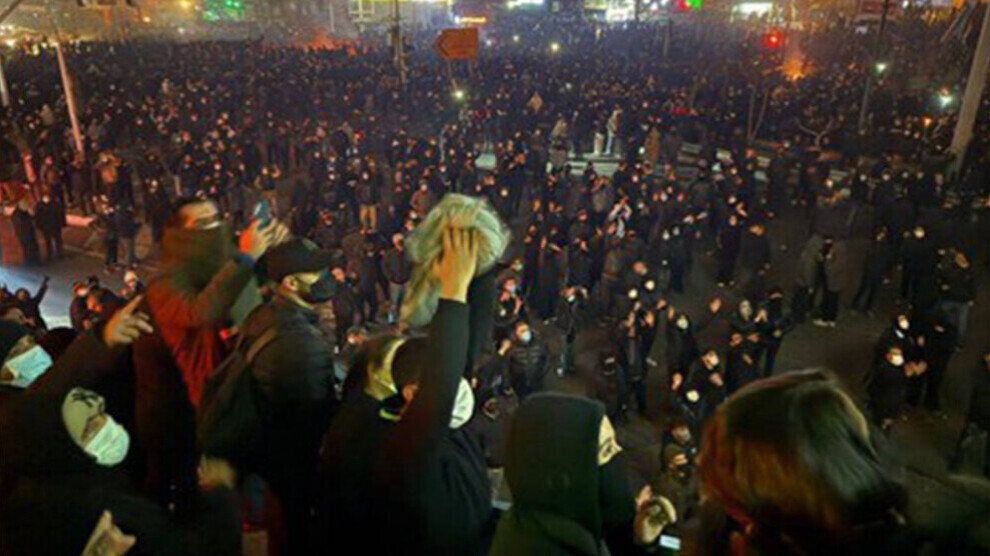
News Center – In recent days, protests erupted in Tehran's bazaar among merchants and quickly spread to the streets of other cities, where civilians took to the streets to protest high prices, inflation, the collapse of the rial's value, and the increasing pressures of daily life. Meanwhile, some voices attempted to separate these protests from the "Jin Jiyan Azadî" uprising, claiming that the protesters' demands were purely economic, related to male breadwinners, and therefore patriarchal and unrelated to gender justice issues.
This stance has effectively marginalized and discouraged support for protests focused on livelihood issues. However, a deeper analysis reveals that this separation is not only inaccurate but also simplistic. Gender justice is inseparable from economic justice; they are two sides of the same coin. A statement issued a few days ago by six women's organizations in Eastern Kurdistan emphasized that these protests are a natural extension of the "Jin Jiyan Azadî" uprising, which advocates for the right to a dignified life and social well-being. This position has allowed for a reframing of the protests in terms of freedom, reaffirming that its slogan can take root in these movements and broaden their scope.
While some opposing viewpoints may seem understandable on the surface, they overlook a fundamental truth: economic justice is an integral part of gender justice. The economic crisis and the pressures of daily life affect women just as they affect men, sometimes even more severely and subtly, making its impact more difficult to detect and more dangerous.
The recent protests were sparked in Tehran's Grand Bazaar, where merchants and shop owners are reeling from unprecedented inflation and a relentless rise in the cost of living. The soaring prices of bread, food, and energy have placed families in dire straits, while the sharp decline in the value of the national currency has eroded purchasing power and left a large segment of society without economic security.
In this context, social media and other media outlets played a pivotal role in accelerating the spread of the protests and connecting various social groups and classes. Thus, although the initial source of anger was primarily economic hardship, the accumulation of pent-up crises quickly surfaced, giving the movement broader social and political dimensions, including demands for fundamental reforms to the structure of the economy and the system of governance.
The experiences of contemporary network movements confirm that horizontal organizations are capable of combining economic, social, and gender-related demands within a single movement, giving it amplified momentum and making it more capable of influencing the course of events.
The slogan “Jin Jiyan Azadî” rose up following the death of Jina Amini in September 2022, its echo spreading in eastern Kurdistan before spreading throughout Iran, turning into a symbol of a widespread uprising. However, the demand for women’s rights in Iran is not a recent phenomenon, but rather its roots extend back more than a century of continuous struggle.
Recognizing the economic value of women's lives is essential
Since the Constitutional Revolution, women have waged their battles by establishing newspapers and associations to demand their civil and social rights. In the 1960s and 70s, they gained the right to vote and participate in public office. However, the 1979 revolution reinstated discriminatory laws against women, once again closing the door on these gains. Nevertheless, the feminist movement has never ceased and has remained present in various forms within society.
This long history demonstrates that the demand for gender justice is neither fleeting nor separate from daily economic issues. The economy and gender are inextricably linked. The claim that "men are the breadwinners, therefore women have no connection to economic crises" lacks logic. Even in families where men are considered responsible for expenses, inflation and rising prices directly impact the lives of women and children.
Moreover, the number of women who are the primary breadwinners for their families is increasing year after year. Between 2024 and 2025, nearly five million women were under the care of social support institutions. Many of them work in informal and precarious jobs, from selling goods to carrying heavy loads, without insurance or job security, and they support their families amidst harsh and unjust economic pressures.
Today, few men can claim to be able to provide for their families on their own with a decent standard of living. Women, as workers, teachers, nurses, saleswomen, and activists in the agricultural and service sectors, constitute a fundamental pillar of the national economy.
Economic justice and gender justice stem from the same structure, and any injustice in one exacerbates the other. Gender oppression and class oppression are intertwined, and the division of labor based on gender and traditional roles reproduces multiple forms of inequality.
The feminist movements of the 1970s proved that women’s work inside the home, despite being ignored and considered “not work,” constitutes a fundamental pillar in the economy and in the reproduction of the labor force. From this standpoint, the issue of bread and livelihood is not exclusive to men, but rather recognizing the economic value of women’s lives is an essential necessity.
Two Sides of the Same Coin
The historical example of the Icelandic women's strike in 1975, when 90% of women stopped working both formally and domestically for a single day, stands as compelling evidence that society and the economy cannot function without women's contributions.
With the rising cost of living, economic pressures on women and their families intensify directly. Under these circumstances, opportunities to develop individual capabilities and forge a sense of self diminish, replaced by a daily struggle to survive poverty, insecurity, and the accompanying violence. Economic crises also restrict access to education and healthcare, placing heavier psychological and physical burdens on women and children.
Economic freedom is a cornerstone of women's freedom. True enjoyment of social and political rights is impossible without economic security. The very structures that oppress women are also responsible for creating and perpetuating economic crises.
Combining economic demands with gender justice gives protests a broader character and greater strength, increasing the chances of achieving comprehensive justice. The recent protests in Iran, while seemingly focused on livelihood issues, are fundamentally intertwined with the demand for gender justice. Economic and gender justice are two sides of the same coin; neither can be achieved without the other.
The demands for bread, a dignified life, and freedom are universal human demands, not limited to any specific gender. These protests demonstrate that the daily lives of people, both men and women, are inextricably linked to economic and social justice, and that these two dimensions must be pursued simultaneously.