
Nahida Ahmed:Kurdish Women Are Essential Partners in struggle and Resistance.
Kurdish women have long stood at the forefront of struggle,defending land and dignity and demonstrating heroic resilience against accupation and extremism,remaining central to resistance,peace,and freedom.
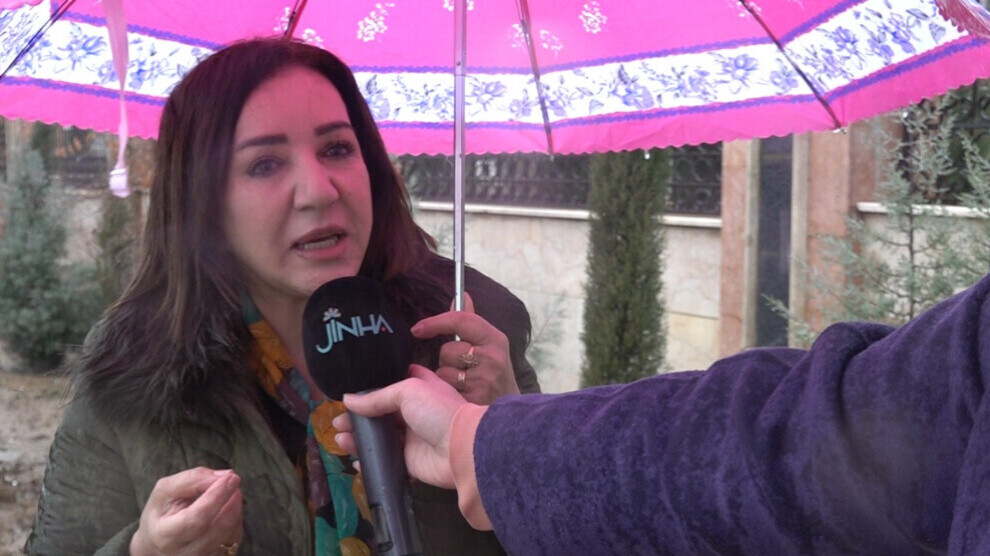
Helen Ahmed
Sulaymaniyah — For decades, Kurdish women have stood at the forefront of the struggle for freedom and dignity, actively participating in resistance movements and making immense sacrifices in defense of land and rights. Their role has not been limited to social life; it has extended to the battlefields, where they have played a pivotal role in advancing the Kurdish liberation movement, confronting policies of repression and occupation targeting Kurdistan and its people.
In Eastern Kurdistan, women faced attacks by the Islamic Republic of Iran and continued to resist until the emergence of the “Jin, Jiyan, Azadî” uprising, which remains to this day a powerful voice against the Iranian regime, demanding rights for women and oppressed peoples.
In the Autonomous Administration of North and East Syria, women have stood on the front lines of battles to defend freedom. In 2014, they courageously confronted ISIS, achieving major victories that led the world to view them as symbols of women’s revolution and heroic resistance.
More recently, on January 6 of this year, renewed attacks by the Turkish state and its agreements with Hayat Tahrir al-Sham jihadists targeted the neighborhoods of Sheikh Maqsoud and Ashrafieh. These violent assaults lasted several days, during which women made significant sacrifices in defense of land and dignity.
In contrast, a cleric named Muzhir Khorasani, influenced by ISIS extremist ideology, issued statements belittling female fighters within the Internal Security Forces (Asayish), claiming that a woman’s role is confined to domestic service rather than fighting or defending the land. These remarks sparked widespread outrage across all parts of Kurdistan, as they were seen as an insult to women’s sacrifices.
In Sulaymaniyah, activists, women’s rights defenders, and female fighters responded by organizing protests and gatherings, and by filing legal complaints against Khorasani. They stressed that his statements reflect nothing but a backward and shameful mindset, while Kurdish women have proven throughout history that they are essential partners in struggle and resistance.
Brigadier General Nahida Ahmed, a founding member of the Women’s Peshmerga Battalion, affirmed that Kurdish women have always been—and remain—a cornerstone in defending land and homeland. She noted that women have played a decisive role across historical stages and maintained a strong presence in confronting enemies and resisting occupation. “To this day,” she said, “women bear great responsibility in peace-building, proving that their role extends beyond the battlefield to shaping a safer and more just future.”
She pointed out that “some clerics influenced by the ideology of occupying forces attempt to undermine the status of Kurdish women, as Mullah Muzhir Khorasani did through his regressive statements, despite history bearing witness to women’s heroism in wars and resistance.” She emphasized that Kurdish women participated in the Peshmerga, fought in battles, and even engaged in trade since ancient times, proving that their public role is neither new nor incidental.
Recalling the ISIS attacks of 2014, Ahmed reaffirmed that Kurdish women are fully capable of bearing arms and defending land and dignity. They are indispensable partners in struggle, and no extremist ideology or reactionary discourse can erase or diminish their role.
She praised the resistance of women in North and East Syria, stressing that female fighters have proven their ability to protect themselves and their land. Thanks to their resilience, defensive battles were transformed into symbols of freedom and dignity. Despite attempts by extremist-influenced voices to belittle women fighters, the undeniable truth remains that Kurdish women have always been a strong shield against occupation.
Ahmed emphasized that extremist thinking, which portrays defending one’s land as a wrongdoing, reflects nothing but a reactionary mentality. History and reality confirm that Kurdish women have always been on the front lines of struggle. “We saw this in battles against ISIS that spread across several countries, where male and female fighters stood firm, halted its advance, and achieved victories that astonished the world.”
She also criticized the shameful silence of many states and human rights organizations in the face of these sacrifices. “The Kurdish people—men and women alike—remain living proof that freedom is not granted but seized, and that Kurdish women will continue to be symbols of resistance and dignity, no matter how much extremist ideology attempts to undermine them.”
Nahida Ahmed concluded by stressing: “From beginning to end, we will stand firmly against the statements of Muzhir Khorasani and anyone who seeks to diminish the role of Kurdish women.” She added, “We struggle in every part of Kurdistan and stand in solidarity with all women. They are doctors, teachers, and active contributors across sectors—and when battles intensify, they are on the front lines defending land and dignity.”
In closing, she affirmed that Kurdish women have proven that occupiers fear them because they confront oppression with unwavering courage and expose its crimes. “Has Muzhir Khorasani not seen how Kurds sacrifice their lives for freedom and stand against killing and oppression? Until our last breath, we will stand beside male and female fighters alike, defend our rights, protect our land, and preserve our dignity. Neither extremist ideas nor attempts at distortion will deter us. Kurdish women will remain symbols of resistance and essential partners in the struggle for freedom until victory is achieved.”