
Moroccan activist supports Kurds, highlighting diversity as foundation for just societies
Defending the cultural and human rights of the Kurdish people is part of defending universal human rights values. Respect for cultural and ethnic diversity constitutes a fundamental pillar for building just and peaceful societies.
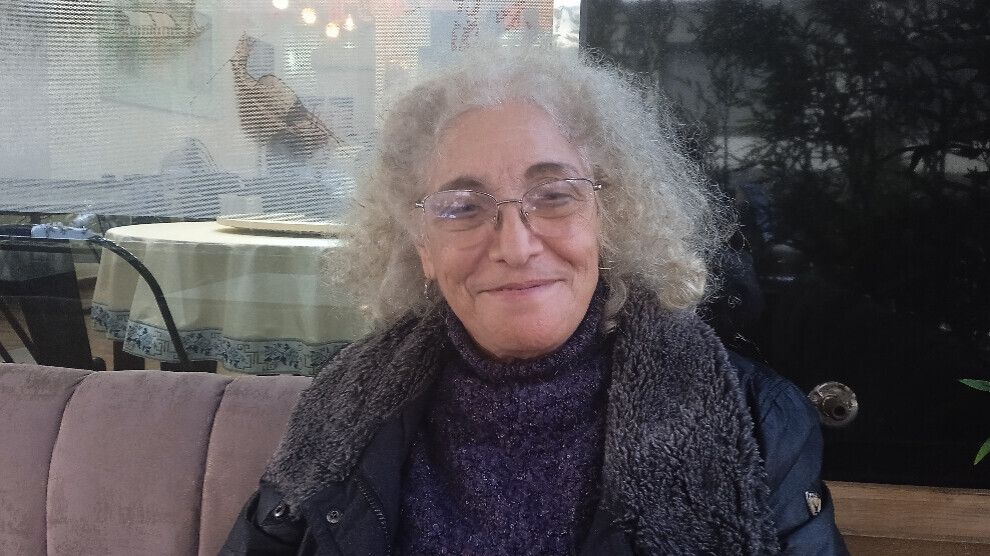
HANAN HARRAT
Morocco — The peoples of the Middle East are largely unfamiliar with the history of many indigenous peoples of the region, including the Kurdish people. This lack of awareness contributes to the acceptance of chauvinistic rhetoric against them and the falsification of history, which in turn leads to ethnic massacres committed against them, the latest of which are taking place today in the regions of Rojava.
Moroccan human rights activist Kabira Chater provides a general assessment of the situation in northern and eastern Syria, particularly in the regions of Rojava, in light of the serious security and humanitarian challenges facing the area. These challenges include armed conflicts, displacement, and the deterioration of civilian living conditions, especially in predominantly Kurdish areas.
She believes that the escalation of tensions is linked to regional interventions, in addition to the continued threat posed by extremist armed groups to civilians and various components of Syrian society. This has further complicated the situation on the ground and increased the suffering of the population. She considers that the Syrian crisis goes beyond being an internal conflict, as it reflects broader issues related to the protection of human rights in conflict zones and highlights the importance of international solidarity with affected peoples in order to safeguard their dignity and right to live in peace.
Regarding the presence of the Kurdish cause in Moroccan, Arab, and international public awareness, and the impact of the Kurdish people’s geographic dispersion on their current situation, she states that awareness of the Kurdish issue in Morocco and the Arab world remains limited, despite the fact that the Kurdish people are among the oldest components of the region and possess a rich historical and cultural heritage. She adds that today Kurds are distributed across several Middle Eastern countries, in addition to having large communities in Europe, as a result of cumulative political and historical transformations that the region has undergone over decades.
Kabira Chater points out that this geographic dispersion has not prevented Kurds from preserving their cultural and linguistic identity, but it has, in her view, made them more vulnerable to precarious conditions and violations linked to conflict and instability.
The Syrian Context
Regarding the legal and administrative challenges faced by Kurds in Syria and their impact on daily life, she explains that Kurds in Syria have, during previous periods, faced legal and administrative obstacles that affected their civil status. More than 300,000 people were left outside the citizenship system, placing thousands of children and young people in fragile legal situations. She considers that these structural problems have contributed to the accumulation of complex social and humanitarian conditions, the effects of which persist to this day.
She clarifies that with the outbreak of the Syrian crisis in 2011, these conditions worsened amid the rise of extremist armed groups, which negatively affected civilian life, particularly that of women and children, in several conflict-affected areas.
Kabira Chater believes that various regional interventions have contributed to further complicating the Syrian scene and increasing the suffering of local populations, especially in areas of strategic and economic importance. She emphasizes that Kurds are not a marginal component but an integral part of the Syrian national fabric, present in Hasakah, Aleppo, Qamishli, and Damascus. Their society includes intellectuals and active figures who aspire to Syrian unity while respecting cultural and historical pluralism.
As for the role played by Kurdish women in confronting conflicts, she notes that they have played a major role in resisting extremist groups. “Their presence on the front lines was not only in the security field, but also in defending human values and the rights of local communities.”
She also points out that suffering is not limited to the direct effects of conflict, but extends to challenges related to displacement, restricted access to education, and limitations on media and human rights work in conflict zones. “These conditions raise questions about the effectiveness of international protection mechanisms designated for civilians.”
International Approaches
Kabira Chater assesses the international community’s and media’s handling of various humanitarian crises, stating that there is a clear double standard in dealing with international conflicts. “The media and political focus on certain conflicts, such as the war in Ukraine, is contrasted with far less attention to what is happening in other regions, including Syria, Iraq, and Turkey, where violations and humanitarian consequences affect various population groups.” She explains that this disparity in media coverage and political engagement directly affects the level of support and protection provided to civilians in conflict areas.
She also warns of the danger posed by the re-emergence of ISIS and other extremist elements. “Opening prisons and the leniency of some parties toward the movement of extremists threaten Syria and the entire region, from Iraq to Lebanon, Palestine, and Egypt, amid a suspicious laxity on the part of the international coalition that claims to fight terrorism.”
Kabira Chater views diversity within Syria not as a threat to its unity, but as one of the essential elements for human and societal development, whether regarding Kurds or other components of the region. She warns against reducing identity to a single dimension, such as religion, ethnicity, or affiliation, due to the negative consequences this has on human rights and on efforts toward coexistence and joint human rights action.
She expresses reservations about some unilateral political initiatives proposed on the international stage, considering that such approaches may raise issues related to respect for international laws and agreements and undermine the accumulated achievements of international humanitarian law established since the mid-20th century.
Diversity as a Human Value
Kabira Chater stresses that defending Kurdish rights is inseparable from defending human rights in general. She calls for a more comprehensive international approach based on respect for diversity, the protection of civilians, and the strengthening of human solidarity away from narrow political calculations. She affirms the necessity of respecting cultural, ethnic, and religious diversity, as this forms the foundation for building just and peaceful societies.
She calls on international human rights organizations and actors concerned with human rights issues worldwide to pay greater attention to the Kurdish cause and to strengthen efforts aimed at protecting civilians and mitigating the consequences of escalation in conflict-affected areas.
In conclusion, the Moroccan activist Kabira Chater considers that continued neglect of these conditions raises serious moral and legal questions and may have broader humanitarian and security repercussions, given that Kurds constitute a significant demographic component in the Middle East, in addition to their wide presence among refugee populations in several European countries.