
Jihan Belkkin…. An icon of truth who resisted in the face of repression
Journalist Jihan Belkin dedicated her life to documenting the truth—from fighting ISIS to covering Turkish attacks. Martyred on duty, she became a symbol of resilience and free, steadfast media in North and East Syria
Sarokel Sheikhou
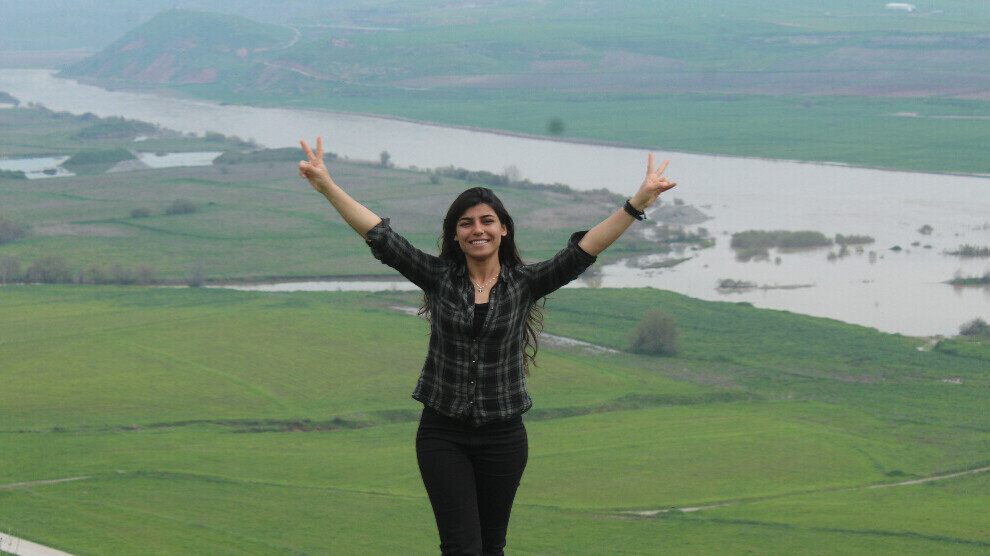
Tal Tamr – Jihan Belkkin, a Kurdish journalist who dedicated her life to documenting the truth from Mardin to North and East Syria, participated in covering the battles against ISIS and the Turkish attacks until she was martyred by a Turkish drone strike in 2024 while performing her work. She left a deep impact on her colleagues and the people of the region, becoming a symbol of resistant journalism. However, the demand for holding her killers accountable and repatriating her body to her family remains pending.
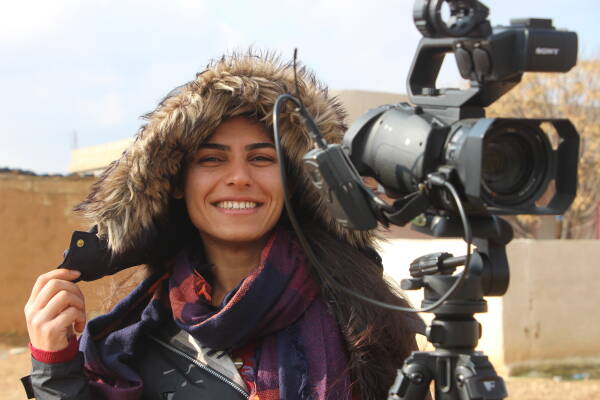
Jihan Belkkin, daughter of the plains of Mardin in northern Kurdistan, lived a life full of struggle and a constant pursuit of truth. She was born on October 26, 1996, in the Midyat district of Mardin city. In 2014, she enrolled in the Faculty of Law at Dicle University in Amed (Diyarbakir). During that period, her passion for seeking truth and exposing the practices of the Turkish occupation began to crystallize, prompting her to enter the world of journalism. She started her professional career with the Dicle News Agency (DİHA), taking her first steps into media work.
In 2017, Jihan Belkkin moved to North and East Syria, where she followed the military operations against ISIS on the ground, from Raqqa to Tabqa. As events evolved, she turned her lens this time towards documenting the attacks launched by the Turkish occupation on the border cities of the region, capturing the reality of the assaults moment by moment with her camera.
On November 19, 2024, between the Qara Qozaq bridge and the Tishreen Dam, while covering the resistance against Turkish attacks, Jihan Belkkin and Nazim Dashtan were targeted by a drone belonging to the Turkish occupation, leading to their martyrdom while performing their journalistic duty.
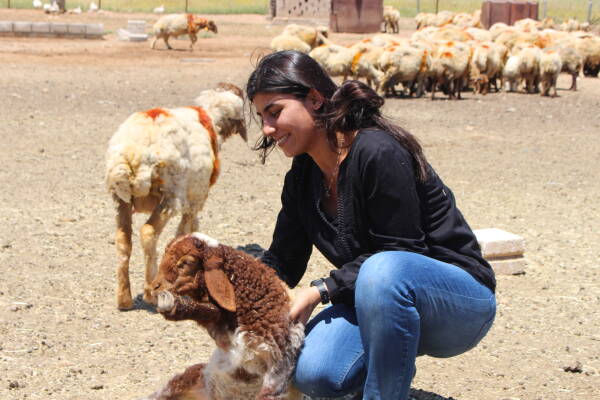
“The Icon of Resistance Media Whose Killer Has Yet to Be Held Accountable”
On the first anniversary of her passing, her colleagues recalled the path she paved and her unwavering determination. Arin Sweid, administrator at Hawar News Agency (ANHA), said that Jihan Belkin’s final words bore witness to her deep faith in the path she had chosen: “I am confident this path will triumph, and we will walk again with Commander Öcalan.”
She added, “Today we live those words. Jihan never had the chance to see the path of peace and a democratic society come to fruition, nor witness the enthusiasm she longed for. Yet before this journey began, she was full of life and worked with steadfast faith in what she believed.”
Jihan Belkin was always at the forefront of documenting operations against ISIS, often being the first to step into any field mission. “She wanted to record every historical moment and share it with the world. She constantly said: ‘This revolution deserves one’s life.’ Her documentation work became a cornerstone of revolutionary media, and much of the history being written today in North and East Syria bears her mark. In every new front that opened, Jihan was there, leading with her camera and her conviction,” Arin Sweid explained.
Speaking further about Jihan Belkin’s legacy, Sweid said, “Today, many women continue journalistic work in Jihan’s spirit and determination. For her last passion and her hopes for victory, we remain loyal to her path and continue the work she began.” She added, “Until now, the killers of our colleagues have not been held accountable. Statements were issued, but they were shameful and inadequate given the gravity of the crime. Before Jihan, several of our colleagues were also martyred, yet the perpetrator remains unpunished.”
Sweid noted that international organizations have received reports and files related to Jihan Belkin’s assassination to open a legal investigation, but no results have been achieved yet. Legal follow-up continues. “The most painful part is that we still could not transfer her body to Northern Kurdistan so her mother could bid farewell, due to Turkish occupation restrictions. Nevertheless, we will keep her spirit alive, and she will remain present in every report we write.
“Her Dream of Rojava Was Stronger Than the Limits of Repression”
Samra Turan, an editor at Jin News who met Jihan Belkin in Northern Kurdistan, spoke about her early days, saying: “In Northern Kurdistan, she worked in journalism only for a short period, as most journalists there focused on local issues. But Jihan’s heart and mind were devoted to the Rojava revolution. She dreamed of witnessing it and understanding it up close.”
She continued: “In meetings, she always proposed new ideas. Whenever we were preparing to go out to cover the news, she would take the initiative and ask, ‘What can I do?’ Her enthusiasm and sense of camaraderie were truly inspiring, and she empowered everyone around her.”
Turan emphasized that targeting journalists did not begin with Jihan Belkin’s assassination, but followed a series of killings of their colleagues. “She sought to expose every massacre, to introduce the world to the Rojava revolution, and to carry the voice of the people everywhere. Through Jihan’s reports and news, the progress achieved by the region became visible. Every martyred colleague reminds us of a single question: how will we continue this path?”
She added: “We have carried Jihan’s struggle and did not let her pen fall. We must be the voice of the people of Kurdistan in all its four parts, and the voice of all peoples subjected to injustice under oppressive regimes.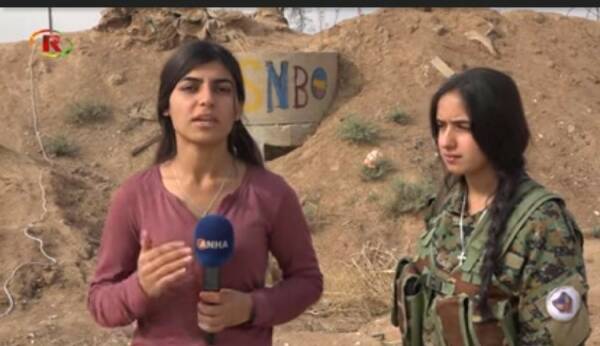
“She Was Not a Lover of War, but a Lover of Truth”
Lousine Hakobian, a fighter in the Armenian Nubar Ozanyan Battalion, conducted her first-ever journalistic interview in her military career with Jihan Belkin and recalled those moments: “Our acquaintance began through that interview. At every site where attacks occurred, Jihan documented everything with her camera. But she was not a lover of war—she was a lover of truth.”
She emphasized that Jihan Belkin left a profound impact on the hearts of all communities in North and East Syria: “Her martyrdom did not sadden only the Kurds, nor only her mother and sisters. Arabs, Assyrians, Syriacs, and Armenians were also affected. Every Kurdish, Arab, or Assyrian mother is a mother of Jihan Belkin,” adding, “It has not even been a year, yet it feels as if time has not closed the page of her departure; her martyrdom remains as vivid as if it happened yesterday.”
Hakobian drew attention to her own family’s story, which survived the Ottoman massacres, and which Jihan Belkin documented: “She documented the story of my Armenian family, who resisted the massacres, and shared it with the world so others could know it. In return, we pledge to tell Jihan Belkin’s story to our children and those around us, keeping her memory alive. We will open our children’s eyes to her story, just as her vision illuminated our lives.”
In her last journal entry, Jihan Belkin wrote: “I know the lands of Manbij, Qarqouzaq, Tishrin, and Ain Issa, and their people. When they were liberated, I shared in the joy of the women in those areas and felt the glow of freedom shining in their eyes. I was filled with memories of the women I saw as my sisters, and the pain left by what ISIS did to them. I drank tea and coffee with people I had never met before and became part of their stories. Their great tales added a new depth to my own story.
I told myself that all these memories must remain alive. Even if in forty years I need a cup of coffee to return here, I will come back. I came for this place