
With March 8 approaching... Turkish women between the struggle for equality and the battle for survival
On March 8, Özgür Aktokun of the Women's Platform for Equality highlights women's struggle for equal citizenship, work, and life amid a femicide surge.
Alif Akçul
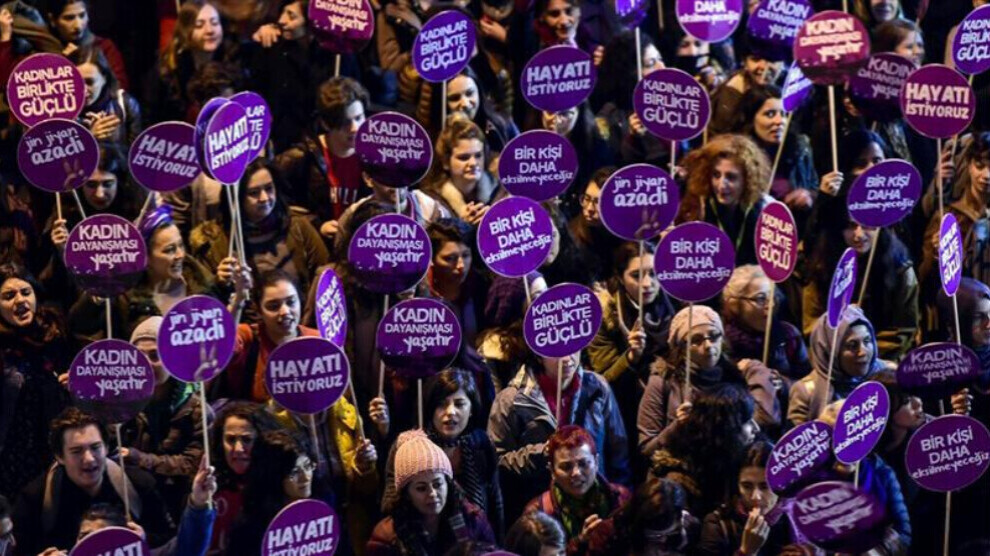
Istanbul – As March 8th, International Women's Day, approaches, women's organizations in the Turkish metropolis of Istanbul are preparing to intensify their struggle across a wide range of issues; starting from the continuous rise in femicides, passing through the demand for equal citizenship, and reaching the lack of recognition for care work and the escalating debates on secularism and the legal system. In the view of the women's movement, this day is not merely a symbolic occasion or an annual commemoration, but rather a milestone in the struggle where women's demands for equality are renewed and forcefully return to the forefront.
According to sociologist and member of the Women's Platform for Equality, Özgür Aktokun, women's agenda is not reduced to a single law or a single headline; it is directly related to women's lives and their right to equal citizenship, affirming that women's issues are not limited to legal amendments but are connected to life itself. "Therefore, our agenda is life itself. To build a life in which a woman can live as a human being, as a citizen, on the basis of equality. This also includes work, so our struggle is about the recognition of our existence in all areas of life, and that is why what occupies women today is life."
"Equal Citizenship Remained on Paper"
Özgür Aktokun explains that women's agenda intersects with many issues such as work, the burden of care, and equal citizenship, pointing out that the rights stipulated in laws often remain without actual implementation in daily life.
She states that one of the most important reasons for the continuation of women's struggle for years is this problem of implementation. "Even if women's rights to equal citizenship in this country are recognized in the Civil Code, these rights have not been practically exercised in the existing implementation. This is precisely what keeps the struggle for women's rights alive and strong."
She adds that one of the fundamental axes determining women's agenda is inequality in the field of work. The weak participation of women in the labor market and the non-application of the principle of equal pay for equal work constitute an important part of this picture. The issue of invisible work and care work also emerges as one of the factors directly affecting women's lives.
She emphasizes that this burden is often not viewed as an issue requiring public policies. "Our rights related to care duties have never been put on this country's agenda. The non-recognition of the care burden makes the lives of many women extremely difficult, and most importantly, because this burden is not visible, we do not know what millions of women are forced to endure, nor do we know what they are compelled to face."
"Don't Touch the Law… Implement It"
Özgür Aktokun clarifies that the struggle of women's organizations is not limited to demanding new rights, but also includes insisting on the implementation of already existing laws, which is a fundamental aspect of women's daily battle. She states that the problem lies not only in enacting laws but in ensuring their actual application, and for this reason, the Women's Platform for Equality reiterates its clear position: "Don't tamper with the law… Implement it."
She views that this demand, which women have been repeating for years, is not just a legal call, but is also a reminder to the state of the necessity to activate the principle of equal citizenship and make it a tangible reality in women's lives.
A Struggle for Rights and Survival Simultaneously
Özgür Aktokun points out that the escalation of violence against women casts a direct shadow over all these discussions, explaining that women are struggling not only for their rights but also for survival. She states that the reality is so harsh that six women are killed in a single day in this country, which makes the battle for life itself an integral part of their daily struggle.
She believes that with March 8th approaching, the defense of the principle of secularism and the preservation of the Civil Code emerge as one of the most important issues on women's agenda, noting that the rights women have wrested through years of struggle have long been subjected to continuous attempts at undermining through various practices and discussions. She explains that what occupies women today is protecting these foundations, which, in their view, are a guarantee of the state's very existence in the face of pressures exerted by the authority.
Aktokun reminds us that women did not obtain their rights easily but wrested them through long years of struggle, emphasizing that today's debate is not limited to matters like inheritance or alimony, and that the issue is much deeper, as tampering with these rights essentially means depriving the girls and boys of this country of their most basic right to live their childhood as they should.
For the women's movement, protecting the Civil Code represents a fundamental axis of struggle. Aktokun believes that any infringement upon this legal system will leave a profound impact extending beyond the present to future generations, stressing that backtracking on the gains that define women's status and rights within the Civil Code will not only affect women today but will carry its severest consequences for those who come later, stating that losing these rights will make future generations pay the highest price