
From ISIS to Hay’at Tahrir al-Sham… Repeated Scenes of Brutality
In Sweida, despite constant attacks on its people, life persists through the strength of those who remain. They cling to hope and to a resilient will that refuses to break, even after deep loss and ongoing suffering
Rochelle Junior
Sweida — The entry of ISIS into eastern rural Sweida in 2018 was far from random. It was a deliberate and organized act aimed at humiliation through the targeting of women in particular, using them as bargaining tools — a strategy ISIS had employed in multiple places, from Yazidi women in Shingal to women of the Alawite community and others. Hay’at Tahrir al-Sham replicated this pattern with brutality in the villages of eastern Sweida.
From the first moment of the attack, women were the group most exposed to violence. They became direct victims of kidnapping and threats, and a means for imposing conditions and negotiating. The violence extended beyond abduction; it included deliberate humiliation, intimidation, the use of kidnapped women’s photos for propaganda, and the physical and psychological suffering endured during captivity.
In armed conflicts, women are usually among the most vulnerable groups — but under ISIS, their targeting was deliberate and systematic, meant to break the community’s morale by making people feel powerless.
2018… The Day ISIS Entered Shabki
On the morning of July 25, 2018, ISIS stormed villages in the eastern Sweida countryside, including Shabki, leaving dozens dead and kidnapping at least 36 women and children from that village alone. Several kidnapped women were forced to walk long distances in the desert, leading to the death of one of them, while another was executed by gunfire. ISIS published their photos to spread fear and showcase its media power.
The kidnapped women were between 18 and 60 years old — a shocking incident that left deep trauma in the community and a fear that lasted for years.
2025… Memory Reopens
Seven years after the first attack, Sweida in 2025 found itself reliving a similar tragedy. The same fear returned through new violations that directly targeted women: kidnappings, attempted killings, and the loss of loved ones during recent attacks.
The suffering did not end with ISIS’s retreat. More than 36 villages became almost entirely depopulated. Families — especially women — were forced to live in shared houses with multiple households, stripping women of their privacy and placing heavy psychological and social burdens on them.
Many women found themselves without shelter, privacy, or the ability to protect their children in a society under immense pressure and fear. They faced compounded violence: the violence of armed groups, the violence of displacement, and the violence of a society that often places the greatest burdens on women during crises.
“Personal Pain and Collective Memory”
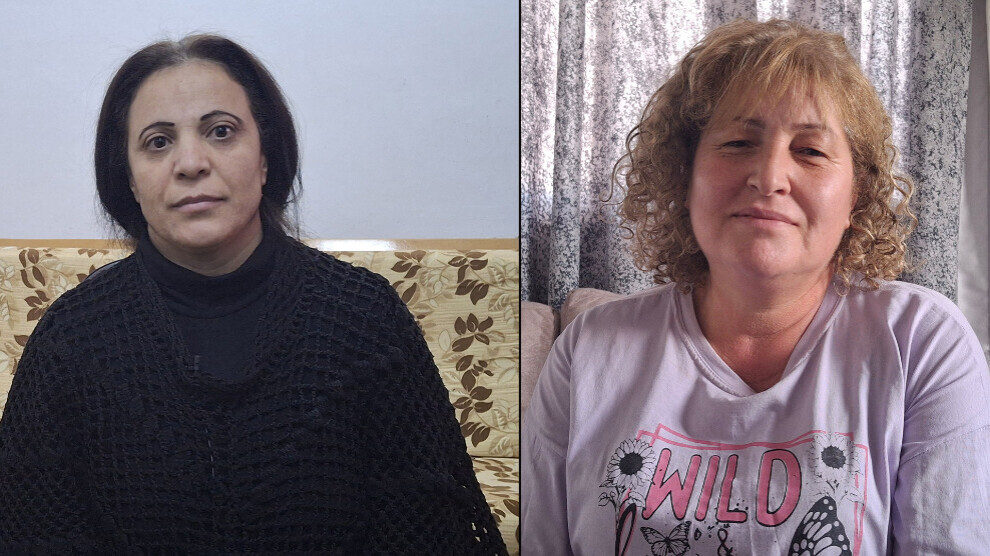
For residents, the new attacks reopened the wound of 2018. As Juheina Thleij Jaba’i describes it, it is “personal pain and collective memory.”
Juheina, from the village of Shabki, recounts how members of her family were killed during the events: two brothers, her mother, and her sister — all of whom defended their home until the last moment. She explained that the attack targeted not just their village, but multiple villages across the eastern countryside.
She said ISIS kidnapped around 29 girls and minors from their village, while several women were killed — events that left deep scars in the community and a lasting sense of anger and helplessness. She added that the recent attacks in Sweida brought back all the memories of 2018, with its killings, kidnappings, and destruction.
The suffering extended beyond the human loss. The attacks forced many residents to flee, some remaining displaced for one or two years before returning. Juheina noted that people rely mainly on agriculture and livestock, but the attacks led to the loss of hundreds of livestock, causing severe economic damage. Living pressures intensified, and as a government employee, she went four months without receiving her salary, worsening her financial burdens — a struggle many others shared.
She paused at the memory of her sister, a university student, who was killed in their home a day before her graduation. “For what sin was she killed?” Juheina asks. She describes ISIS as criminals “who do not distinguish between old and young, educated or uneducated. They are killers — nothing else.”
Exceptional Stories of Strength and Will
Amid the darkness, Juheina shared extraordinary stories of resilience, including that of Hanin al-Jaba’i, who witnessed her mother and sisters killed before her eyes. To avoid being kidnapped, Hanin threw herself into a water tank and miraculously survived. Despite losing her entire family, she held on to a promise she made to them — to continue her education. She fulfilled that promise, graduating from medical school this year and now pursuing her specialization, supported by her relatives and the local community.
“Their property could be replaced, but their lives could not,” Juheina said. The wounds remain open, and the graves of loved ones stand as silent witnesses to the magnitude of the tragedy. Still, life continues through those who remain, relying on the last remnants of hope and the will of a community that refused to let its spirit break.
Kidnapping, Marginalization, and the Unknown Fate
Rimal al-Hamad also recalled the events Sweida has recently experienced, connecting the mid-July 2025 attack with the 2018 attack on Shabki — memories still deeply embedded in local consciousness.
She noted that the latest assault by Hay’at Tahrir al-Sham shared many features with the 2018 ISIS attack on the eastern countryside, especially Shabki. Both attacks were sudden, leaving numerous casualties among the dead, wounded, and kidnapped, and causing the displacement of thousands of families.
Rimal added that a common factor between both attacks was the entry of the attackers under religious slogans and sectarian incitement against the Druze community, calling for violence and extermination — rhetoric that left profound social and psychological scars.
She believes both attacks unfolded under complex circumstances involving armed groups and influential actors, pointing to what she described as “facilitations” that allowed attackers to advance into the affected villages. Residents continue to fear a repetition of these scenarios, especially amid ongoing sectarian incitement.
Women as Primary Targets
Rimal emphasized that women were “the most marginalized group” during the attacks, recalling how many were kidnapped in 2018 and returned only after months of negotiations.
During the July 2025 attack, both men and women were targeted. Several women remain missing, and although some were freed, information about the others remains “deeply concerning.”
Enduring Psychological and Social Impact
According to Rimal, the 2018 Shabki events marked the beginning of a prolonged phase of violence that created a rift between Sweida’s residents and the government. The July 2025 events, she said, left severe psychological effects across the community, particularly amid ongoing tension and fear of renewed violations.
She concluded by stressing the need for unity within Sweida, saying the community is “more vulnerable than ever to external interference,” and that social cohesion is the only true safeguard against escalating dangers