
Azar Azima… A Female Muscial Legacy that History Did Not Do Justice
Azar Azima, Isfahan's first female singer and Golha program star, left her mark on early Iranian music, yet her legacy remains underrecognized in official memory.
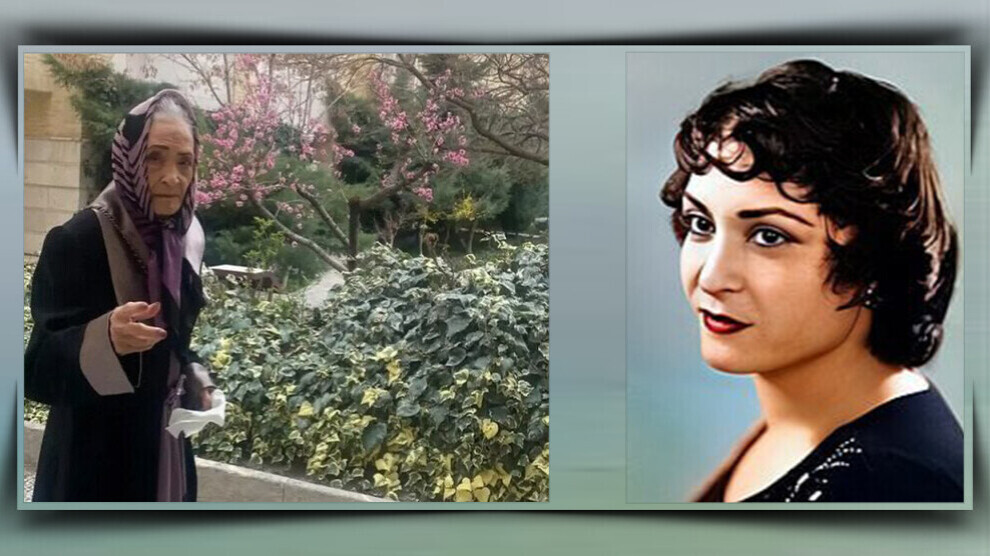
News Center — Azar Azima, one of the most prominent pioneers of Iranian singing and the first female voice from Isfahan to reach Iranian radio, has passed away at the age of 99. Despite her influential role in shaping an important part of the history of women's singing in the country, her name and artistic legacy have not received the attention they deserve in recent years, despite her prominent presence in the early days of radio music.
The artist Azar Midekht Azima Sirajpour, known by her stage name Azar Azima, was born in Isfahan in 1927 and is considered the first known female singer in the city. She has passed away, leaving behind an important artistic legacy associated with a foundational period in the history of Iranian music.
Azar Azima began her artistic career in 1955 with Radio Iran, at a time when radio played a decisive role in introducing audiences across the country to new musicians, singers, and works. Her entry into this field was not merely the beginning of an artistic career for a singer from Isfahan but also part of the growing presence of women in Iran's professional music scene.
Her first work was a musical piece composed by a prominent Iranian musician and performer, accompanied by a poem by Abolhasan Farzi. Collaborations with figures such as Saba solidified Azar Azima's position among active radio music artists from her early years.
Voice on Programs
Azar Azima was one of the first artists to appear in the "Golha" (Flowers) program series, which holds a special place in the history of Iranian radio music, and on which many prominent singers, musicians, and composers presented timeless works.
She presented her first program, "Gosn-e Golha" (Branch of Flowers), accompanied by violin and santur. Her presence in these programs is part of a record showing that female singers in the mid-twentieth century, despite the social and cultural constraints of the time, were able to make effective contributions to the production and recording of Iranian music.
Azar Azima continued her artistic career, presenting many works on the "Golha-ye Biyaban" (Desert Flowers) program and other radio programs. These performances brought her voice to audiences beyond Isfahan and established her name among the artists who contributed to shaping Iranian classical and radio music during that period.
"The Road to Shiraz"
"The Road to Shiraz" is considered one of Azar Azima's most famous works, performed by the Farabi Orchestra conducted by her husband, Morteza Hannaneh, a composer and orchestra conductor.
The collaboration between Azar Azima and Morteza Hannaneh served as a bridge between her singing and the Iranian orchestral music movement—a movement that, in those years, sought to present Iranian music in broader forms through the use of new instruments and structures.
The passing of Azar Azima is not merely the loss of a singer but also a reminder of a part of the history of women's music in Iran, where many figures, despite their pivotal roles, have not received sufficient attention in official and public narratives. Nevertheless, Azar Azima's voice will remain part of Iran's cultural memory through the works she left behind in radio and music programs of that period.