
A Witness to the Suwayda Massacres Reveals a Systematic Pattern of Genocide Against Minority Communities
Crimes and massacres that make humanity shudder continue to be uncovered by the women of Suwayda, a city that was subjected to genocidal violence against the Druze community in southern Syria on July 13, 2025.
ROCHELLE JUNIOR
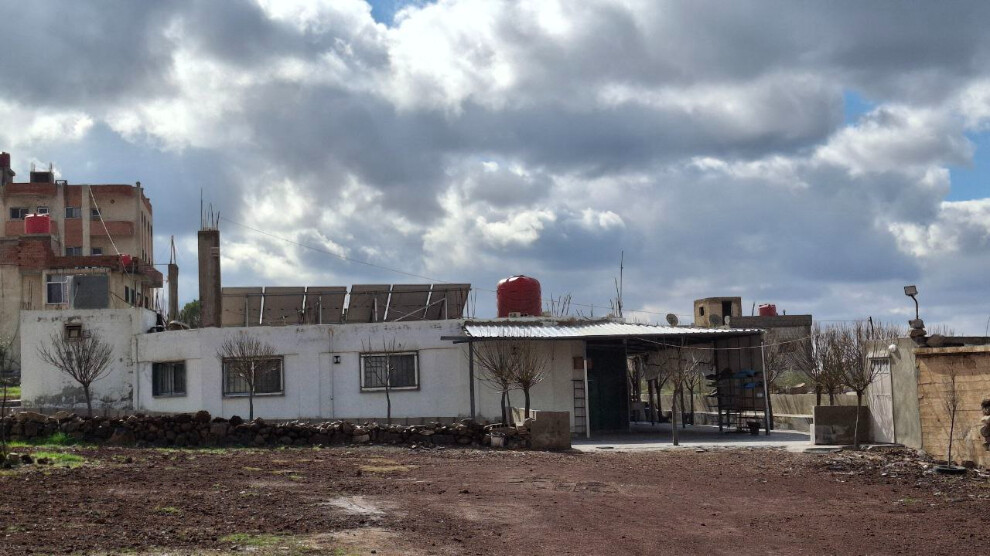
As-Suwayda — The memories of Suwayda’s women remain heavily burdened by the painful events of July 2025. The attacks and the accompanying violations constituted a profound shock to the city’s residents, a city historically known for its peaceful nature and the coexistence of its religious and social components.
What occurred was not an isolated incident, but rather part of a recurring pattern of violence previously witnessed along the Syrian coast, then in Suwayda, and more recently in Kurdish regions, with clear similarities in methods and objectives.
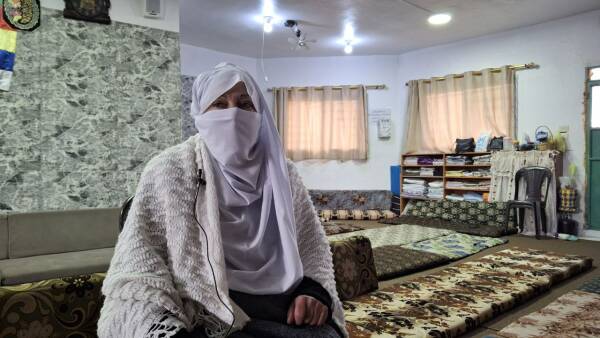
Ikhlas Al-Melhem, a resident of the Tarbiya neighborhood in Suwayda city, recounts the ordeal her neighborhood endured following the entry of jihadist fighters from Hayat Tahrir al-Sham, along with armed groups from Bedouin tribes, into the area, accompanied by widespread killings and the direct targeting of civilians.
She explained that the people of Suwayda were not prepared for such events, given the city’s peaceful character and its diverse sects that have long lived together without conflict. She noted that Suwayda had never known violence or killing, nor had it ever had shelters or military preparations, as its people were accustomed to coexistence and safety.
She added that only minimal first-aid preparations had been made as a precaution, amid threats directed at the city following the coastal massacres—especially in light of videos circulated on social media showing armed groups emerging from the Syrian coast, documenting killing, slaughter, and mutilation of bodies, accompanied by direct threats such as: “We’re coming for you, Druze.”
Ikhlas Al-Melhem said these threats prompted her and her husband—who were responsible for a religious center in the neighborhood—to prepare for a possible attack. They organized first-aid training sessions for the girls present at the center and equipped a small pharmacy with essential medicines and supplies to assist the wounded in case of an assault.
The Entry of Armed Groups and the Siege of the Religious Center
On July 14, 2025, jihadist fighters from Hayat Tahrir al-Sham and armed groups from Bedouin tribes entered the western villages of Suwayda, before extending their operations into Suwayda city itself and reaching the Tarbiya neighborhood.
According to Ikhlas Al-Melhem, the militants infiltrated the neighborhood covertly, while the religious shelter remained open to civilians. As fear escalated, dozens of families—mostly women, children, and the elderly—took refuge in the religious center, believing that religious sites remain neutral during wars.
Within a short time, the number of people sheltering there reached around 150. Al-Melhem said they remained besieged inside the shelter for two full days, with snipers positioned around the area, preventing anyone from leaving or bringing in aid. As food and water ran out, fear and terror overtook everyone.
Evacuation Attempt Turns Into Direct Targeting
As conditions worsened, young men from the area attempted to secure the evacuation of civilians to a safer location. Three vehicles (a van and two pickup trucks) arrived, and only ten minutes were given for everyone to board, while the young men attempted to distract the militants during the escape.
Al-Melhem pointed out that nearby buildings were under sniper control, with gunfire directed at anyone attempting to pass. After leaving the center and less than one hundred meters away, the vehicles came under heavy fire from multiple directions: “snipers positioned in rear and facing buildings, in addition to snipers in the surrounding olive groves.”
She recalled that a pickup truck carrying women and children went ahead and had its tires shot out, causing it to overturn. The occupants were then shot while lying on the ground. Subsequently, the van driven by Ikhlas’s husband was directly targeted, its tires shot amid intense gunfire from all sides, resulting in a large number of wounded.
Injuries and Scenes of Terror
Ikhlas Al-Melhem explained that when she boarded the van, it was overcrowded with more than 25 women, leaving no space to sit. She remained bent over as gunfire erupted. Women in front of her were shot and collapsed onto her, blood pouring heavily. She herself was injured in her hand.
She described the scene as indescribable terror, with no one knowing where the bullets were coming from. After about an hour, one of the snipers was hit by a projectile, forcing the snipers in the olive groves to retreat. At that point, the wounded—most of them women—began seeking refuge in nearby homes in search of any medical assistance. One elderly man opened an uninhabited house and placed the injured inside.
Grave Violations Against Civilians
Al-Melhem noted that one mother, whose daughter had been killed, later returned, covered her daughter’s body, and placed it back in the car out of fear of mutilation—describing this as a repeated behavior by militants toward the dead.
She also mentioned that a three-day-old baby was among the group and was shot in the mouth, asking in disbelief: “How does such a person think? What did this baby do?” She emphasized that this ideology of killing and mutilating bodies has nothing to do with religion or morality.
The Death of Her Husband and a Night in Hiding
Ikhlas Al-Melhem remained with her wounded husband inside the van until his death that evening. Throughout that time, shelling continued, and armed elements moved between houses carrying unfamiliar weapons, while human remains were scattered across the roads.
Some people attempted to contact her through her husband’s phone after hers stopped working due to blood, urging her to leave the area and not remain alone in the open. At sunset, she walked through the olive groves until she heard a child crying. Upon reaching the sound, she found an apartment crowded with wounded people.
They all remained hidden throughout the night without making any noise, while hearing gunfire, laughter, and the sounds of screaming and crying.
She added that jihadists stormed the neighboring house, killed the men, and sexually assaulted the women—scenes the hidden group could hear but could not intervene in for fear of being killed. At dawn, an order to withdraw was issued. Afterward, young men from the area entered and evacuated the wounded to safer locations.
Ikhlas Al-Melhem described what happened as an unforgettable ordeal and expressed hope that it would never be repeated. She stressed that what happened to the people of Suwayda is also happening to the Kurds, noting that the same methods used in Suwayda were previously used along the Syrian coast and are now being used against Kurdish civilians, as well as in Aleppo during earlier stages.
She concluded by stating that “the common denominator in all these cases is the targeting of women and children, direct killing, and grave violations, which indicates a single pattern of violence based on genocide and terror, carrying a clear racist character against minorities