
The Biography of Light... Libertas's Journey from Chains to the Flame
Libertas, the goddess who emerged from the throes of pain, tyranny, and slavery to illuminate the universe with freedom, citizenship, and justice in every time and place.
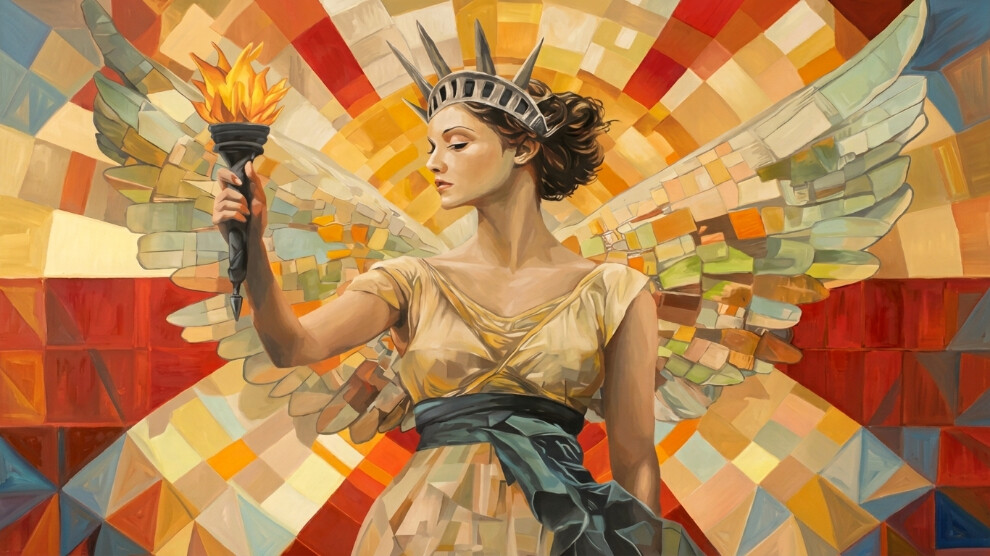
NEWS CENTER– Libertas was not born from the foam of the sea like the goddess of beauty, nor from the thunderbolts of the sky like the goddess of war. She was born from the ancient human question about the thing that can be taken away but not bought: freedom.
In Rome, where the master was free and the slave was property, freedom took the form of a woman. Libertas appeared carrying the symbols of manumission, foremost among them the cap of liberty and the rod, to embody the moment of a person's transition from the category of the owned to the ranks of the free.
But Libertas carried from her birth a harsh paradox: How is freedom sanctified in a society based on slavery?
Perhaps for this very reason, her image became more than the image of a goddess. It became a mirror of politics.
When Julius Caesar was assassinated, the conspirators against the republic carried the image of Libertas onto their coins, declaring that they had restored freedom to Rome. Then the republic fell and the emperors rose, yet the face of Libertas remained present on coins. As if authority, no matter how tight its grip, always needed to borrow the face of freedom to hide behind it the cruelty of power.
Libertas did not die with the fall of Rome. She hid in memory, then returned centuries later whenever humans needed a face on which to place their dreams of liberation.
In modern Europe, the woman-symbol turned from a goddess granting manumission into a woman waging the battle. She would later appear in Delacroix's "Liberty Leading the People," then in the French figure of Marianne, before crossing the ocean in a calmer and more majestic image: the Statue of Liberty carrying a torch in New York.
But Libertas leaves us her most important question: What does freedom mean if it remains a beautiful image while the human being is deprived of it in reality?
Here her journey becomes greater than the journey of a Roman goddess. It is the journey of a concept that changed over time: from the manumission of the slave, to the freedom of the citizen, to the freedom of the people, reaching the dream of equality and human dignity.
Perhaps her most beautiful paradox is that history continued to depict freedom in the form of a woman, while real women continued to wage their battles so as not to be merely a symbol of freedom, but partners in owning it, making it, and defending it.
This is why Libertas was not a woman of stone.
She was, and still is, the face of the human being when they decide to break their chains.