
Between Workplace Harassment and the Hope of Education, an Afghan Doctor Refuses to Surrender to Restrictions
Despite harassment and threats, Afghan doctor Shabana Fattah defends her right to practice medicine and save lives, defying restrictions on women, and opens her home to educate girls, turning suffering into hope.
BAHRAN LAHIB
PARWAN– Health sector workers in Afghanistan believe that integrity, dedication, and compassion toward patients are among the fundamental pillars of their profession, as humanitarian treatment contributes to enhancing trust between doctor and patient, and encourages patients to disclose their fears and health problems, whether physical or psychological, ensuring they receive better care.
However, since the Taliban movement's return to power, Afghan women have faced increasing restrictions affecting various aspects of their lives, amid tightened control over their behavior and appearance. Women working in the health sector have not been spared from these measures, as testimonies indicate that some of them have been subjected to repeated pressures and harassment while performing their professional duties, which has raised concerns about their psychological safety and working conditions.
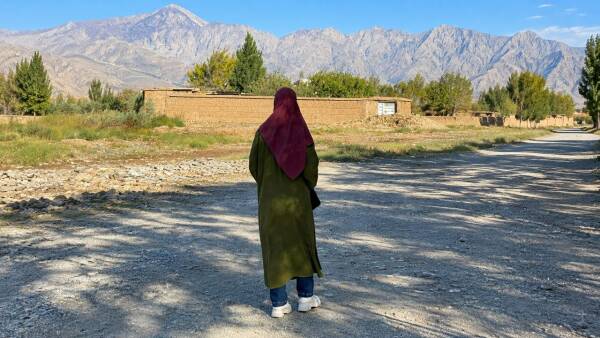
In this context, Shabana Fattah, a doctor in Parwan province, recounted details of what she said was repeated interference by officials of the Taliban's Ministry of Promotion of Virtue and Prevention of Vice in her professional life, due to her not fully complying, according to their account, with the controls imposed on women's clothing. She explained that these practices not only affect the workflow but also cause the spread of fear and anxiety among female doctors.
Regarding her working conditions, she says that she works daily in two hospitals, one government and one private, noting that the Taliban has assigned two persons in each hospital to monitor the clothing of female employees on a daily basis. In the event of non-compliance with the imposed instructions, these officials deal harshly with female doctors, or contact hospital administrations to summon other officials and take measures against them.
She added that female doctors are sometimes summoned, without prior notice, to meetings with officials of the Ministry of Promotion of Virtue and Prevention of Vice, where they are subjected, according to her account, to interrogation, threats, and humiliation.
Reprimand After Saving a Patient's Life
Shabana Fattah recalled one of the most painful experiences in her professional career, when she was confronted and reprimanded because part of her hair appeared from the front of her head, even though she had just come out of the operating room after participating in saving a patient's life.
She said that officials had previously issued several warnings to her because strands of her hair appeared, and that the latest incident occurred after a previous warning from the same official. "We had just saved a patient who was struggling with death. At that moment, I was not paying attention to the fact that part of my hair was exposed. Shortly after, five officials from the Ministry of Promotion of Virtue and Prevention of Vice entered the hospital." She explained that the arrival of the officials raised concern among the workers, before she was asked to enter one of the rooms. "My colleagues were keen to help and support me," confirming that solidarity among members of the medical team gives them a feeling of support in such situations.
She described what happened, saying: "When I entered the room, I felt as if I were facing ravenous, hungry wolves. They began inspecting me with their eyes from top to bottom, as if I were a person brought specifically for accountability. Then they began directing insults and threats at me."
She added that she was initially unable to understand what violation she had committed, before the officials' voices rose, according to her account, demanding that she know the guilt she had committed. She confirmed that they did not give her a chance to defend herself or explain her position.
She explained that the experience was not limited to shaking her sense of safety in the workplace, but also pushed her to rethink the reality of women and the future of girls in Afghanistan, in light of the restrictions that limit their opportunities in education and professional life. "What I was subjected to reinforced my feeling of insistence and determination to contribute to raising girls' awareness, and not to remain silent about the conditions facing women in our society."
Education at Home... An Attempt to Open a Window Toward the Future
Following these experiences, Shabana Fattah decided to turn her suffering into a motive to work for the future of girls. She dedicated her home to giving educational lessons to them, in cooperation with her sister, in an attempt to provide an opportunity for learning in light of the restrictions imposed on the education of women and girls. She said that she seeks, through this initiative, to broaden the horizons of girls and help them acquire knowledge that enables them to build a better future.